

19 Inch System Integration Cabinet Supplier: Custom Solutions for Seamless Deployment
2026-05-12
In the realm of electronic systems, seamless deployment starts with the right infrastructure—and that’s where the 19-inch system integration cabinet becomes the unsung hero. At TPS, we’ve seen firsthand how generic cabinets create bottlenecks, forcing compromises in thermal management, cable routing, or mounting flexibility. That’s why we’ve moved beyond one-size-fits-all: our custom solutions are engineered to fit your exact configuration, slashing installation time and eliminating integration guesswork. If a flawless build is your goal, the enclosure shouldn’t be an afterthought. Here’s how we make it a strategic advantage.
Rack Designs That Fit Your Workflow, Not the Other Way Around
For too long, standard rack enclosures dictated how you arranged your gear—forcing awkward cable runs, tangled airflow paths, or difficult front-to-rear access because that’s just how they were built. Our approach flips that script. Instead of cramming your operations into a one-size-fits-all frame, these rack designs start with how your team actually moves, organizes, and services equipment day to day. Modular side panels that pop off without tools, adjustable rail depths that match the variety in your hardware stack, and pre-punched knockouts positioned where your power and data lines actually terminate—all these details come from watching real workflows, not from a generic spec sheet.
Think about the moments that slow you down: tracing a cable from a top-of-rack switch down to a middle server, or swapping a hot-swap power supply when the rear is jammed against a wall. We’ve seen network engineers twist themselves into pretzels around fixed vertical cable managers, and datacenter techs balancing on a knee to reach a bottom unit because the rack’s footprint didn’t allow full slide-out. Our design incorporates wider rear clearance zones, reversible airflow chicanes, and tool-free mounting rails that re-position in seconds, so those small daily frustrations disappear. It’s not about adding complexity—it’s about stripping away the obstacles that get between you and the job.
Beyond the immediate fit, the rack should grow with your topology, not hold it back. When you need to shift from a pure TOR setup to a mixed leaf-spine layout, or suddenly integrate deeper storage arrays, the physical enclosure shouldn’t force a forklift upgrade. With adjustable rack units that don’t require full disassembly, and weight-bearing frames that let you mix depths across the same vertical column, your floor layout stays fluid. That kind of adaptability means one less thing to fight when priorities change—the rack simply disappears into the background of your workflow, exactly where it belongs.
Built to Slot Into Your Existing Infrastructure Without a Hitch
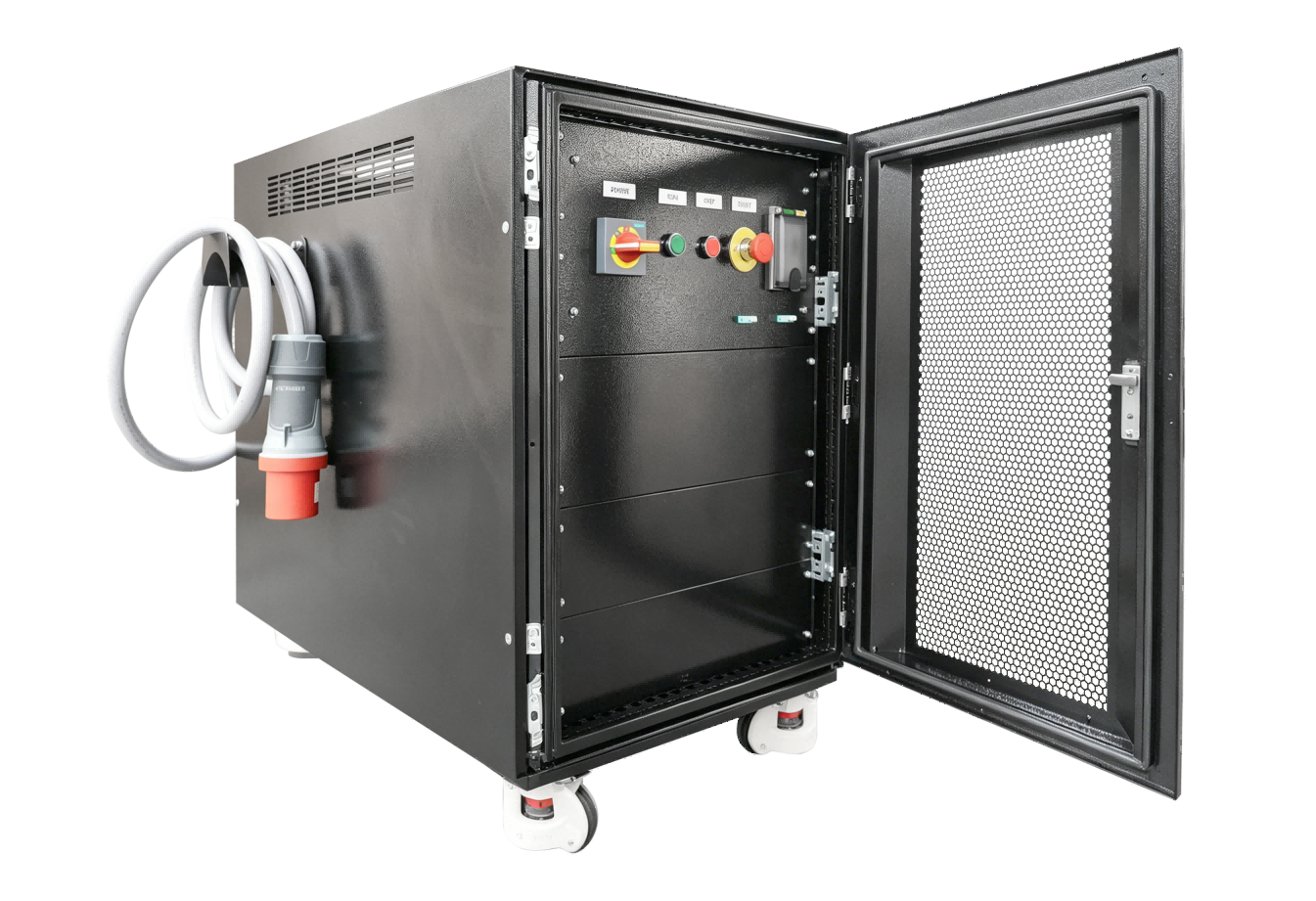
It feels almost too easy—plug it in, and the thing just works. There’s no rewiring of your entire system, no forced migration you didn’t ask for. Instead, it quietly syncs with what you’re already running, whether that’s legacy databases, modern cloud stacks, or some messy hybrid in between.
Under the hood, it speaks the languages your tools already understand. REST, GraphQL, gRPC—it doesn’t demand you learn a new dialect. Authentication flows tap right into your existing OAuth or SAML setup, so your team won’t be juggling yet another set of credentials. It’s designed to disappear into your stack, not announce itself with breaking changes.
Set-up is measured in minutes, not sprints. You drop in a snippet, adjust a few environment variables, and move on. And when something does need tweaking, the defaults are sane enough that most of your crew won’t even need to crack open the docs. Less friction now, fewer headaches later—that’s the whole point.
From Factory Floor to Data Center: Cabinets That Handle Any Environment
Industrial enclosures have evolved far beyond their origins on the factory floor. Today's cabinet designs are engineered to thrive in wildly different conditions—from the oily, vibration-heavy chaos of manufacturing lines to the precisely climate-controlled silence of a data center. It’s not just about swapping a gasket or adding a fan; the entire approach to thermal management, ingress protection, and structural integrity has had to pivot. A single cabinet family might now use reversible doors, modular side panels, and intelligent cooling pathways that can be reconfigured as the deployment environment changes.
What’s often overlooked is the connectivity layer. A cabinet in a data center deals with high-density fiber and structured cabling that demands careful bend-radius management and segregated airflow. On a plant floor, that same cabinet might need to keep dust and sparks away from copper terminations while still allowing field technicians quick access through a NEMA-rated seal. The trick lies in accessory ecosystems—cable entry plates, brush strips, and internal mounting grids that don’t compromise the environmental rating when reconfigured. This isn’t one-size-fits-all engineering; it’s a deliberate design philosophy that anticipates constant change.
Then there’s the material science angle. Powder-coated cold-rolled steel has long been the go-to, but the demands of mixed environments are pushing materials like stainless steel and aluminum-laminate composites into more roles. These aren’t just about corrosion resistance anymore; they’re part of a heavier focus on hygiene in food-processing areas or electrostatic discharge control in electronics assembly. The real differentiator, though, is how the cabinet manages thermal swings. In an outdoor telecommunications enclosure, you might see a heat exchanger integrated into the door alongside a smart heater that kicks in when the temperature plummets. That same core design might show up in a containerized data center on a wind-swept tundra, proving that the line between “factory” and “data center” is now a continuum rather than a divide.
Pre-Configured Systems That Cut Your Deployment Time in Half
Getting a new system up and running usually means hours of clicking through installers and tweaking settings. Our pre-configured machines arrive with everything dialed in ahead of time—operating system, drivers, security patches, and your essential software stack. That upfront work eliminates the repetitive tasks that eat into your schedule, so you can focus on what actually moves the needle.
We bake automation directly into the setup. Think scripted environment provisioning, role-based access controls, and network configs ready for your infrastructure. Instead of starting from scratch, you plug in your credentials and hit the ground running. It’s the kind of seamless handoff that turns a multi-day rollout into a same-day launch.
The benefit shows up right in your timeline. Customers have seen new deployments shrink from days to mere hours, with far fewer hiccups during rollout. By removing friction from the initial tech stack, you free your team to tackle higher-value projects from day one.
Why Off-the-Shelf Cabinets Never Match a Purpose-Built Setup
When you pull a pre-made cabinet off the shelf, you're inheriting someone else's idea of what you need. Standard dimensions might leave awkward gaps in your kitchen, or force you to sacrifice storage in a tight corner. A purpose-built cabinet, on the other hand, is shaped around your exact space—down to the millimeter. You're not just filling a hole; you're making every square inch work for you.
The materials used in mass-produced cabinets often tell a similar story. Thin veneers and particleboard can warp or sag under daily use, especially in humid environments. With a custom build, you choose the plywood, the joinery, the finish—ensuring that the cabinet not only fits but lasts. That attention to detail is something an assembly line simply can't replicate.
Over time, the limitations of off-the-shelf cabinets become more apparent. That gap above the fridge becomes a dust trap. The drawer that doesn't quite close right grates on your nerves. A purpose-built setup eliminates these frustrations from the start, turning your storage into a seamless part of how you live. It's not just about aesthetics; it's about creating a space that genuinely supports your daily routines.
Direct Engineering Support From Concept to Final Rack Integration
Every project begins with a conversation—not a sales pitch. Our engineers sit down with your team to unpack the real demands of the system, from thermal limits and power budgets to physical constraints that often get overlooked. Ideas sketched on a whiteboard turn into detailed feasibility studies, because we believe the foundations of a reliable rack start long before any hardware is selected.
As the design takes shape, that same engineering group stays embedded, refining layouts, validating component compatibility, and running through failure scenarios that standard validation often misses. When it’s time to install, they’re the ones on the floor, double-checking cable paths and torque specs—not handing off a checklist. The goal isn’t just to deliver a working rack; it’s to make sure your team fully understands every decision behind it, so they’re confident running it day one and beyond.
FAQ
Every project has its own quirks, and we build each cabinet to mirror your exact setup — from internal rail placement to cooling and cable routing. There's no forcing your gear into a one-size-fits-all box.
Absolutely. We regularly handle extended-depth servers, shallow network switches, and mixed-use layouts. Just share your equipment dimensions and we'll adjust the mounting rails and internal clearances accordingly.
As much as you prefer. Some clients send a rough sketch and let us fill in the blanks; others go through multiple CAD revisions to fine-tune every detail. Either way, you'll see a full 3D preview before fabrication starts.
Yes, and we don't just add fans and call it a day. We model airflow based on your specific hardware configuration, then integrate quiet, high-efficiency cooling paths, sound-dampening liners, and filtered intakes if needed.
It means we pre-assemble and test everything in our facility — rails, power strips, cable management, labeling — so your team can roll it in, plug it up, and go. Many customers go from crate to operational in under an hour.
Lead times vary by complexity, but our typical turnaround is two to four weeks after finalizing the design. We also keep a stock of common components to shorten urgent orders, and we'll give you a firm schedule before we start cutting metal.
We get it — project scopes shift. If you need to alter the layout or add features, we'll pause and rework the plans. Minor tweaks are often absorbed at no extra cost, and larger changes only trigger a transparent change order quote.
Routinely. From mixing Cisco switches with Dell servers to integrating proprietary industrial controllers, we configure mounting, power and cabling to suit every device's footprint. You provide the equipment list, and we'll make them coexist neatly.
Conclusion
When you’re piecing together a complex system, the last thing you want is a cabinet that dictates how you work. That’s why we design every 19-inch integration cabinet around your actual workflow—not the other way around. Whether your team is managing a noisy factory floor or a climate-controlled data center, our enclosures are built to handle the extremes without complaint. Dust, vibration, temperature swings: they’ve been tested against all of it. And because no two infrastructures are identical, we engineer each unit to slot right into what you already have. The connectors, the rails, the airflow—everything aligns from day one, so there’s no retrofitting scramble.
What really changes the game, though, is how we deliver these cabinets. We pre-assemble and configure as much as we can before they ever reach your dock. That approach typically cuts deployment time in half compared to generic, off-the-shelf options that still need hours of fiddling. It’s a level of readiness that only comes from a purpose-built mindset—one where your engineers talk directly to ours from the first sketch until the final bolt is torqued. No middlemen, no spec handoffs that lose nuance. The result is a system integration cabinet that feels less like a purchase and more like a natural extension of your operation.
Contact Us
Contact Person: Lily
Email: [email protected]
Tel/WhatsApp: +49 (0) 2161 49526-0
Website: https://tps-elektronik.com/en/