

Best Programmable Power Supply for Accurate Testing and Prototyping
2026-08-25
Every engineer knows that moment when a prototype misbehaves for no obvious reason—and the power supply is the last thing you suspect. But a drift of a few millivolts or a slow transient response can turn a promising design into a frustrating debugging session. That's exactly why a truly programmable power supply isn't just a convenience; it's your first line of defense for accurate testing and prototyping. TPS builds bench supplies that respect the signal integrity of your work. Here's what separates a supply that powers your circuit from one that protects your data.
When a Millivolt Drift Changes Everything
The calibration lab had been running the same voltage reference for six years without a single hiccup. Then, on a Tuesday morning, the readout slipped by 0.4 mV. Not enough to trigger any alarm, not enough to fail a spec sheet. But it was enough to shift the offset on a batch of pressure sensors heading into neonatal incubators. Three units passed final inspection with a bias that would have read a healthy lung as borderline. The shift was invisible on the bench, but it changed the meaning of every downstream number.
What makes millivolt drift so dangerous is that it rarely announces itself. A connector oxidizes, a solder joint relaxes, a reference diode ages—each contribution is tiny, slow, and quiet. Engineers chase it with temperature chambers and long-term logging, but the real lesson is simpler: a millivolt is never just a millivolt. It is the difference between a battery cell balanced and a battery cell overcharged, between a patient stable and a patient flagged for intervention.
The fix isn't always a better chip. Sometimes it's recognizing that your measurement chain has a memory, and that memory degrades in the most boring, predictable ways. Tighten the sense leads. Re-tin the pads. Recharacterize the zero point after every repair. When a millivolt drifts, it doesn't just move a number—it quietly redraws the line between safe and sorry.
Finding the Right Voltage and Current Range Without Overbuying
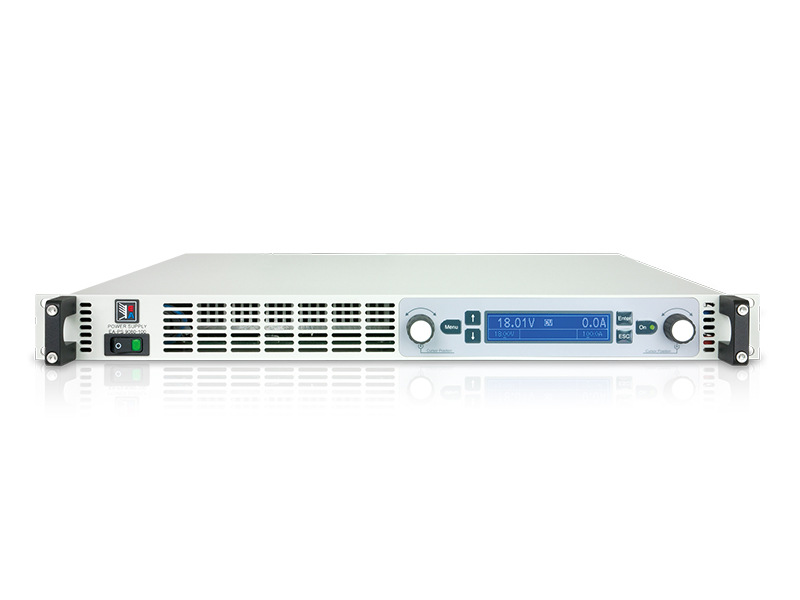
Most bench power supplies on the market push you toward a wide voltage and current envelope that you'll rarely use. Instead of grabbing a 60V/10A unit out of habit, take a hard look at your actual test scenarios. Are you mostly powering low-voltage logic boards, charging single-cell batteries, or running small motors? If so, a 30V/5A supply likely covers ninety percent of your work. The extra headroom of a bigger unit often translates into noisier output at low settings, heavier physical bulk, and a chunk of your budget spent on specs that sit idle.
One practical approach is to keep a small log of your last twenty bench tasks. Note the highest voltage you dialed in, the maximum current draw you observed, and how often you needed both simultaneously. Many engineers discover that their peak current demand happens only at low voltages, while high-voltage needs are brief and low-current. That mismatch is key – a supply with a fixed power limit might disappoint you, but a unit with a derating curve that matches your usage pattern lets you avoid paying for a bigger transformer and heat sink than necessary.
Another trap is assuming you need remote sense, multiple outputs, or high resolution on every channel. For most breadboarding and repair work, a single well-regulated output with fine and coarse controls is easier to live with than a feature-loaded box that complicates routine adjustments. If occasional high voltage is needed, consider a compact boost module or a second-hand linear supply rather than overbuying your main bench unit. The goal isn't to hit every possible spec on paper – it's to have a tool that sits comfortably in your daily workflow without wasted cost or clutter.
Ripple and Noise Quietly Shape Your Results
Small fluctuations rarely announce themselves. A power rail that dips a few millivolts under load or a ground plane carrying faint switching transients can slip past a quick inspection, yet these subtle disturbances often end up riding on top of the signal you actually care about. When that happens, an otherwise stable reading starts to wander, and the root cause stays hidden because the waveform still looks mostly correct at a glance.
The problem is rarely a single large spike. Instead, ripple and noise accumulate through dozens of tiny interactions: a capacitor chosen for the wrong frequency range, a return path that shares too much impedance, a connector that picks up stray coupling from a nearby clock. Each contribution seems negligible on its own, but together they tilt the baseline, shift thresholds, and erode the margin you thought you had.
Paying attention to these quiet influences does not mean chasing an impossible zero-noise goal. It means looking at the spectrum of what you cannot immediately see, checking how the noise moves with load and temperature, and then deciding where a small layout change or different filtering approach will actually keep the signal honest.
Controls and Readouts That Don't Interrupt Your Workflow
Every control sits within a thumb's reach, but none of them shout for attention. The buttons have a subtle tactile click that confirms without breaking your rhythm, and the displays refresh in the corner of your eye rather than demanding a glance. You can adjust core settings mid-task with a quick twist or tap, then get back to what you were doing before the thought even fully lands.
Readouts are designed to be glanced at, not studied. They use soft, high-contrast values that your brain parses in a split second, even while your hands stay busy. If something needs a closer look, the information is right there, but it never pushes itself into the middle of the screen or steals focus with blinking alerts or pop-ups.
The real test is how it feels after an hour: no frustration, no constant rechecking, just a quiet sense that the tool is moving with you instead of asking you to stop and babysit it. That's the difference between a dashboard and an interruption.
Remote Control and Logging for Repeatable Test Sequences
Most setups that run the same sequence over and over still fall apart the moment someone has to drive the process from a laptop in another room. The remote layer needs to accept plain commands—start, pause, step, abort—and return enough context that you aren't guessing what the rig is doing. A simple JSON-over-WebSocket bridge tends to work better than heavyweight frameworks because it keeps the control path short and easy to inspect.
Logging for repeatable sequences stops being useful when it only records pass or fail. You need a stream that captures the exact command, its parameters, the time it was issued, and any output the test produced. That way a failed run can be replayed locally against the same fixture without hunting through scattered files. Adding a monotonic sequence counter to each log entry also helps you match the remote view with what actually happened on the test hardware.
One pattern that stands out is treating the log as the source of truth rather than an afterthought. Every remote action gets an entry before it is executed, and the result gets appended to the same record. This creates a trail you can diff against earlier runs to spot timing drift or unexpected state changes. It also makes handoff between team members much smoother because the log alone explains what was tried, what changed, and where to resume.
Protection Features That Keep Your Supply and Prototype Alive
Real protection starts before the first spark. Every rail in your design gets its own current trip point, not some lazy one-size-fits-all threshold. A bank of tiny eFuses sits right at the input, each tuned to cut power within microseconds if a wire shorts or a new batch of MOSFETs turns out a little too eager. That means your dev board survives the classic reverse-polarity mistake and the accidental 12V into a 3.3V rail, leaving the prototype on your bench instead of in the scrap bin.
Then there's the overvoltage and undervoltage lockout pair watching the supply rail. They're not just flags; they actually hold the downstream converters in reset until the input sits stable for a programmable number of milliseconds. Brownouts and ringing from long USB cables stop being a source of random resets. You can hot-plug a noisy bench supply and the board won't hiccup or corrupt its configuration flash.
Finally, thermal foldback on the load switches keeps a stalled motor or a shorted LED string from cooking the PCB traces. Instead of a hard shutdown that leaves you guessing, the switch backs off the current limit as temperature climbs, so the load gets a chance to recover. Pair that with a small coin-cell backed RTC and your prototype keeps its state through power loss, meaning you can unplug the whole thing for a week and pick up exactly where you left off.
FAQ
It comes down to regulation, readback accuracy, and transient response. A precise unit holds its set voltage within a few millivolts even as the load changes, and its built-in meter agrees with an external DMM. Cheaper supplies often drift with temperature or show coarse resolution, which wrecks sensitive measurements.
Digital circuits are more forgiving than analog, but ripple can still cause jitter in high-speed logic or unstable clock references. A switching supply with 10-20mV ripple is usually fine for microcontrollers, but if you're testing ADCs or RF blocks, aim for under 5mV or use a linear post-regulator.
Yes, many mid-range and high-end models have a battery simulator mode where you set the internal resistance and capacity curve. You can step through voltage drops under load to see how your prototype behaves as the battery drains, which is far more realistic than a fixed 3.3V rail.
USB-TMC is the most practical for a single bench setup because it works out of the box with Python or LabVIEW. If you plan to integrate with other instruments, look for LAN/LXI - it lets you run long scripts without tying up a PC's USB port. GPIB is legacy but still common in industrial racks.
Linear supplies produce almost no high-frequency ripple, but they're heavy and inefficient above 50W. For op-amp filters, strain gauges, or precision references, linear is still the best choice. If you need higher power, get a switching supply with a linear post-regulator stage or an ultra-low-noise switching design.
For general prototyping, 1mV/1mA resolution is adequate. But if you're characterizing low-power sensors or LED forward voltages, step down to 0.1mV/0.1mA - otherwise you'll see staircase errors in your data that aren't from your circuit.
Over-voltage and over-current limits are non-negotiable when you're bringing up a new board - they can save an expensive FPGA or sensor array from a firmware bug. Output enable/disable with programmable slew rate also helps prevent inrush spikes that could latch up CMOS devices.
Conclusion
In precision work, a supply that wanders by even a millivolt can push a sensitive circuit out of spec or mask a real fault. That's why choosing a programmable unit starts with honest range planning: you want enough headroom for tomorrow's projects, but buying a 60 V, 10 A monster to power 3.3 V logic just adds cost and noise. Look at the fine print on ripple and noise, because a clean DC rail under static load can still fall apart when the output stage switches or a motor kicks in. The best supplies don't just promise low numbers on a datasheet; they hold those numbers across the entire voltage and current range you actually use.
A front panel that forces you into menus for every change gets old fast, so direct knobs or a responsive encoder matter more than a colourful screen. Just as important is what happens when you're not standing there: remote control over USB, LAN, or GPIB plus logging turns a one-off measurement into a repeatable sequence. And before you trust any of it, check the protection story. Overvoltage, overcurrent, and thermal shutdown aren't just checkboxes; they're what stops a firmware glitch or a slipped probe from taking out your prototype. A supply that quietly guards your work while staying out of your way is the one worth keeping on the bench.
Contact Us
Contact Person: Lily
Email: [email protected]
Tel/WhatsApp: +49 (0) 2161 49526-0
Website: https://tps-elektronik.com/en/