

Best Road Shot Blasting Machine Supplier Features That Improve Pavement Profiling Results
2026-11-18
Not every road shot blasting machine supplier delivers the surface data your profiling crew actually needs. From blast pattern consistency to dust control and travel speed, the right engineering choices quietly separate clean, repeatable profiles from costly rework. Here, we break down the supplier features that move the needle—and why teams evaluating equipment are increasingly looking toward PuHua for machines built around those details.
Abrasive Velocity Tuning That Keeps Texture Depth Predictable
Getting the abrasive speed right isn't just a dial setting—it's about matching the media's travel across the surface so the cut stays consistent from edge to center. When velocity drifts, some zones get scoured while others barely see contact, and that's where texture depth starts to wander outside spec. A tighter speed window, verified with a handheld tachometer on the drive roll rather than trusting the machine display, catches the small losses in belt tension or wheel wear before they translate into a shallower or deeper profile.
The trick is treating velocity as a variable you can map, not a fixed number you set once. Run a quick test coupon at the same lineal speed as production, then measure the resulting peak-to-valley values across three points. If the corners read deeper than the middle, the abrasive is dwelling too long on the turnaround or losing engagement mid-pass. Adjust the oscillation stroke or feed rate slightly—sometimes a two percent change is enough to pull the texture back into the predicted band without altering the whole process.
Operators who keep a simple log of speed, media lot, and measured Ra or Rz per shift start to see patterns that a spec sheet won't show. That record becomes the real tuning guide: when a new roll of abrasive comes in with a slightly different backing, the velocity adjustment is already known instead of guessed. The goal isn't faster or slower for its own sake—it's making the abrasive's travel so repeatable that the texture depth lands where you expect it, every pass.
Dust Collection Engineering That Stops Profile Interference
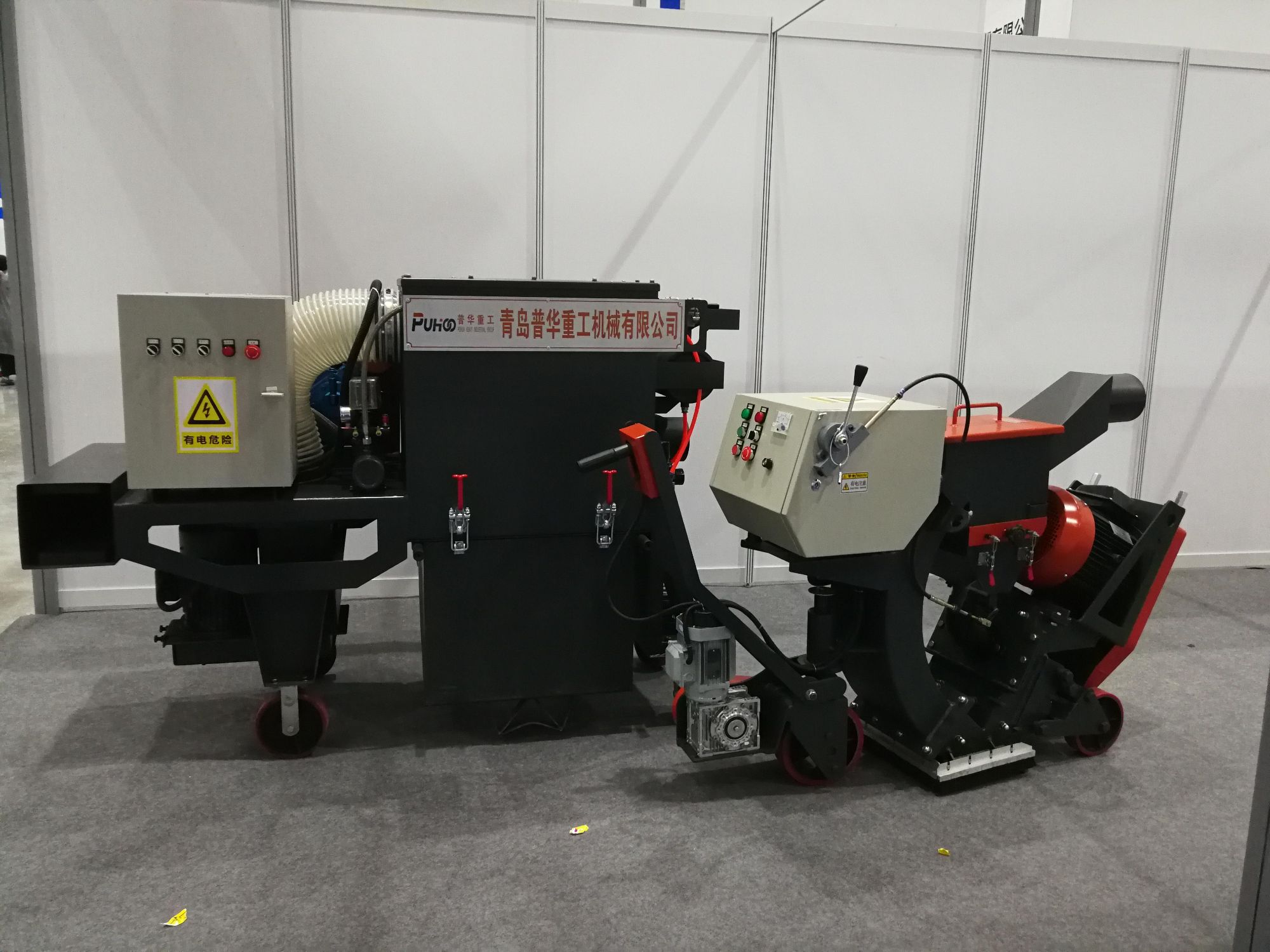
Most profile marking in a cutting cell gets blamed on tooling, but the dust pickup is often the real culprit. A hood placed too close to the work can create a low-pressure zone that pulls fine chips back across the finished face, leaving swirl marks or packing dust into grooves. Good dust collection engineering starts by moving the capture point away from the visible profile and shaping the pickup to follow the contour, so the air stream carries debris off the edge without dragging it against the surface.
Hardware routing causes a second form of interference. Drops, brackets, and flex hose that sit in the same plane as the workpiece force operators to reset guards or slow down changeovers. Low-profile side-draw chambers and recessed duct runs keep the working envelope clear, which means a wider profile can run the same setup without the dust collection components getting in the way of the stock.
The most reliable setups balance high capture velocity at the tool with a softer draw across the profile opening. Small bleed-air ports and slotted pickups reduce vacuum lock on wide or flat sections, while a modest face velocity keeps dust moving without lifting the part off its reference surface. That combination prevents the system from becoming another obstruction the profile has to fight through.
Operator Controls Arranged for Repeatable Field Adjustments
Field crews rarely have time to hunt through multiple menus for a setting that changes with soil type or crop stage. On this machine, the most frequently touched controls sit within a single hand span: feed rate, depth stop, down pressure, and reel speed all occupy the same row, raised just enough to avoid accidental bumps while wearing gloves. Each dial has a firm detent rather than a free spin, so the operator can count clicks by feel when bouncing across rough headlands. That tactile feedback matters more than a digital readout when the light is flat and the dust is thick.
The layout itself follows the sequence of a typical adjustment pass. Start from the left with the header height rocker, move across to the stripper plate gap, then finish at the concave clearance on the far right. It mirrors the physical order of components along the feeder house, which cuts down on the habit of looking up and down between the cab and the intake area. After a few hours, a new operator stops naming the controls and starts reaching for them without glancing away from the swath.
Repeatability comes from the small detent windows printed on the panel, each one mapped to a common set of materials. Switching from dry corn to damp barley means turning three dials to the marked zones instead of re-testing from scratch. That may sound minor, but it prevents the slow drift in settings that happens when every pass calls for a slight nudge. Operators can trust that the same hand position produces the same machine response crop after crop.
Frame Damping That Reduces Vibration Before It Reaches the Surface
Most damping methods wait until vibration has already spread into the outer structure, but this setup interrupts the path much earlier. A constrained-layer treatment inside the frame uses a viscoelastic core bonded between stiffer materials, turning shear movement into low-grade heat before that energy can reach the visible or load-bearing surface.
Placement is just as important as the material choice. Areas near joints, gussets, and mounting points tend to flex repeatedly under load, so they respond best to targeted damping. Tuning the layer to the frame’s dominant frequencies keeps the added weight minimal while still removing the sharp edge from vibration that would otherwise travel outward.
The result is a quieter structure without relying on thick rubber isolators or extra dead mass. Because the damping works inside the frame profile, the exterior stays clean and the surface remains stable under repeated stress, with less of the micro-chatter that eventually leads to cracks, loose fasteners, or fatigue.
Media Shape Matching for Different Pavement Hardness Levels
Media shape does not work as a one-size-fits-all variable. On softer pavement, rounded profiles deflect more and cut less, which is exactly what you want when the goal is to clean without gouging. The surface gives slightly under each impact, so a bead or a smooth-edged particle can rebound cleanly instead of burying itself.
Move to a rigid, high-compressive-strength surface and that same rounded shape becomes inefficient. Angular media holds its corner against the pavement long enough to fracture the top layer or strip a coating. It also produces a sharper surface profile, which matters if a new overlay has to bond.
Hardness changes within a single lane are common, so operators often keep two or three shapes on hand and adjust feed rate or blast pressure as the substrate shifts. Paying attention to that transition prevents overworking soft patches and undercutting dense areas.
Service Access Points That Preserve Profiling Tolerance Over Time
Long-term profile stability at service access points rarely comes from a single design decision. It shows up in the way mating faces are relieved, how fasteners are sequenced, and whether the surrounding structure can flex without pulling the sealing edge out of position. When those details are ignored, an access point that measures within tolerance on day one tends to drift after repeated use, temperature swings, or minor disassembly.
A more durable approach is to treat each access point as a load path rather than just an opening. Reinforcing the perimeter, isolating the sealing surface from structural strain, and using captive hardware all help the opening hold its original profile. Small dimensional shifts in the frame get absorbed before they reach the surface that actually controls fit or sealing performance.
Documentation makes the tolerance repeatable. Recording baseline measurements at installation, marking the correct torque sequence, and scheduling rechecks after a defined number of cycles turns profile drift into something that can be caught early. The goal is not a tighter initial tolerance, but an access point that still measures the same way after years of service.
FAQ
It usually comes down to how precisely they control blast pattern overlap and abrasive flow. A supplier worth considering offers adjustable blast wheel speed and a sealed recovery system so the machine doesn't lose media mid-pass. The result is a uniform texture across the full lane width without streaking or missed strips.
Closed-loop abrasive metering and a rigid blast head with independent wheel height control matter more than raw power. When the operator can lock in feed rate and working speed, each pass removes roughly the same layer, which is critical for specs that require CSP 3 to CSP 5 across large surfaces.
A well-matched dust collector keeps the blast chamber clear so abrasive doesn't cushion the impact. If fine dust stays in the chamber, the shot loses velocity and the profile becomes shallow or uneven. Reverse-pulse filters and enough airflow per blast wheel width help maintain steady cutting action.
It is practical when paired with automatic abrasive flow adjustment. Different concrete hardness and existing surface conditions require slowing down or speeding up without changing profile depth. A supplier that integrates speed and shot feed into one control system gives operators a better chance to hit the specified texture on the first pass.
The separator should remove broken shot, rust, and fine concrete dust before returning usable media to the hopper. Effective air wash separation keeps the working mix consistent in size and shape. This prevents a gradual shift toward fine dust that reduces cutting aggression and changes the final profile over a long shift.
Wider heads cover more ground but need enough weight and downforce to keep the seals in contact with uneven pavement. If the head bounces or tilts on rough surfaces, the blast pattern becomes patchy. A well-designed frame with independent wheel suspension allows wide heads to follow the road profile rather than forcing it flat.
Onboard diagnostics, accessible wear-part inventories, and technical guidance on abrasive selection often matter as much as the initial build. A supplier with field experience can recommend the right shot size and hardness for a given concrete mix, which changes texture depth more than adjusting the machine alone.
Conclusion
On jobs where surface profile has to stay within a narrow band, the most useful road shot blasting equipment rarely relies on a single standout feature. Instead, the supplier’s choices compound. Abrasive velocity tuning matters because it lets crews hold texture depth steady without constantly fighting wheel speed or feed rate. When paired with dust collection that actually keeps fines from packing into freshly blasted pores, the measured profile reflects the blast pattern rather than leftover debris. Operator controls arranged for repeatable field adjustments also reduce setup guesswork, so a second shift or a different operator can return to the same settings without chasing the previous day’s numbers.
Frame damping does quieter work: it keeps machine-born vibration from transferring into the blast head and smearing the texture before it stabilizes. Media shape matching adds another layer of control, especially where pavement hardness shifts between bridge decks, ramps, or patched lanes. Over time, service access points become the difference between a machine that holds tolerance and one that drifts. Easy access to wear parts, tensioners, and seals means crews actually perform the small maintenance tasks that preserve consistency, rather than delaying them until profile results begin to suffer.
Contact Us
Contact Person: Bruce
Email: [email protected]
Tel/WhatsApp: +86 15166629468
Website: https://www.povalchina.com/