

Best TFT LCD Displays for Crisp, Vibrant Visuals in Every Application
2026-05-12
TFT LCD displays have become the backbone of modern visual technology, powering everything from industrial control panels to consumer electronics. When you need sharp, vibrant images that perform reliably in any setting, the choices can be overwhelming. That’s where Jingda-Display steps in, offering a range of high-performance TFT LCD solutions designed to deliver exceptional clarity and durability. Whether you’re designing a medical device, an automotive dashboard, or a smart home interface, the right display can make all the difference. Let’s explore the key factors that separate ordinary screens from those that truly shine.
Unmatched Color Precision for Professional Use
Achieving accurate color is non-negotiable when every detail counts. Our displays are engineered with a finely tuned calibration process that ensures colors are rendered exactly as intended, straight out of the box. Whether you're grading footage, retouching photos, or designing brand assets, you'll see subtle tonal gradations and precise hue distinctions that lesser screens simply miss.
We push beyond standard color spaces by employing a wide gamut panel paired with 10-bit processing, delivering over a billion colors with smooth transitions and no banding. This means you can work confidently in DCI-P3 or Adobe RGB without sacrificing fidelity. Hardware-level uniformity compensation also eliminates hotspots and vignetting, keeping consistency across the entire screen from corner to corner.
For professionals who collaborate or present, built-in color accuracy means what you see is what others will see in print or on a calibrated projector. Advanced factory measurements guarantee a Delta E of less than 2, often far lower, so you can skip the trial-and-error cycle and trust that your creative decisions are based on ground truth. It’s not just about seeing color—it’s about seeing it unerringly.
Sunlight-Readable Screens for Outdoor Devices
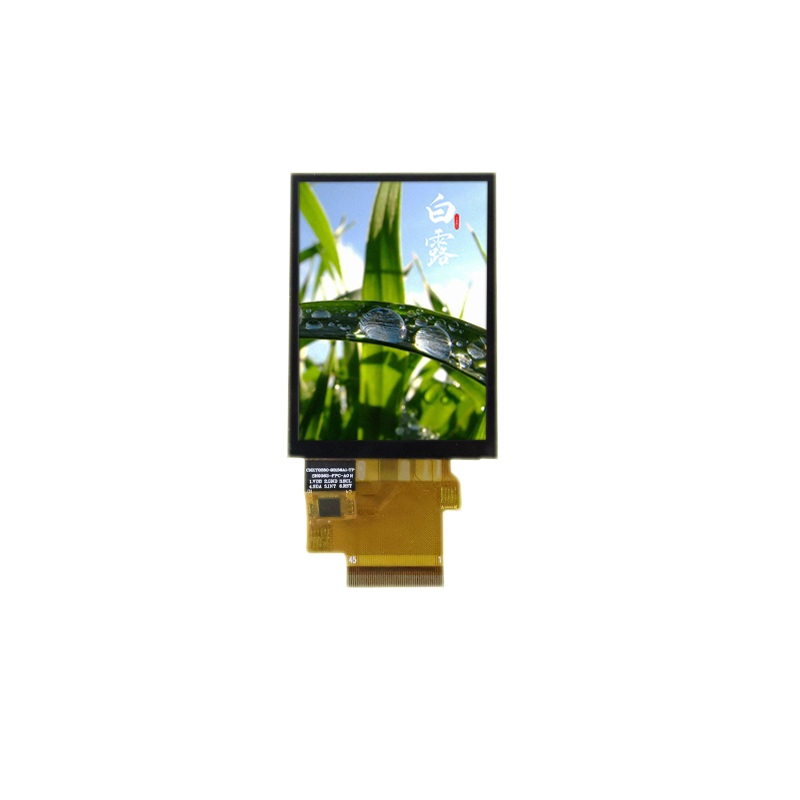
When you step outside with a tablet or a handheld meter, the screen can become a mirror of the sky, washing out critical readings. It’s not just about brightness—though that’s part of it—it’s about how the display handles the sun’s relentless punch. Engineers have moved past simply cranking up the backlight; they’re now bonding layers of glass and polarizers directly to the LCD, cutting reflections at the source. The result is a deeply visible display even under direct noon glare, without chewing through the battery like older high-nit panels.
The real art lies in optical bonding and anti-glare treatments. By filling the air gap between the touch sensor and the display with a resin that matches the refractive index of glass, manufacturers slash internal reflections that wash out contrast. Coupled with a slightly etched or coated front surface, the screen diffuses ambient light instead of bouncing it back as a perfect mirror. It’s a delicate balance: too much etching and the display turns hazy; too little and you’re squinting at your own reflection. The best implementations manage to look almost like printed paper, even when the sun is blazing.
Colour fidelity under sunlight is another frontier no one talks about enough. Many high-brightness panels push whites to the point where colours wash out, turning a vibrant map into a pastel mess. Newer transflective and reflective LCD technologies mix ambient light with the backlight selectively, preserving saturation without demanding 2000 nits. In the field, that means a weather radar or a machinery diagnostic screen keeps its reds red and its blues distinguishable—details that matter when you’re making split-second decisions with nothing but sky above you.
Wide-Angle Views Without Quality Loss
Capturing a broad scene often forces trade-offs between field of view and image sharpness, especially in compact devices. Our approach sidesteps the usual compromises by pairing a precision-engineered lens array with advanced computational correction. This means you can take in an entire city skyline or a sprawling interior, and every detail—from the center to the far edges—remains crisp and true to life.
Conventional wide-angle setups tend to introduce softening at the periphery, along with color fringing or unwanted distortion. We’ve built a system that reads the scene in real time, mapping and adjusting for those imperfections on the fly. The result is a wide perspective that feels natural, not stretched or artificial, preserving the textures and tonal subtleties that give an image its depth.
Whether you’re framing a landscape or an architectural shot, you’ll notice the consistency across the entire image plane. Fine patterns, distant subjects, and subtle lighting transitions stay intact, so you don’t have to choose between a wider view and the clarity you’d expect from a standard lens. It’s wide-angle, just without the usual penalty.
High-Resolution Panels for Detailed Imagery
When every subtle texture and nuance matters, high-resolution panels transform how we experience visual content. They bring out the fine grain in photographic prints, reveal hidden brushstrokes in digital art, and ensure that intricate architectural plans are rendered with absolute precision. By packing millions of pixels into tightly engineered surfaces, these displays eliminate the softness that often plagues lower-density screens, making even the most complex patterns appear crisp and lifelike from a normal viewing distance.
The shift toward ultra-high-definition panel technology has redefined expectations across creative industries and beyond. Physicians can scrutinize medical scans with unprecedented clarity, while designers can fine-tune interfaces without second-guessing aliasing artifacts. It’s not merely about larger numbers—it’s about achieving a seamless viewing experience where the eye naturally blends individual dots into a continuous, immersive image. This level of fidelity invites closer inspection rather than demanding viewers step back, changing how we interact with every form of detailed imagery.
Rugged Builds That Withstand Harsh Environments
When you're working in extreme conditions, from dust-choked deserts to freezing arctic tundra, the last thing you need is equipment that flakes out under pressure. That's where machines with truly rugged construction come into their own. Every seam, gasket, and connector is engineered to keep out moisture, fine particles, and temperature swings that would wreck ordinary gear. These aren't just off-the-shelf parts slapped into a sturdy-looking housing—each component is selected for resilience, often tested well beyond what any sane person would put them through in the field.
Take the chassis, for instance. It might be crafted from high-grade aluminum or reinforced composites, designed to absorb shocks and resist corrosion without adding needless bulk. Sealed ports and military-grade connectors ensure that rain, mud, and accidental submersion don't turn into a repair bill. And the screens? They're often optically bonded and hardened, so they stay readable even when you're dealing with glare or wearing gloves. It's this obsessive attention to detail that separates a tool you can depend on from one that's just a liability when you're miles from the nearest workshop.
Beyond the physical armor, the internal layout matters just as much. Components are often mounted on shock-absorbing cradles, with thermal management that can handle continuous full-load operation in a sweltering engine room or a sunbaked worksite. Batteries might be swappable in seconds without tools, because downtime isn't an option. The result is gear that feels almost boringly reliable—and that's exactly the point. When you're out there doing real work, a machine that doesn't demand constant babying isn't just convenient; it's the difference between finishing the job and packing it in.
Seamless Touch Integration for Interactive Displays
Modern interactive displays have moved beyond basic touch panels. They now integrate sensing layers so finely that the boundary between screen and touch vanishes. Every tap, pinch, or slide is recognized instantly, creating an experience where you aren't aware of the technology mediating your actions. It simply responds as you'd expect, whether you're sketching a diagram or flipping through a product gallery.
Behind this fluid interaction is hardware that registers multiple points of contact with minimal latency, and algorithms that interpret intentional gestures from accidental brushes. The integration extends across the entire surface, including corners and edges, so nothing feels like a dead zone. Calibration is often automatic and transparent, meaning the setup remains accurate without user intervention, even in bright environments or when the display is jostled.
The result is a natural extension of how we use our senses to interact with the world. In collaborative workspaces, teams gather around and manipulate content simultaneously without lag or confusion. In retail, customers browse with the same ease as handling physical objects. The technology doesn't demand attention; it disappears, leaving only the content and the conversation it invites.
FAQ
Resolution and color accuracy are the heavy hitters, but don't overlook brightness and contrast. For anything outdoors or well-lit, you'll want at least 800 nits. IPS-type panels give you wider viewing angles, which is a lifesaver if the screen isn't always straight ahead. Also, check response time if motion blur bugs you.
Absolutely. Brands like Innolux and AUO offer panels that straddle multiple worlds. The Innolux G121XCE-L01, for instance, hits 1024x768 with LED backlighting and a 25ms response—fine for most non-gaming tasks. It's used in medical monitors and kiosks alike. Look for models with wide temperature ranges and robust build quality; they'll take a beating without losing picture quality.
It's a trade-off. OLED gets you perfect blacks and higher contrast out of the box, but TFT LCDs have matured—especially with wide color gamuts and quantum dot enhancements. A good TFT won't suffer from burn-in and often costs less for the same size. Plus, if you're displaying static content like dashboards or menus, TFT is more durable over the long haul.
Definitely. Smaller panels, like the 5-inch or 7-inch ones from Waveshare or Newhaven Display, pack 800x480 or even 1024x600 pixels and connect easily via HDMI or RGB interfaces. They often come with touch overlays and driver boards included. Just confirm the driver IC has good documentation so you're not reverse-engineering half the setup.
It changes everything. LED backlights are standard now—cooler running, more efficient, and they deliver better color saturation than older CCFLs. For top-tier vibrancy, look for units with WLED or even full-array local dimming, though that's rarer in smaller displays. The backlight's uniformity matters too; clouding or edge bleed kills an otherwise solid panel.
Plenty. Pinout mismatches are the first hurdle—older systems might use parallel RGB while newer panels run LVDS or MIPI. You might need a converter board. Also, timing controllers can be finicky if the LCD's resolution and refresh don't align with what your device expects. Always grab the data sheet and double-check signal levels; 3.3V logic doesn't play nice with 5V by default.
Ingress protection and wide operating temperature. Look for panels rated IP65 or higher if dust or moisture is a concern. Industrial-grade displays often list -20°C to 70°C operation. Optical bonding between the glass and LCD cuts reflections and prevents condensation inside. And don't ignore the touch sensor type—resistive works with gloves, PCAP offers multi-touch but can act up if water hits the screen.
Conclusion
TFT LCD technology has evolved to meet the demands of virtually any setting, blending rich color, robust design, and responsive touch capabilities. For professionals in graphic design or video editing, panels with exceptional color accuracy eliminate guesswork, rendering true-to-life hues straight out of the box. Meanwhile, outdoor applications benefit from high-brightness, optically bonded screens that cut through glare, staying readable even under direct sun. Viewing angles have also become a non-issue thanks to advanced liquid crystal alignments, ensuring consistency whether you look head-on or from the side—no washed-out tones or contrast shifts.
Beyond visual excellence, these displays are built to last. Reinforced glass, sealed bezels, and wide temperature tolerances let them thrive in factory floors, kiosks, and vehicles where dust, moisture, and vibration are daily realities. For interactive use, integrated touch technology responds effortlessly to fingers, gloves, or stylus, enabling smooth navigation in public signage, medical devices, or industrial controls. The combination of razor-sharp resolutions—often 4K or higher—with rugged build quality gives engineers and designers a platform to present every detail confidently. From sleek indoor interfaces to weather-beaten outdoor installations, the right TFT LCD delivers crisp, vibrant visuals without compromise.
Contact Us
Contact Person: Vincent
Email: [email protected]
Tel/WhatsApp: 86 135 5485 1379
Website: https://www.jda-display.com/