

Best Turnkey Complete Cleanrooms for GMP Compliance and Efficiency
2026-09-10
Pharmaceutical cleanrooms are often judged by their certifications, but the real test happens every day when gowning protocols stretch thin and HVAC systems drift out of spec. Getting to GMP compliance—and staying there—requires more than a list of components; it demands a cohesive, turnkey approach that eliminates the gaps between design, construction, and validation. That’s exactly the philosophy behind GENO Pharmatech's complete cleanroom solutions. Instead of juggling multiple contractors and hoping everything aligns by audit day, you get a single, accountable partner focused on both regulatory rigor and operational efficiency. In this article, we’ll explore what makes a truly best-in-class turnkey cleanroom—and why the right build can transform your compliance posture from reactive to resilient.
Why Turnkey Cleanrooms Are Rewriting GMP Project Timelines
Traditional cleanroom builds often stall at the handoff between design, construction, and qualification. Turnkey delivery folds those phases into a single accountable team, so the people designing the air handling system are the same ones installing and testing it. That removes the usual back-and-forth over spec changes, RFI responses, and punch-list items that quietly adds months to a project.
Another reason timelines compress is that turnkey providers increasingly rely on pre-engineered modular components. Wall panels, ceiling grids, and HVAC skids are fabricated off-site while site prep moves forward. Instead of waiting for sequential trades to finish, crews can assemble a cleanroom shell in weeks rather than months, then move directly into certification without waiting for a separate contractor to schedule commissioning.
Perhaps the biggest shift is how validation gets embedded from day one. Turnkey teams build and document against GMP requirements continuously, so IQ/OQ protocols are drafted during construction, not after. By the time the last filter is scanned, much of the documentation is already complete, which cuts the traditional end-of-project paperwork bottleneck and lets qualified production start sooner.
The Hidden Costs of Choosing a Non-Compliant Cleanroom Shell
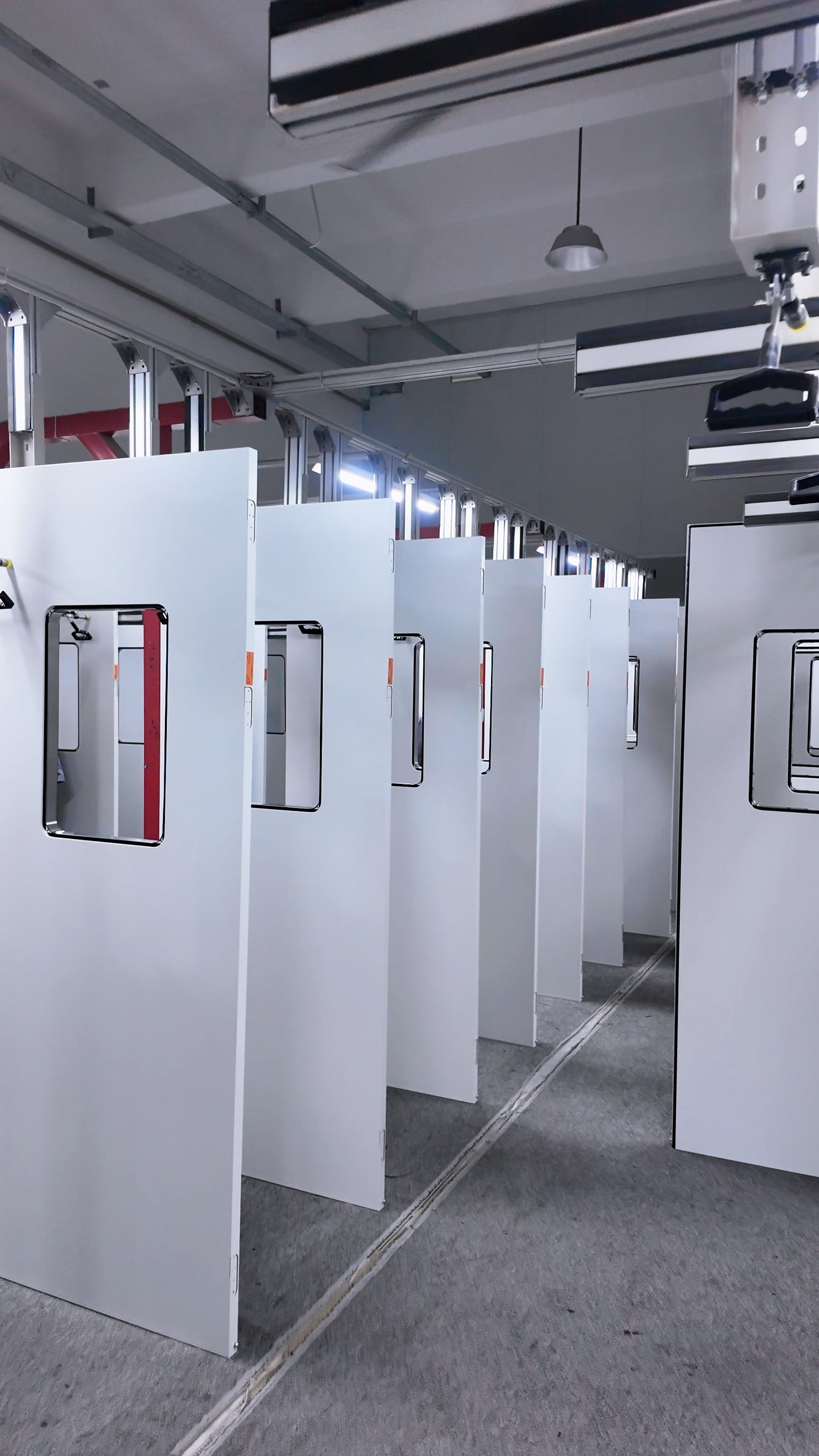
The initial quote for a non-compliant cleanroom shell often looks tempting, but that savings disappears quickly once the facility is in use. Walls that lack proper surface resistivity or have unsealed joints allow particle ingress and static buildup, forcing repeated shutdowns for cleaning and recalibration. Each unplanned halt means lost production time, idle staff, and emergency service calls that erode any upfront discount.
Beyond downtime, there are quieter expenses that compound over months. Poorly fitted doors, incompatible gaskets, and windows without the right fire rating can trigger failed audits or delayed certifications. Every deficiency has to be corrected under pressure, often at premium labor rates and with expedited material shipping. In regulated industries, a single nonconformance finding can also lead to formal investigations, additional documentation burdens, and closer scrutiny on future projects.
Perhaps the most overlooked cost is the long-term drag on performance. A shell that cannot hold pressure differentials or maintain temperature and humidity setpoints forces the HVAC system to work harder, driving up energy consumption and maintenance intervals. Teams end up retrofitting or replacing components that should have been specified correctly from the start, turning a seemingly economical choice into a recurring operational liability.
How Modular Design Cuts Contamination Risk Before Validation
Modular systems limit contamination by keeping critical paths separate from the start. Each module can be sealed and tested individually, so a leak or flaw in one section doesn't automatically spread to the rest. This kind of compartmentalization means you're not waiting until the whole system is assembled to find out where particles or microbes might enter.
Because modules are pre-fitted with their own connections and barriers, there are fewer open interfaces during assembly. Fewer open interfaces translate to fewer chances for airborne or surface contaminants to get inside. You can also swap out or sterilize a single module without breaching the entire line, which is a practical advantage when you're still fine-tuning process parameters.
Early-stage validation becomes less of a guessing game when each module has clear boundary conditions. Instead of chasing contamination through a complex, fully integrated setup, you can isolate the problem to one block, replace it, and keep moving. This approach not only reduces risk but also speeds up the iterations that happen long before formal validation runs begin.
HVAC Choices That Make or Break Cleanroom Efficiency
Cleanroom HVAC success rarely hinges on a single grand decision. It lives in the tension between airflow volume, filtration integrity, and pressure cascade stability. Pushing air changes per hour beyond what the process actually demands inflates energy bills without improving particle counts, while undercutting them invites contamination that no amount of terminal HEPA coverage can fix. The smart move is to match air change rates to the cleanroom's ISO class and real particle generation sources, not to a generic checklist.
Another overlooked lever is pressurization control. A room that can't hold its differential pressure against adjacent spaces will leak unfiltered air through door gaps and pass-throughs, eroding the entire containment strategy. Variable speed drives on supply and exhaust fans, paired with fast-acting dampers, keep pressure stable during door openings and filter loading. Equally important is humidity and temperature stability—rapid swings force the HVAC system to work harder and can alter particle shedding from materials and personnel.
Finally, filter selection and maintenance schedules shape long-term efficiency. Overspecifying high-efficiency filters where they aren't needed adds static pressure and fan energy. Instead, use the right filter grade per zone and monitor differential pressure across filter banks to schedule replacements based on actual loading, not calendar dates. Duct sealing, coil cleanliness, and heat recovery systems round out the picture: small leaks and fouled coils quietly rob airflow, making even a well-designed cleanroom struggle to meet spec.
What a True Turnkey Partner Delivers Before Handover
A true turnkey partner treats the final weeks before handover as a working transition, not a deadline sprint. You should see a live, documented run-off that matches the original performance guarantees, including cycle time, output quality, and energy consumption. The numbers matter less than how openly the team responds when a test result falls short. If issues are dismissed or quietly adjusted, that tells you more than any certificate.
The paperwork you receive should feel specific to your facility, not pulled from a shared drive. Expect as-built drawings that reflect late-change orders, updated PLC program backups with version history, maintenance schedules tied to actual operating hours, and a spare parts list with lead times for critical items. Every permit, pressure test record, and electrical sign-off should be indexed so your maintenance crew can find it without contacting the vendor next month.
Training is another deliverable that separates a real partner from a vendor racing to invoice. The best handovers include hands-on sessions where your operators run the line under normal and fault conditions, and your maintenance team practices at least one unplanned recovery scenario. If the partner leaves before your people can explain the system in their own words, the project isn't done—no matter what the contract date says.
Future-Proofing Your Cleanroom for Changing GMP Regulations
Cleanroom designs locked into a single interpretation of GMP tend to age poorly. The better approach is to build in headroom for tighter particle limits, more frequent monitoring, and revised material flows without forcing a teardown. That means sizing HVAC capacity above today’s calculated loads, choosing modular wall and ceiling systems that allow reconfiguration, and keeping utility chases accessible for new sensors or sampling ports.
Regulators are moving toward continuous environmental monitoring and data integrity expectations that make paper logs look increasingly fragile. A cleanroom that can accommodate wireless particle counters, pressure differential sensors, and automated alarm routing without major retrofits will absorb those shifts more easily. It also helps to standardize change control around a living risk assessment rather than a fixed validation package, so reclassification of a room or a new grade requirement becomes an update rather than a crisis.
Material and personnel flows deserve the same flexibility. Built-in anterooms, pass-through chambers, and decontamination spaces that can switch between manual and automated cycles give you options when guidance changes. If you invest early in segregated mechanical zones and modular utility drops, you can shift a filling line or sampling area to a different grade without reworking the entire facility.
FAQ
A turnkey complete cleanroom bundles the controlled environment itself with all supporting systems: modular wall and ceiling panels, HVAC with HEPA or ULPA filtration, pressure differential controls, lighting, pass-throughs, specialized flooring, and environmental monitoring. The supplier handles design, fabrication, installation, certification, and final handover, so you receive a ready-to-operate room rather than a pile of parts.
Compliance is engineered from the first drawing, not bolted on later. Surfaces are flush and non-shedding, corners are coved or radiused, air change rates and pressure cascades are calculated for the target cleanroom class, and materials meet cGMP expectations. The validation package typically includes DQ, IQ, OQ, and PQ documents that trace design intent through final performance, which minimizes deviations during audits.
Efficiency comes from layouts that respect material and personnel flow, doors and pass-throughs placed to reduce unnecessary movement, monitoring systems that alert you before a parameter drifts out of range, and HVAC units with demand-based control to avoid wasted energy. Low-maintenance surfaces and quick-change filter housings also cut downtime during routine servicing.
Pharmaceutical manufacturing, biotech processing, medical device assembly, sterile compounding, and certain electronics or semiconductor operations see the biggest gains. Any operation that must demonstrate control over airborne particles and microbial contamination while keeping project timelines tight will find the coordinated turnkey model valuable.
A strong supplier delivers a full validation dossier alongside the physical build. That includes user requirement specifications, design qualification, installation and operational qualification protocols, and final performance qualification reports. Because documentation is generated in parallel with engineering and construction, internal quality teams avoid retroactive paperwork and can focus on process validation instead.
Turnkey does not mean off-the-shelf rigidity. You can specify cleanroom class, room dimensions, air handling capacity, number and type of monitoring points, door and window placement, pass-through configurations, and integrated utilities like vacuum or gas lines. The supplier adapts the modular design to your process flow, while still taking single-source responsibility for delivery.
Look beyond the brochure and check their track record with similar processes, whether engineering is done in-house or subcontracted, the depth of their validation documentation, and how responsive they are to mid-project changes. Ask for references from companies under the same regulatory framework, and clarify what post-handover support includes, such as spare parts, recalibration, or expansion assistance.
Conclusion
Turnkey cleanroom projects have quietly shifted from a convenient option to the smartest route for manufacturers facing tightening GMP timelines. Instead of juggling shell, mechanical, and validation contractors, a single accountable team compresses weeks of coordination into a coherent build. That speed only matters, though, if the shell itself meets regulatory expectations upfront. Cut corners on panel finishes, sealants, or pressure cascades and you inherit remediation costs that dwarf the initial savings. Modular cleanroom systems flip that risk by standardizing high-risk junctions and letting teams test containment logic before validation even begins. This pre-validation readiness is what keeps contamination control from becoming a last-minute scramble.
The less obvious efficiency gains come from HVAC decisions made early. Sizing air handlers for actual cleanroom class, not vague overdesign, prevents energy waste while keeping recovery times short. A true turnkey partner earns its fee in the final stretch: complete as-built documentation, filter certifications, and training that match what inspectors will ask for. And because GMP guidance evolves, the best installations leave spare capacity in fan walls, control points, and layout flexibility, so a future upgrade doesn't require ripping out what you just paid for. That is the difference between a cleanroom that passes today and one that stays compliant for a decade.
Contact Us
Contact Person: Amy Yang
Email: [email protected]
Tel/WhatsApp: 008619330882686
Website: https://www.genopharmatech.com/