

China Stainless Steel Ball Valve: Essential Guide for Industrial Buyers
2026-11-16
Sourcing stainless steel ball valves from China can be a maze of conflicting specs, vague quality claims, and price traps. This guide cuts through the noise, giving industrial buyers the practical checkpoints that actually matter—from material traceability to pressure ratings. Along the way, you’ll see why UPTAI has become a go-to reference for teams that refuse to gamble on fluid control.
Reading the Fine Print on Stainless Steel Grades Before You Commit
Stainless steel isn't a single material—it's a family of alloys where small differences in nickel, molybdenum, and carbon can mean the difference between decades of service and a costly replacement. Buyers often fixate on the familiar “304” or “316” labels without realizing that a grade's performance hinges on the exact chemical composition, finish, and even the mill's production methods. For example, a 316L with the same surface polish as a 304 may still corrode faster in a coastal installation if the molybdenum content sits at the low end of the allowable range.
Before you place an order, ask for the material test report rather than relying on a stamp or a sales rep's reassurance. Check the actual percentages of chromium, nickel, and molybdenum against the environment where the part will live—chloride exposure, acidity, or heat cycling can render a “stainless” grade useless if it's just barely meeting the spec. Also watch for finishing steps like passivation or pickling; skipping those can leave free iron on the surface and invite rust even on alloys that should resist it.
Why Some Chinese Ball Valves Outlast Others by a Decade
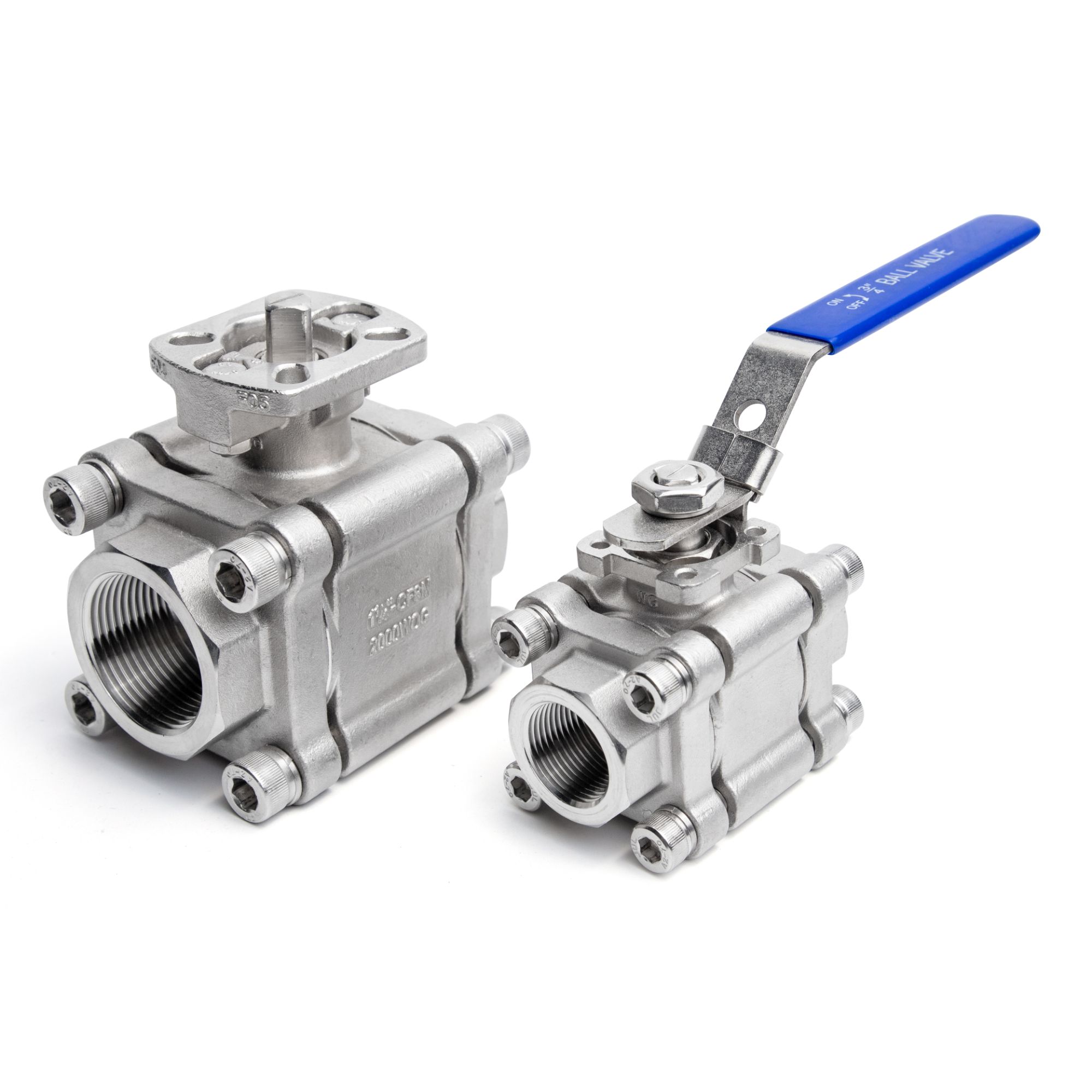
The longevity gap often starts with the raw billet. Many lower-cost Chinese ball valves use reclaimed or poorly alloyed brass or stainless steel, leading to micro-porosity and premature dezincification or stress cracking. In contrast, manufacturers that invest in spectrometric verification and use virgin 316 stainless or CW617N brass with strict traceability produce bodies and end caps that resist corrosion far longer. The difference isn't visible on day one, but after a few thousand cycles in aggressive water or chemical lines, it becomes obvious.
Machining tolerances and sealing material choices separate a five-year valve from a fifteen-year one. Some factories run CNC equipment without regular calibration, producing ball-to-seat gaps that wear out seals quickly. Others hold roundness within microns and pair mirror-finished balls with reinforced PTFE or PEEK seats. That combination maintains bubble-tight shutoff even after repeated thermal swings and high-pressure cycles. Add a properly designed anti-blowout stem and live-loaded packing, and the valve survives conditions that quickly destroy cheaper units.
There's also the matter of assembly discipline and testing. A valve that outlasts others by a decade usually comes from a line where every unit undergoes shell and seat pressure testing, not batch sampling. Workers use torque wrenches instead of impact drivers, and internal cavities are cleaned to remove machining debris before final assembly. These practices cost more per piece, but they eliminate the early failures and slow leaks that plague commodity imports. Buyers who audit the factory floor rather than just comparing spec sheets tend to find those decade-long performers.
Pressure Testing Beyond the Factory Floor and What Buyers Overlook
Factory pressure tests are often treated as the final word, but they rarely mirror what happens once a system is bolted into place. Thermal cycling, vibration from nearby equipment, and uneven pipe loads introduce stress combinations that a controlled test bench simply does not recreate. Buyers who rely solely on the certificate from the production line may be signing off on a component that has never faced the conditions it will actually see.
The biggest blind spot is transient pressure behavior. Water hammer, sudden valve closures, and pump start-up spikes can push components well beyond their rated static pressure for fractions of a second. Most factory tests apply a steady ramp or hold a fixed pressure, which tells you little about how seals, joints, or housings will survive repeated shock loads in the field.
Long-term degradation is another area that gets overlooked. Corrosion, seal fatigue, and micro-leakage develop over months or years, not in the minutes a factory test takes. Smart buyers ask for evidence from real installations or test protocols that replicate cyclical loading and environmental exposure, rather than treating a one-time pass as a guarantee of service life.
Certifications That Actually Matter for Industrial Valve Orders
A shelf full of generic ISO certificates won't stop a stem leak or a seat failure. What actually protects industrial valve orders are certifications tied to specific failure modes, not just quality management. API 6D gives you a solid design and testing baseline for pipeline valves, but it says nothing about fugitive emissions. If you're moving volatile fluids, ISO 15848 is the one that keeps inspectors off your back. In chemical or petrochemical plants, PED and ATEX often outweigh a dozen ISO 9001 badges, because they address pressure boundary safety and explosive atmospheres directly.
Fire-safe and sour-service ratings are where many buyers get burned. API 607 or API 6FA certification matters if the valve sits anywhere near a fire zone, and you need the full test report, not just a certificate number. For wet H2S or sour gas, NACE MR0175 / ISO 15156 compliance is non-negotiable, yet plenty of orders fail because only the body material meets the standard while the trim or bolting does not. If the valve operates in a safety instrumented function, ask for the SIL capability certificate and proof of prior-use data, not a brochure claim.
Match the certification to the operating envelope instead of collecting certificates like stamps. Oxygen or chlorine service calls for specific cleaning and compatibility documentation, which most generic API specs don't cover. In the EU, pay attention to the PED category and module, because a lower-risk classification changes the conformity assessment route. And whenever a vendor says 'certified to' instead of 'certified by', request the actual test lab report and the scope of certification. That's the only way to confirm the valve's pressure class, size range, and temperature limits were really covered.
Lead Time Realities When Ordering Custom Flanged or Threaded Ends
Most people assume a custom flange or threaded end is just a quick turning job. The reality hits when you place the order and learn the forging blank hasn't even been scheduled yet. Exotic materials like duplex stainless or nickel alloys often have their own melt wait before machining can start. Even when raw stock exists, non-standard flange dimensions—sealing face geometry, bolt circle oddities, unusual OD-to-thickness ratios—force the shop to abandon standard fixtures and cutters, which quietly eats into the clock.
Threaded ends carry their own hidden delays. If the spec calls for anything beyond common NPT, BSPT, or SAE straight threads, the shop may need to pull rarely used gauges from the toolroom and recalibrate them. Wall thickness also has to align with the pressure class of the mating pipe, so the sequence often becomes rough turn, thread chase, hardness test, and only then final inspection. One failed step sends the part back and the whole order slips.
The less obvious reality is that custom ends frequently wait for their counterparts. A valve body with a custom flange may not be finish-machined until the mating flange or pipe stub arrives, because nobody wants to own the tolerance stack-up. That turns delivery into a serial chain—forging lead time, then machining, then fit-up, then testing—not a simple sum of quoted days. Before you commit, ask whether the shop has same-spec blanks on hand, whether they already own the thread gauges, and whether they can absorb at least a week of process buffer. Otherwise the promised date is more wish than plan.
Spare Parts and Support as the Hidden Cost of Choosing Wrong
The sticker price on industrial equipment rarely tells the full story. A less obvious expense lurks in the availability and pricing of spare parts after the initial purchase. Some manufacturers design machines with proprietary components that force you back to their own supply chain, where a simple bearing or sensor can cost three times the market rate. Over a decade of operation, these inflated consumables quietly erode any upfront savings you thought you had secured.
Support responsiveness becomes equally critical when production lines stall. A bargain machine with a thin local service network means every hour of downtime stretches into days while you wait for a technician to fly in. Worse, some vendors treat after-sales support as an afterthought, leaving your maintenance team to troubleshoot through vague manuals and unreturned calls. The real cost of choosing wrong isn't just the part you replace—it's the revenue lost while the line sits idle.
Before signing off on a lower quote, ask the hard questions: What is the average lead time for common wear items? Are third-party replacements readily available, or are you locked into a single source? Does the vendor maintain regional stock or rely on overseas shipments? These answers often reveal that what looked like a cost-effective choice up front carries a long-tail liability that only grows with every unplanned stoppage.
FAQ
Confirm the exact material grade and its suitability for the process fluid. Request heat number traceability, a 3.1 material certificate, and pressure test reports. Check the pressure class and end connection dimensions against a recognized standard such as ASME B16.34 or ISO 17292. Also ask whether the valve features an anti-blowout stem and fire-safe design if the service is hazardous. A factory audit or sample inspection before bulk production is a practical way to catch quality gaps early.
When built to the same design codes, there is little functional difference. Many Chinese plants produce valves for global brands, so tooling and process knowledge are mature. The main variables are not country of origin but specification clarity and supplier discipline. Buyers should compare body wall thickness, ball and stem material, seat and seal options, and test certificates rather than assuming lower price means worse quality. State the operating pressure, temperature, and media clearly to get a genuinely comparable quotation.
CF8 (304) works for general water, air, and mild chemical service. CF8M (316) adds molybdenum and handles chlorides and many acids better. 316L reduces carbon for improved weldability and corrosion resistance after fabrication. For seawater or high-chloride environments, duplex grades like 4A or 2205 are common. Each grade behaves differently under temperature and stress, so specify the actual process conditions instead of simply asking for stainless steel.
It depends on the risk level. For standard water or HVAC service, factory test certificates and a pre-shipment photo report are often enough. For high pressure, toxic media, or critical shutdown service, use a third party such as SGS, BV, or TUV to witness pressure testing, check material identification, and review final documentation. The cost is modest compared with a failed valve in the field or a delayed project.
Automation accessories like electric or pneumatic actuators, solenoid valves, limit switches, and positioners can exceed the valve cost. Special packing for high temperature, NACE MR0175 compliance for sour service, degreasing for oxygen, cryogenic preparation, and extra testing all add cost. Then there are export packaging, palletizing, inland freight, and port charges. Ask for a line-item breakdown so you can compare supplier quotes on the same scope.
Request the minimum wall thickness values stated in the quotation, aligned with ASME B16.34 or the relevant product standard. Ask for casting heat numbers and radiographic or dye penetrant inspection reports for critical valves. Many suppliers will provide wall thickness measurement records if you ask early, but after production it is too late. A pre-production sample or first article inspection is an effective way to lock in the quality before the whole batch is cast.
A complete package typically includes a commercial invoice, packing list, bill of lading, material certificates to EN 10204 3.1 or 3.2, dimensional inspection records, shell and seat test reports, valve serial number list, and a conformity declaration. For special services, add welding procedure records, NDE reports, and operating manuals for any mounted actuator. Keeping the serial numbers tied to the test reports helps maintenance teams later.
Direct factory sourcing suits larger orders where you need custom design changes or tight technical control. Trading companies can be practical for smaller mixed orders, faster communication, or when the buyer lacks the time to audit multiple factories. Both channels can fail if you do not verify the actual production site and sample quality. Ask for recent export records, factory certifications, and the specific production line that will build your order.
Conclusion
Before you sign off on a Chinese stainless steel ball valve order, dig into the alloy composition rather than trusting a generic “304” or “316” label. Many failures trace back to lower nickel or molybdenum content that passes a quick glance but weakens under chloride exposure or thermal cycling. The valves that genuinely outlast competitors by a decade usually pair honest material certificates with internal geometry designed to avoid crevice corrosion, plus seats and seals chosen for the actual media, not just water. Ask for third-party pressure test reports from an independent lab; factory hydro tests at ambient temperature tell you little about performance at elevated temperatures or with repeated pressure spikes. Certifications worth demanding are not wall decorations—look for API 607 fire-safe approval, ISO 15848 fugitive emission ratings, and traceability to the specific heat number on the body and ball. If a supplier hesitates to share mill test reports or heat traceability, treat that as a red flag regardless of the price.
Custom flanged or threaded ends rarely ship as fast as a standard port valve, and lead time estimates often start counting only after the drawing is approved. Confirm whether the quoted eight weeks includes forging, machining, assembly, and sea freight or just the workshop schedule; many buyers get caught when the vessel booking adds another month. Beyond delivery, the real hidden cost is spare parts and after-sales support. A valve that matches your flange dimensions today becomes a liability if you cannot source an identical seat or stem packing two years later. Request a written commitment for spare kits, overhaul instructions, and a local contact who can answer technical questions without a ten-day email delay. The cheapest valve often turns expensive when you factor in downtime waiting for a nonstandard seat that only one factory can produce.
Contact Us
Contact Person: Adonis
Email: [email protected]
Tel/WhatsApp: 8615858822657
Website: https://www.uptaivalve.com