

China Switchgear: Key Innovations Powering Modern Power Systems
2026-08-30
China’s switchgear industry is rewriting the rules for modern power systems—think smarter fault interruption, smaller footprints, and grid resilience built for renewable-heavy loads. Among the companies driving this shift is Deepwill, whose innovations are catching the attention of engineers far beyond China. Here’s what’s changing, and why it matters for the future of power delivery.
From Mechanical to Solid-State: The Silent Shift in Fault Clearing
For decades, clearing an electrical fault meant watching a set of heavy contacts physically separate. The mechanical circuit breaker, with its springs, latches, and arc chutes, has been the default guardian of power systems. It works through visible, audible motion: a surge in current triggers an electromagnetic trip, the mechanism snaps open, and an arc is drawn, stretched, cooled, and finally extinguished. This process is reliable but not instantaneous. Contacts erode over time, the arc releases energy, and each interruption leaves a small scar on the device. Maintenance crews know the smell of burnt contacts and the routine of periodic inspection.
The shift to solid-state fault clearing changes that entire experience. Instead of moving parts, power semiconductors such as IGBTs or silicon carbide MOSFETs interrupt current within microseconds. There is no arc to manage because the current is simply switched off at a zero-crossing or forced into a snubber network. The operation is silent, with no flying contacts, no mechanical bounce, and no wear from repeated switching. This silence is not just acoustic; it represents a different philosophy. Fault clearing becomes a controlled electronic event rather than a physical break, allowing for much faster response and precise current limiting.
Yet the transition is not without complications. Solid-state breakers introduce conduction losses, leakage currents, and new thermal management challenges. They also demand a rethink of protection coordination, because traditional time-current curves based on mechanical inertia no longer apply directly. Adoption has been gradual, starting in DC microgrids, data centers, and renewable energy systems where speed and arc-free operation matter most. In these installations, the absence of an arc is not a minor benefit but a safety requirement, especially in battery storage or fuel cell environments. The shift is silent in more ways than one, but its impact on how we design and protect electrical infrastructure is only beginning to be heard.
Digital Twins Turn Switchgear into Self-Aware Assets
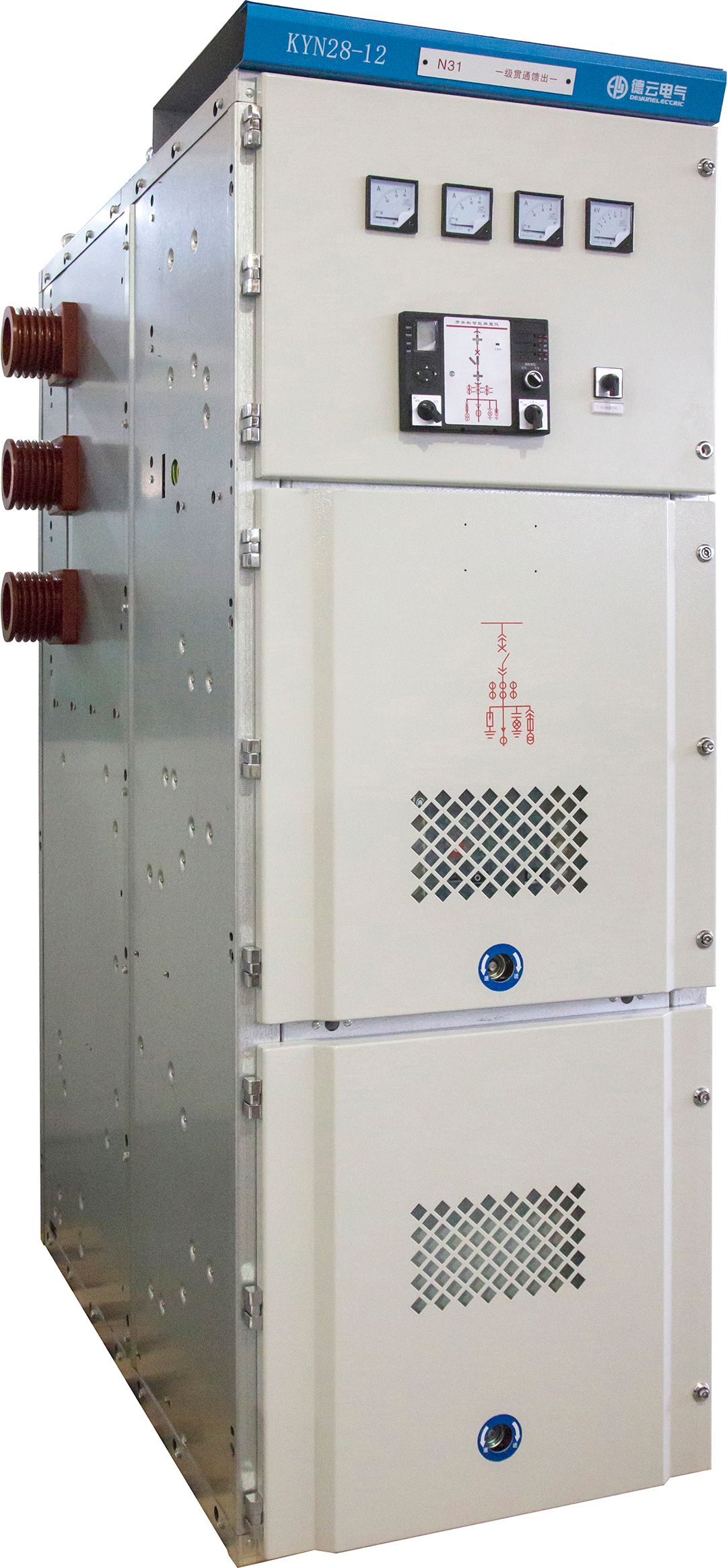
A digital twin gives a physical switchgear panel a living virtual counterpart that ingests real-time data from temperature sensors, partial discharge monitors, and breaker timing mechanisms. Instead of a static CAD model, this twin refreshes continuously, mirroring the actual condition of contacts, insulation, and operating mechanisms second by second. That turns a traditionally passive piece of electrical distribution equipment into an asset that can report its own health.
This self-awareness shows up in the ability to spot anomalies before they become failures. When thermal profiles drift beyond normal bands or contact wear accumulates faster than expected, the twin flags the deviation and can simulate the impact of continued operation. Maintenance teams stop relying on fixed calendar intervals and start responding to condition-based alerts, scheduling interventions only when the data says they are needed.
The result is fewer unplanned outages and longer asset life. Because the twin learns from historical load patterns and past fault signatures, its predictions sharpen over time. Engineers can query the virtual model instead of opening energized panels, cutting safety risks and inspection hours. Over time, self-aware switchgear becomes an active participant in grid resilience, adjusting to stress and revealing degradation long before it would surface in a routine walkthrough.
Beyond SF6: New Gas Mixtures and Vacuum Tech Cut Carbon
For decades, sulfur hexafluoride (SF6) has been the default choice for insulating electrical switchgear. Yet its heat-trapping ability is thousands of times stronger than carbon dioxide, which raises serious questions as grids expand. The search for cleaner alternatives has moved beyond incremental tweaks and into fundamentally different approaches.
New gas mixtures built on fluoronitriles or fluoroketones, blended with oxygen and carbon dioxide or nitrogen, now deliver the same dielectric performance with a fraction of the environmental burden. Manufacturers have validated these blends across a range of operating temperatures and pressure levels. The result is a drop in global warming potential of over 99 percent compared with SF6, without requiring a complete redesign of existing switchgear cabinets.
Vacuum technology takes the elimination a step further. Instead of finding a less harmful gas, it removes the need for any gaseous insulator in the interrupting chamber. Modern vacuum interrupters can handle higher voltages and short-circuit currents than ever before, and their sealed-for-life design means no refilling, no leak checks, and no end-of-life gas recovery. When paired with solid insulation systems, vacuum switchgear offers a carbon footprint that is effectively zero from the insulation side.
Plug-and-Play Modules Speed Up Grid Expansion
Grid expansion projects often drag on for years due to custom engineering, lengthy permitting, and on-site construction. Plug-and-play modules change that equation by shifting most of the work to controlled factory environments. Pre-assembled switchgear, transformer skids, and protection panels arrive on flatbed trucks ready for quick connection—no field welding, no piece-by-piece wiring, no drawn-out commissioning. Utilities can energize new substation bays or line extensions in weeks rather than seasons.
The real speed gain comes from design reuse. Instead of drafting unique layouts for every location, engineers select from a catalog of tested, standardized modules. A 138 kV feeder bay or a 34.5 kV distribution tap can be dropped into nearly any footprint with minor civil adjustments. This not only trims engineering hours but also reduces procurement risk, because components are already stocked and familiar to field crews. When a capacity crunch hits, the utility simply orders another module set and schedules a short outage—no multi-year capital project required.
Plug-and-play also accelerates grid expansion in constrained urban sites and remote corridors. Compact, factory-tested units minimize land disturbance and on-site labor, which eases permitting and community pushback. For rural electrification or renewable integration, modular substations can be deployed in phases: start with a basic transformer and protection module, then add feeders or reactive compensation as demand grows. The result is a grid that expands at the pace of actual load, not at the pace of traditional construction cycles.
Embedded Intelligence Flags Anomalies Before Outages
Buried inside the control loop, a lightweight inference engine watches the subtle drift nobody bothers to chart—bearing temperatures that creep a degree every shift, current spikes that arrive a half-second earlier than they did last month, vibration spectra that lose their usual harmonic order. It doesn't wait for a threshold to trip. It learns the machine's normal rhythm and raises a flag the moment that rhythm starts to break.
Those flags often look wrong to a human. A pump drawing slightly less torque on a Tuesday afternoon rarely triggers alarms, but the embedded model correlates that dip with a gradual rise in discharge pressure and a faint change in seal friction. Together they point to cavitation weeks before the first pitting appears. The real value isn't the alert itself—it's the head start. Maintenance teams stop reacting to smoke and start scheduling a repair during a planned lull.
By moving anomaly detection onto the device rather than shipping every sample to a distant server, the system keeps its ear to the ground even when connectivity drops. It stores only the moments that matter: the ragged start-up sequence, the strange harmonic at 3 a.m., the brief pressure flutter during a load change. These are the fingerprints of impending failure, caught early enough to matter.
High-Voltage DC Breakthroughs Connect Remote Renewables
Recent advances in high-voltage direct current (HVDC) transmission are finally unlocking remote renewable energy resources that were previously stranded by distance and grid constraints. Unlike traditional alternating current lines, which suffer from high losses and stability issues over long distances, voltage-source converter based HVDC systems can independently control active and reactive power, making them ideal for linking offshore wind farms or desert solar arrays to distant load centers. China's ±800 kV ultra-high-voltage DC projects, for instance, now move hydropower and solar from the western provinces to coastal cities along corridors exceeding 2,000 km, each line carrying up to 8 GW. These systems rely on modular multilevel converters that cut harmonic distortion and conversion losses, while also providing black-start capability that helps restore grids after major outages.
In Europe, multi-terminal HVDC grids are beginning to stitch together North Sea offshore wind with onshore networks across national borders. The NordLink interconnector between Germany and Norway runs 623 km as a ±525 kV submarine cable, rated at 1.4 GW, allowing Norwegian hydropower to back up German wind fluctuations and, in reverse, sending surplus wind to Norway's pumped storage. Such links not only raise renewable energy utilization but also deepen electricity market integration by smoothing price differences. A remaining technical hurdle has been the DC circuit breaker—conventional AC breakers cannot interrupt fault currents on a DC line. Hybrid DC breakers developed in the past few years can now open a 25 kA fault within 3 milliseconds, removing a key obstacle to building true DC grids. As a result, renewables in sparsely populated regions are no longer limited by local demand, and their output can reach consumers hundreds or even thousands of kilometers away.
FAQ
Chinese firms have moved beyond simply adopting IEC standards. They now push compact designs using vacuum interrupting technology and integrate sensors directly into primary components, so a single unit can measure current, temperature, and partial discharge without external devices. This convergence of primary and secondary systems is more aggressive than what's typically seen in Western products.
Instead of relying solely on SF6, several Chinese suppliers now offer switchgear using dry air or nitrogen-based insulation with vacuum interrupters. Some models use fluoronitrile mixtures, but the real shift is toward solid-insulated busbars and epoxy-encapsulated vacuum interrupters, which eliminate gas handling entirely and reduce lifecycle maintenance.
Many medium-voltage panels now ship with built-in edge computing modules. These gather data from embedded Rogowski coils and capacitive dividers, run local diagnostics for arc flash risk and contact wear, and push only actionable alerts to the SCADA system. This offloads the control room and makes predictive maintenance feasible without a full IoT platform rebuild.
Chinese switchgear designed for solar and wind farms often includes fast-acting vacuum circuit breakers with synchronization controllers. They handle frequent switching operations (some rated for 30,000 mechanical cycles) and integrate reactive power compensation interfaces. This reduces downtime during grid disturbances and helps meet grid codes for low-voltage ride-through.
Most Chinese suppliers already test for condensation, salt spray, and altitudes up to 4,000 meters as standard practice. Many products use conformal-coated electronics, sealed pole assemblies, and anti-corrosion aluminum alloys. For example, switchgear for offshore wind platforms uses double-layer enclosures with positive pressure ventilation to keep salt-laden air out.
Research institutes and a few commercial vendors are piloting silicon carbide-based solid-state breakers for low-voltage DC distribution and microgrids. These can interrupt faults in microseconds, far faster than mechanical breakers. While not yet standard in AC medium-voltage switchgear, the technology is being tested in data centers and electric vehicle charging hubs where arc flash must be minimized.
By combining multiple functions into single modules. For instance, a three-position disconnector and earthing switch integrated into one gas-filled tank reduces separate compartments. Also, side-mounted vacuum interrupters and plug-in cable connections allow front-access-only maintenance, so switchgear can be installed against a wall, shrinking substation building floor area by up to 30% compared to older designs.
Leading factories now use automated robotic welding for busbar joints and X-ray inspection of vacuum interrupter contacts. Some perform routine partial discharge testing on every panel, not just type tests. Additionally, digital twin models of each production batch let customers trace material origins and test settings, which is uncommon in many Western plants that only do batch sampling.
Conclusion
China's switchgear sector is moving beyond incremental upgrades into a rethinking of how fault interruption, insulation, and asset management work together. The gradual replacement of mechanical breakers with solid-state designs has quieted the arc, shortened clearing times, and reduced wear, while digital twin platforms now mirror each panel's thermal, electrical, and mechanical state in real time. Instead of reacting to trips, operators watch a live model drift from baseline and schedule service before equipment degrades. At the same time, the long reliance on SF6 is fading. New gas mixtures and vacuum interrupters are cutting global warming potential without sacrificing dielectric strength, and these changes are being proven across voltage classes from distribution to transmission.
On the grid expansion side, prefabricated plug-and-play switchgear modules are shortening substation commissioning from months to weeks, letting utilities match load growth and renewable connections more flexibly. Embedded intelligence adds another layer: current, temperature, partial discharge, and breaker timing data are processed locally to flag anomalies that would otherwise surface only as outages. High-voltage DC breakthroughs are then tying these pieces together, enabling long-distance links from remote wind and solar bases in the west and north to load centers along the coast. Together, these innovations push switchgear from a passive protective device into an active, self-diagnosing node that helps China's power system absorb more renewables without compromising reliability.
Contact Us
Contact Person: Julion
Email: [email protected]
Tel/WhatsApp: 8617351370631
Website: https://www.deyunelectric.com