
Compostable Bag Manufacturer Shares How to Choose the Right Compostable Bags for Your Business
2026-08-19
Most "compostable" bags on the market won't actually break down in a commercial facility—let alone your customers' backyard compost. As a manufacturer, CHALLENGE WOLVES has watched too many businesses get burned by misleading certifications and cheap fillers. This guide cuts through the noise so you can pick bags that truly meet your operational needs and sustainability goals.
Know Your Trash Before You Pick a Bag
Many people choose a trash bag by whatever is on sale or whichever box is closest, but the real starting point is the waste itself. Wet kitchen scraps, greasy takeout containers, and coffee grounds put different stress on seams than a bin full of dry paper or packaging. If you usually toss heavy, damp, or abrasive items, a thin liner will tear before it's half full.
Pay attention to the sharpest and heaviest thing you regularly throw away, not the average load. Chicken bones, broken glass, tin can lids, and even stiff plastic clamshells can puncture a bag that would otherwise handle a week of lightweight trash. Matching the bag's thickness and seam style to that worst-case item saves you from the annoying routine of double-bagging or wiping out a bin.
It also helps to note where the trash sits between pickups. A bag left in a hot garage or exposed balcony breaks down faster than one stored in a cool pantry, and odor control matters more in small kitchens. Once you know what goes in, how sharp it gets, and where it waits, picking the right bag becomes a quick habit rather than a guess.
Don't Trust Every Compostable Claim You See
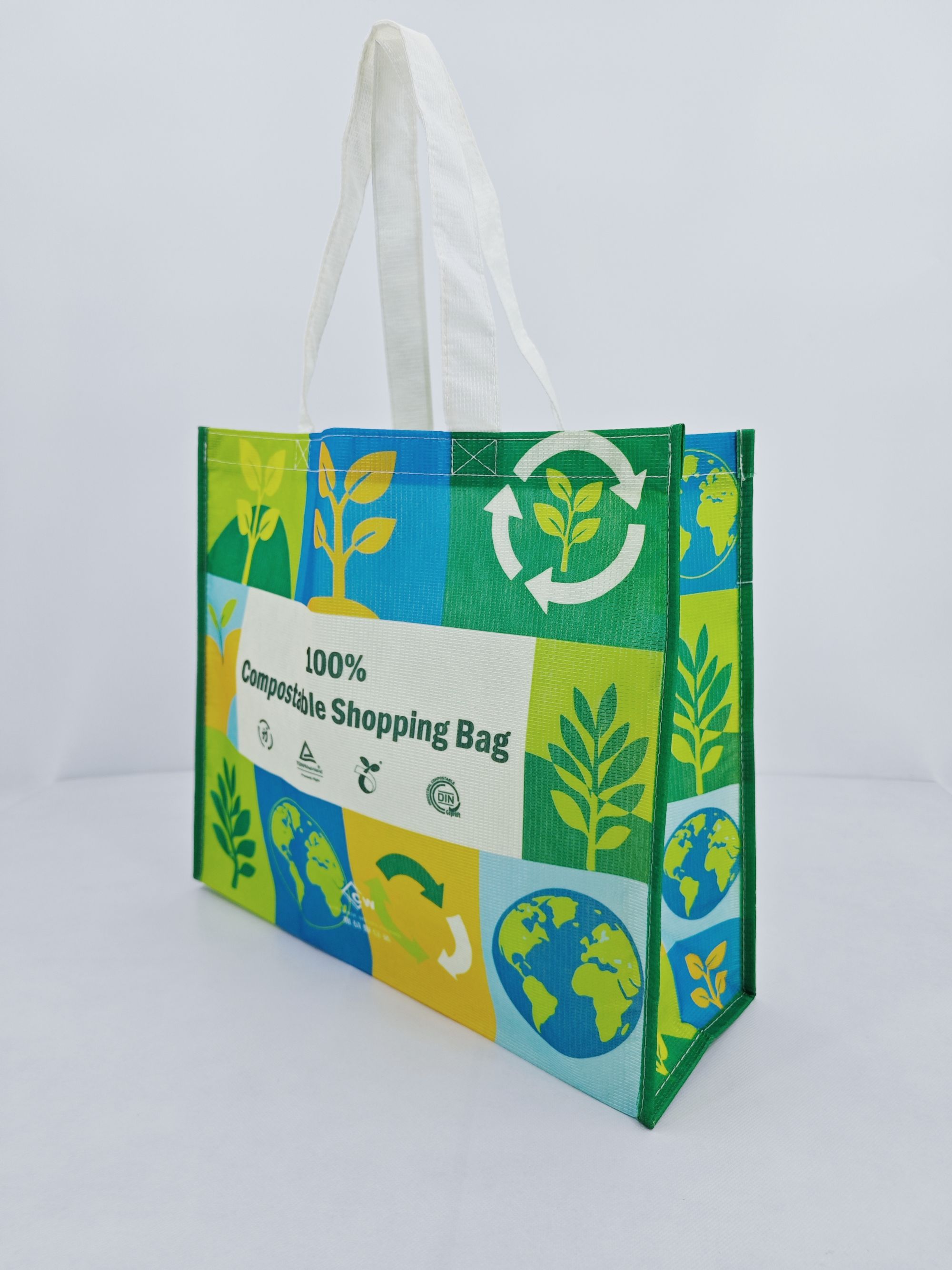
The word “compostable” gets tossed around like confetti at a parade, but the reality is far messier. Many products wear that label without ever having to prove they'll break down in a backyard pile or even a municipal facility. Some require industrial composting at temperatures your average heap never reaches, while others simply degrade into smaller bits of plastic instead of organic matter.
A quick glance at certifications can help, but even those aren't foolproof. Look past the green leaf icon and check whether the standard actually matches where your waste goes. If your city doesn't collect compostable packaging separately, that coffee cup lid will likely sit in a landfill for decades—same as its conventional cousin.
The real test is asking what happens after you toss it. Without the right infrastructure, a compostable claim is just marketing with extra steps. Next time you see that label, dig a little deeper before assuming it'll return to the soil.
Read Certifications Like a Skeptic, Not a Fan
A certification stamped on a product or website often triggers a quick nod of approval—but that nod is exactly the problem. Instead of treating a badge as a final verdict, ask what it actually took to earn it. Some certifications require little more than a fee and a self-reported checklist, while others demand independent audits, ongoing testing, and public transparency. The gap between those two paths is where mediocre claims hide.
Flip the usual question. Rather than asking, “Is this certified?” ask, “Who certified it, and what did they check?” Look for the certifying body’s reputation, its funding sources, and whether the standards are available for anyone to read. If the criteria are vague, the renewal process is automatic, or the logo appears without a link to a current certificate, treat it as marketing rather than evidence.
A skeptical eye doesn’t mean dismissing every certification—it means refusing to let a label do your thinking for you. Compare two products with the same badge but wildly different price points or performance records. Dig into one certification’s test results, then another’s. The goal isn’t to become cynical; it’s to keep the burden of proof where it belongs: on the claim, not on your willingness to trust a familiar icon.
Test Strength and Shelf Life Before You Commit
A label can boast all it wants, but the real proof is in how the product holds up over time. Before placing a bulk order, grab a sample and put it through its paces — flex it, rub it, expose it to light and moisture, and see if the adhesive still bites. Too many teams skip this step and end up with packaging that fades, peels, or loses its grip weeks after launch. Your packaging has to survive warehouses, shipping routes, and retail shelves, not just the first photo shoot.
Shelf life isn't just about expiration dates; it's about performance under real-world conditions. Test how the material reacts to temperature swings, humidity, and UV exposure. Check if the color shifts, the finish dulls, or the structure weakens. If a supplier won't send you samples for a stress test, that's a red flag. You need to see with your own hands how the packaging behaves after 30, 60, or 90 days — because once it's on the shelf, your brand's reputation is riding on it.
Don't fall for the "looks great today" trap. Run a side-by-side comparison with your current packaging or a competitor's option under the same conditions. Document everything: where it failed, where it surprised you, and how easy it was to recover. That data gives you leverage in negotiations and confidence in your final choice. In the end, a package that stays strong and sharp through its entire life cycle will save you money, returns, and customer complaints — far more valuable than a cheaper price tag up front.
Make Sure Your Composting Route Actually Works
Most composting failures are not caused by a bad recipe but by a route that quietly discourages use. Place the bin where you already walk, not in a far corner that requires a detour. Keep a small lidded bucket for kitchen scraps on the counter or under the sink, and make sure the path from that bucket to the main pile is short, level, and passable in slippers on a cold morning. If you have to unlock a gate, step over a hose, or search for a tool each time, the habit will fade within weeks.
Try the whole loop once before committing. Walk from the place you chop vegetables to the bin, open it with one hand while holding scraps, add dry material, and close it. Notice where you pause or reach for something missing. Then do the same for turning and harvesting finished compost. A route that works on paper often fails because a wheelbarrow cannot fit past a fence post or because the pile sits in a low spot that turns to mud after rain. Move the bin, not your willpower.
Seasonal shifts also change how a route feels. In hot weather a bin next to the back door may smell more than expected; in winter a shaded corner may freeze solid and become hard to reach. Choose a spot with some airflow but not direct blasting sun, leave enough room to turn with a fork, and store dry leaves or cardboard nearby in a covered container. The goal is to make the route so simple that on a tired Thursday night you will still take those ten extra steps instead of tossing scraps in the trash.
Watch for the Hidden Costs of Cheap Bags
The price tag on a cheap bag rarely tells the whole story. What looks like a bargain at the checkout often carries a stack of invisible expenses that surface weeks or months later. Zippers that snag, straps that fray, linings that tear—each little failure nudges you toward a replacement, and suddenly you've spent more than you would have on a well-made bag in the first place.
There's also the cost of your time and patience. A budget bag that falls apart mid-commute or on a trip isn't just an inconvenience; it's a stress you didn't sign up for. Repairs, if even possible, often cost nearly as much as the bag itself, and many cheap materials can't be fixed at all. The real price is measured in repeat purchases, wasted effort, and the quiet frustration of carrying something that doesn't hold up.
Consider too the less obvious expenses: cheap hardware that scratches your devices, poorly sealed seams that let in rain, or dyes that rub off on your clothes. These hidden costs don't show up on the receipt, but they erode the value of every item you carry. A reliable bag isn't an indulgence—it's a way to stop paying twice for the same problem.
FAQ
Start with the actual waste stream the bag will enter. If your bags will be collected with food scraps and sent to a commercial composting facility, they need to meet that facility’s incoming material requirements. Ask the hauler what certifications they accept before comparing bag specs. This step alone avoids buying bags that look right but get rejected at the processor.
Check for third-party testing under a recognized standard like ASTM D6400 or EN 13432, not self-declared claims. A manufacturer should be able to share lab reports showing disintegration and ecotoxicity results. One practical test is to ask if the bag has been composted in a real facility, because lab conditions can be more forgiving than the aeration and moisture levels at a busy site.
Yes. Food waste bags need enough puncture resistance to hold wet, heavy scraps without leaking, usually at least 18–22 microns for smaller bins. Retail bags can be thinner because they carry lighter, drier items. The resin blend also changes: bags for food scraps often use a higher share of PBAT for flexibility, while a stiff PLA-rich blend works better for a crisp carryout bag.
Not all logos mean the same thing. In North America, BPI certification is a strong signal for commercial compostability. In Europe, look for the Seedling logo or TÜV OK compost. Avoid generic 'biodegradable' claims without a standard attached. It is worth asking the manufacturer which certification body tested their product and whether the certificate is still current, because formulas change.
Many businesses assume home compostable bags will survive a commercial composting process or vice versa. Others over-order based on a lower price per bag without testing a sample in their own bins and climate. A frequent hidden mistake is storing compostable bags in hot, humid areas; they can start degrading before use and lose strength. Always request a trial roll and test it with your actual waste mix.
Look at the cost per filled bin, not per bag. A cheaper bag that rips and requires double-bagging or extra cleanup costs more in labor and lost product. Factor in storage life too: bags that degrade early from heat or moisture create waste. Request a landed cost including shipping and any customs fees, then compare that against the bag’s certified durability rating.
Ask for the exact resin composition and the percentage of biobased content versus fossil-based polymers, because some compostable bags still contain petroleum-derived PBAT. Request the current certification certificate, a sample roll for testing, and the recommended storage conditions. Also ask what happens if a batch fails a quality test—does the manufacturer replace it or issue a credit? A transparent manufacturer will share batch-level test data.
Conclusion
A compostable bag manufacturer advises business owners to start by looking closely at what they actually throw away. Different waste streams put different demands on a bag—food scraps with sharp bones need puncture resistance, while dry paper and lightweight packaging may only require a basic liner. Matching the bag to the real trash load prevents leaks and tears before they happen. But that's just the first step. The market is full of vague green labels, so treat every compostable claim with caution. A bag can say it breaks down, yet still leave microplastics or require industrial heat you don't have. Instead of trusting the front of the package, flip it over and read the fine print. Look for third-party certifications like BPI or TÜV, but read them like a skeptic: check which standard was tested, what conditions were used, and whether the certificate number is valid on the issuer's site. If a supplier hesitates to share test reports or hides behind buzzwords, walk away.
Before committing to a large order, test the bags in your own environment. Put them through a week of normal use—load them to typical weight, let them sit on a shelf for a month, and see if they tear, stretch, or start to degrade too early. Strength and shelf life matter just as much as compostability; a bag that falls apart before it reaches the bin creates more problems than it solves. Then confirm your composting route actually works. If your waste hauler only accepts yard trimmings and not food-soiled compostable bags, those compostable bags will end up in landfill. Call your facility and ask directly what they accept. Finally, watch for hidden costs in cheap bags. Low prices often mean thinner film, weaker seals, or a shorter shelf life, which forces you to double-bag or replace spoiled inventory. A slightly higher upfront cost usually beats constant reorders and customer complaints.
Contact Us
Contact Person: Tony
Email: [email protected]
Tel/WhatsApp: +8615859766913
Website: https://www.cw-pak.com