
Cooling and Automation System Factory Innovations for Smarter Industrial Operations
2026-09-02
Industrial cooling has long been treated as a necessary utility—quiet, predictable, and rarely noticed until something breaks. But what if it could think? In today's smart factories, the line between thermal management and automation is blurring, and the result isn't just lower energy bills. It's a new kind of operational intelligence. At THINKING-LONG, we're seeing how tightly integrated cooling and control systems can anticipate load shifts, self-adjust in real time, and even predict failures before they cascade. This isn't your father's chiller plant. It's a strategic edge hiding in plain sight.
Cooling Loops That Read the Production Floor
Most cooling loops still run blind. They circulate water or glycol at a fixed rate, responding only to a thermostat that might be three rooms away from the actual heat source. The production floor, however, tells a different story every shift — machines cycle on and off, batch processes spike thermal loads, and ambient temperatures drift with the seasons. A loop that can read these signals doesn't need to wait for a human to notice a hot spot. It adjusts flow, temperature, and sometimes even pressure in real time, matching the thermal demand exactly where it's generated.
The reading happens through a distributed set of sensors embedded at key points: supply and return headers, critical machine inlets, and occasionally on the tooling itself. These aren't just simple thermocouples anymore. Vibration, power draw, and even acoustic signatures can feed into the same control logic, giving the loop a sense of how hard each production cell is working before the heat even builds. One plant I visited had loops that learned the startup sequence of a large press line. The moment the first press began its warm-up cycle, the cooling system would pre-charge the header with slightly colder water, anticipating the spike instead of chasing it.
The result is a loop that behaves less like a utility and more like a colleague on the floor. It nudges flow rates down on slow shifts to save pump energy, then ramps up before the afternoon rush without being asked. Maintenance teams get a clearer picture too — a gradual rise in return temperature under the same load often signals fouling or a worn valve weeks before a failure. In the end, reading the production floor isn't about replacing human judgment. It's about giving the cooling system enough context to act on its own, within boundaries that operators still set.
Shared Brains for Motion and Refrigeration
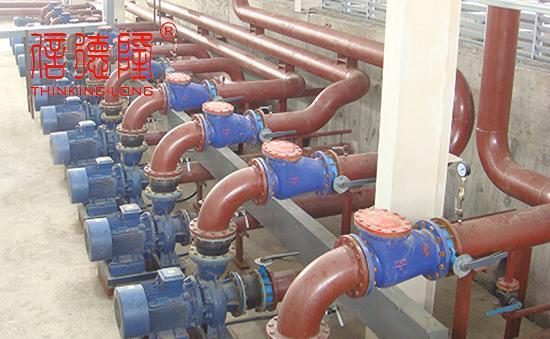
Designing a single controller to handle both motion axes and refrigeration loops sounds counterintuitive at first. Motion demands fast, deterministic updates every few hundred microseconds, while compressor and valve adjustments work on a much slower thermal timescale. Yet uniting them in one embedded platform removes the need for separate gateways and lets the system react intelligently across domains—for example, cutting motor acceleration when the compressor starts to pull excessive current, or pre-chilling a buffer tank during a high-speed pick-and-place sequence.
The real advantage shows up in how faults are interpreted. A pressure spike that once looked like a pure refrigeration issue might actually stem from a jerky motion profile shaking the piping. With both sides sharing the same control loop and logging subsystem, the correlation becomes obvious without exporting data to an external server. Developers also avoid the usual integration mess: no protocol converters, no duplicated safety interlocks, and no version mismatch between two firmware images.
In practice, this approach relies on a memory-protected real-time operating system that can partition hard real-time motion tasks from soft real-time thermal tasks. Shared memory keeps sensor values coherent, while watchdog timers ensure a runaway motor routine cannot starve the compressor controller. The result is a quieter, more energy-efficient machine where the motion and refrigeration subsystems are no longer tuned in isolation but as one responsive unit.
Predicting Thermal Spikes Before the Line Slows
Thermal spikes in manufacturing lines rarely announce themselves with flashing lights. They build quietly inside bearings, resistors, and motor windings long before a slowdown becomes visible to operators. The trick is catching the heat signature early enough to act, not just react. By tracking minute temperature deviations against baseline runs, subtle patterns begin to emerge—patterns that often precede friction-related downtime by hours or even days.
Rather than waiting for alarms to trip, advanced monitoring pulls data from embedded sensors at high frequency. The goal isn't to record a spike after it happens, but to recognize the pre-spike fingerprint: a slow drift, a periodic flutter, or a sudden tightening of the temperature range. Each tells a different story about wear, lubrication breakdown, or electrical resistance. Those stories matter because they give teams a window to adjust feed rates, schedule maintenance, or swap tooling before the line ever thinks about slowing.
On the floor, this shifts the conversation from “why did we stop?” to “what changed at 2:14 pm?” The data doesn't just flag anomalies; it connects them to specific process variables—ambient shifts, coolant flow, load changes. Once operators see how a few degrees here correlates with a stall there, prediction becomes less of a model and more of a habit. The line keeps its rhythm, and thermal spikes lose their surprise.
Reclaiming Waste Heat as a Second Utility
Most facilities still treat thermal exhaust as a nuisance to be vented, but a growing number of operators are reclassifying it as a usable resource. A glass furnace, for instance, throws off enough high-grade heat to preheat combustion air or generate low-pressure steam—savings that show up directly in the fuel bill. The trick is matching the temperature and volume of waste heat to a nearby need, whether that’s hot water for sanitation, space heating in adjacent buildings, or even driving an absorption chiller for cooling during summer peaks.
Once that match is made, the economics shift. Retrofitting a heat exchanger onto an existing exhaust stack often pays back within two to four years, and the equipment tends to be far less temperamental than the primary process it serves. Some plants go further by selling recovered thermal energy to neighboring businesses, turning a former liability into a standing line of revenue. District heating loops built around industrial clusters work particularly well because demand stays steady across multiple tenants.
The real barrier is rarely technical. It’s the accounting habit that separates “electricity” from “heat” and only counts the former as a utility. Once operators begin metering thermal flows the same way they meter kilowatt-hours, waste heat stops looking like a byproduct and starts behaving like a second utility—one that can be stored, traded, and dispatched when the price is right.
Self-Diagnosing Skids That Skip Unplanned Stops
Self-diagnosing skids change how maintenance teams approach uptime. Instead of waiting for a bearing to seize or a sensor to drift out of tolerance, the skid continuously checks its own subsystems—hydraulic pressure, vibration signatures, valve response times—and flags anomalies before they interrupt a cycle. That means an operator sees a clear alert on the HMI, not a sudden line stop at 2 a.m.
The real payoff shows up in unplanned downtime. A skid that can isolate a failing solenoid or a degrading pump gives technicians a head start; they arrive with the right part and a targeted procedure, rather than running through a generic troubleshooting checklist. Over time, those skipped stops compound into fewer overtime hours and steadier throughput.
On the floor, the difference is subtle but tough to ignore. Machines hold their rhythm through shift changes, and maintenance logs shift from reactive entries to short, scheduled interventions. For plants already running lean, self-diagnosing skids provide the kind of predictability you cannot get from a PM calendar alone.
Plug-and-Cool Modules for Fast Line Retooling
Reworking a cooling loop on a conventional line usually means draining fluid, cutting hoses, and waiting for a maintenance crew to re-route rigid piping. Plug-and-cool modules sidestep that entirely. Each unit snaps into a standardized manifold with self-sealing couplings, so operators can pull one module out and slide another into place without touching a wrench. The coolant path reconfigures itself as soon as the new module seats, and the old one can be parked on a nearby rack until the next product run.
What makes these modules practical for fast retooling is not just the quick-connect hardware, but the embedded flow logic. Every module carries its own flow restrictor, temperature pickup, and a small non-volatile memory that tells the line controller its flow curve and thermal limits. When a line switches from a thin-wall molded part to a thick casting, the new cooling module announces its parameters on insertion, and the system adjusts pump speed and valve positions automatically. No manual tuning, no guessing at pressure drops.
This approach also changes how plants plan changeovers. Instead of reserving a full maintenance window to replumb cooling circuits, a retooling team can stage pre-filled modules next to the line and swap them during a normal pause between batches. Because the modules are standardized, spares inventory shrinks to a few common sizes, and a failed module can be replaced in minutes rather than diagnosed over a weekend. The line keeps running, and the cooling system stops being the bottleneck.
FAQ
They combine adaptive control loops with modular hardware that can shift loads, isolate faults, and keep operating even when one section needs service. Instead of relying on fixed setpoints, these systems read temperature, pressure, and flow data continuously and adjust outputs before conditions drift out of range.
Variable-speed compressors and fans match cooling effort to the actual thermal load, so the plant never runs harder than necessary. Heat recovery circuits also capture waste energy from processes and reuse it for space heating or preheating water, which trims overall utility demand while keeping production steady.
Yes, most existing plants can be upgraded through gateways that translate legacy protocols into a common data format. This allows operators to add sensors, smart valves, and remote monitoring piece by piece, avoiding a costly full replacement while still gaining better visibility and control.
Live data feeds let the system spot subtle changes like rising vibration or a slow pressure drop that usually appear days before a failure. Maintenance teams get targeted alerts with suggested actions, so they can swap a bearing or clean a heat exchanger during planned pauses instead of dealing with a sudden line stop.
Critical functions run on separate safety-rated controllers that can shut down equipment even if the main automation network fails. Access is role-based, every command is logged, and the system enforces lockout procedures automatically, which makes audits and regulatory checks much less disruptive.
Modular skids and plug-in control cabinets let a facility add cooling capacity in smaller steps as production grows. If one module needs maintenance, the rest keep running, and spare modules can be swapped in quickly, which reduces both capital risk and downtime during expansions.
Engineers can configure the number of compressors, condenser types, and cooling tower cells to match a specific heat profile. Some projects use computational fluid dynamics to map airflow and hot spots, then tune fan speeds and water flow zone by zone so no area is overcooled or undercooled.
Many new designs use low-GWP refrigerants and closed-loop water circuits that cut both emissions and fresh water intake. Longer service intervals, remanufacturable components, and remote diagnostics also reduce truck rolls and material waste, which helps facilities meet environmental targets without extra reporting burden.
Conclusion
Modern industrial cooling has moved past fixed setpoints. Loops now read production floor signals directly—tracking line speed, batch changes, and even door openings—and adjust flow or compressor staging on the fly. By sharing a single control backbone between motion systems and refrigeration units, plants avoid the usual split-brain problem where conveyors run at one rhythm and chillers lag behind. The result is tighter temperature bands without oversizing equipment. Some installations go further: algorithms trained on historical load patterns flag thermal spikes minutes before they happen, so operators can pre-cool a tank or delay a non-critical cycle instead of watching a line slow down.
Waste heat, once dumped into cooling towers, is increasingly captured as a second utility—preheating wash water, feeding building heating loops, or driving absorption chillers for office spaces. Self-diagnosing skids take maintenance cues from vibration, pressure drop, and refrigerant charge trends, often ordering a filter change or flagging a leaking valve before it causes an unplanned stop. When a line needs to switch products, plug-and-cool modules let teams reconfigure cooling capacity in hours rather than weeks: standardized connections, embedded sensors, and automatic commissioning remove the need for custom piping or lengthy tuning. These changes don’t just save energy; they make cooling part of production planning rather than a background utility that gets blamed when things go wrong.
Contact Us
Contact Person: Qian Xijun
Email: [email protected]
Tel/WhatsApp: 8613961736750
Website: https://www.thinkinglong.com/