

Export Woven Geotextile Reliably for Global Infrastructure Projects
2026-11-20
Every infrastructure project relies on layers that rarely make headlines. Woven geotextile is one of them—until a delayed shipment or inconsistent roll stops a highway, port, or embankment schedule. Exporting it reliably means more than quoting a low price; it means matching technical specs, packaging, and delivery windows across borders without surprises. That is the standard WEN FENG STONE builds its supply chain around. Here is what to look for before your next global tender moves forward.
Grade Selection That Matches Real Subgrade Loads
Matching a grade to the actual subgrade load means looking past the design table and paying attention to how the ground really behaves under repeated stress. Soils that appear identical on a boring log can react differently once moisture moves through them, and a load that is spread evenly on paper may concentrate at the edges of a wheelpath in practice.
A more useful approach is to start with measured stiffness and drainage response rather than a single classification label. Plate load tests, dynamic cone penetrometer readings, and observations from nearby sections with similar fills often reveal more than a default conservative grade. If the subgrade shows non-uniform support or seasonal softening, the selected grade should reflect those conditions instead of assuming uniform bearing.
It is also worth resisting the habit of automatically choosing a heavier grade as a safety margin. Over-specification can create its own problems, including higher cost and a stiffer layer that does not flex with the soil beneath it. The goal is a grade that works with the real load pattern and the ground’s actual response, not one that simply exceeds a nominal requirement.
Custom Roll Sizes Built Around Regional Shipping Limits
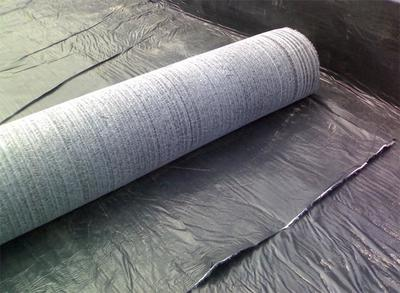
Roll widths and lengths rarely line up with what a freight carrier will accept without a surcharge. We treat shipping limits as design constraints, not afterthoughts. That means before a single roll is cut, we check the dimensional thresholds for the destination region and adjust the master roll size so your shipment stays within standard handling parameters. The result is a roll that still covers the square footage you need, but arrives without surprise fees or forced pallet rework at the dock.
Regional carriers do not share a single playbook. A roll that ships easily across Texas may exceed acceptable girth limits in the Northeast or trigger oversized handling charges in the Pacific Northwest. We keep a running matrix of these regional variances and use it to trim roll diameters, adjust core sizes, or split a large run into paired rolls that travel together without crossing the line. This lets you quote a job with confidence, knowing the freight class and handling fees will match the numbers on your estimate.
Sometimes the best solution is not a smaller roll, but a smarter one. We have built custom rolls with stepped cores, slightly reduced outer diameters, or non-standard lengths that fit neatly inside a carrier's published cube limits while preserving the same usable material. The only visible difference is that your receiving team spends less time fighting with a pallet that should not have been built that way in the first place.
Export Documentation Kept Boring and Border Ready
There’s a quiet kind of confidence in export paperwork that never surprises anyone. A commercial invoice that lists exactly what it should, a packing list with no creative flourishes, and a certificate of origin that matches every other document. That sameness is what customs officers rely on, and it is often what keeps a shipment from sitting in a warehouse while someone tries to decode an ambiguous description.
One mismatched code or a vague goods description can turn a simple border crossing into a week of emails, storage fees, and frustrated calls. Keeping documentation boring means refusing to leave gaps for interpretation. It is less about knowing every trade rule by heart and more about building a repeatable check: same data, same order, same units, same shipping terms, every time.
That kind of discipline doesn’t photograph well, but it clears borders. When a set of documents is predictable, an officer can process it without opening every carton or asking for clarification. The goal isn’t to impress anyone with complexity. It is to let the goods move through clean, consistent paperwork, so a shipment passes from origin to entry with as little friction as the rules allow.
Quality Checks That Happen Before the Container Leaves
Once the loading crew finishes stacking the last pallets, the real review begins. A supervisor walks the full perimeter of the unit, checking that the door seals compress evenly and that no rust or puncture marks compromise the panels. They compare the container number against the booking confirmation, then pull the left-hand door open to confirm the cargo bars and dunnage are still locked in place.
Inside, the focus shifts to what could shift during transit. Staff inspect the floor for nails, oil stains, or leftover debris from a previous shipment. They verify the internal temperature and humidity log if the cargo is sensitive, and they photograph the stowage arrangement from both ends. Any loose straps get re-tensioned, and the vent settings are adjusted to match the product's requirements before the doors close.
Finally, the exterior gets one last pass. The bolt seal and cable seal numbers are written down and double-checked against the manifest. A weight ticket from the yard crane is compared to the declared gross mass, and the twist locks are visually inspected for full engagement. Only after these checks are signed off does the trucker receive clearance to pull the container out of the yard.
Why Coastal and Desert Projects Demand Different Weaves
Coastal installations rarely fail from heat alone. The real threat is a mix of wind-driven spray, fog, and salt that settles into the weave. An open, monofilament-style construction gives moisture fewer places to linger and lets rain rinse chloride deposits before they harden. A dense weave does the opposite: it traps salty air against the yarns and nearby hardware, which accelerates pitting and turns the material stiff after a few seasons.
Desert sites invert that logic. Fine grit works like a slow abrasive, cutting into fibers and slipping through wide openings. A tighter weave built from tape or flat yarns blocks more of that dust while staying flexible enough to handle temperature swings. Ultraviolet exposure also plays a bigger role here, so the structure needs to resist long, direct sun without becoming brittle or losing tension.
The wrong choice is usually obvious within a year or two. A coastal weave collects salt crust and corrodes at the edges, while a desert weave rubs thin in patches and loses its shading ability. Matching the weave pattern to the environment keeps the same basic fabric from failing in two completely different ways.
Lead Times You Can Commit to in a Tender Bid
A credible bid lead time starts with the realities of your supply chain and shop floor, not with the number that looks most attractive on paper. Map the longest path before you commit: raw material availability, supplier lead times, production slots, testing, packing, and transport all stack up. If a critical component normally takes six to eight weeks to arrive, promising finished delivery in seven is not ambition; it is an avoidable contract risk. Where uncertainty exists, quote a range or tie the clock to a defined start point such as receipt of an approved drawing or advance payment.
It also helps to separate lead times by order size and configuration. A standard product pulled from inventory can carry a shorter commitment than a heavily customised build, and lumping them under one blanket figure tends to create problems later. State clearly whether the countdown begins at order acceptance, technical clarification, or deposit clearance, because that detail changes how the buyer reads the date.
Leave a buffer that is honest rather than padded. Buyers can usually sense an inflated date, but they will remember a missed one far longer. If certain materials or approvals sit outside your control, say which parts they are and what happens if they slip. The lead time you commit to should be one you would sign up to after winning the work, not one you hope will become possible once the contract starts.
FAQ
We add UV stabilizers during extrusion and seal each roll in opaque wrapping. On-site storage guidance also keeps rolls off the ground and covered until installation.
Port terminals, airport taxiways, highway embankments over soft soil, and access roads for wind farms. These sites need separation and reinforcement under very heavy cyclic loads.
Yes, we map the required values—tensile strength, elongation, puncture resistance—to ASTM, ISO, or EN equivalents and provide a compliance sheet for each destination.
The roll set is quarantined immediately and not released. We then re-test from both ends of the roll and review production records before deciding whether to rework or replace.
Production is cut with a small positive allowance, and each roll is checked on a calibrated measuring table. Shipping documents list exact net dimensions per roll, not approximate.
The base polymer is polypropylene or polyester, which resists biological degradation and most soil chemicals. For coastal use we recommend polypropylene because saltwater exposure has minimal effect.
Rolls are wound tight, strapped, and palletized with fork slots. For large-diameter rolls we can split the order into two shorter rolls to keep the handling weight under site crane limits.
We prepare the packing list, certificate of origin, and test certificates from the same order data file, then run a pre-shipment check against the letter of credit or contract before dispatch.
Conclusion
Shipping woven geotextile for infrastructure work across borders rarely fails because the fabric is weak. It fails because the grade was chosen from a catalogue instead of the actual subgrade loads, because the rolls were cut to a domestic truck width that cannot clear a port crane or a container door, and because the paperwork is treated as an afterthought. Reliable export starts with matching tensile and puncture requirements to what the ground will really carry, then cutting roll diameters and lengths to fit regional shipping limits without wasting container space or forcing repacking at the destination. The paperwork should stay dull: certificates of origin, packing lists, tariff codes, and test reports that match the physical rolls exactly, so customs has nothing to chase.
Coastal jobs and desert jobs do not want the same weave. Salt spray, tidal wetting, and wave run-up push for a heavier, UV-stabilised structure with strong seam retention, while desert sites with sharp angular subgrades and dry heat often need higher puncture resistance and a different polymer blend to survive handling before the aggregate goes down. Quality checks need to happen before the container leaves the yard, not on the client's site, and lead times should be quoted like a tender commitment, with buffer for mill scheduling, vessel cut-offs, and port congestion. When those details line up, the geotextile is not just sold; it arrives ready to install, on time, and without surprises.
Contact Us
Contact Person: Jennifer LEE
Email: [email protected]
Tel/WhatsApp: 8618553418999
Website: https://vip.e-baixing.com/wenfengshitong