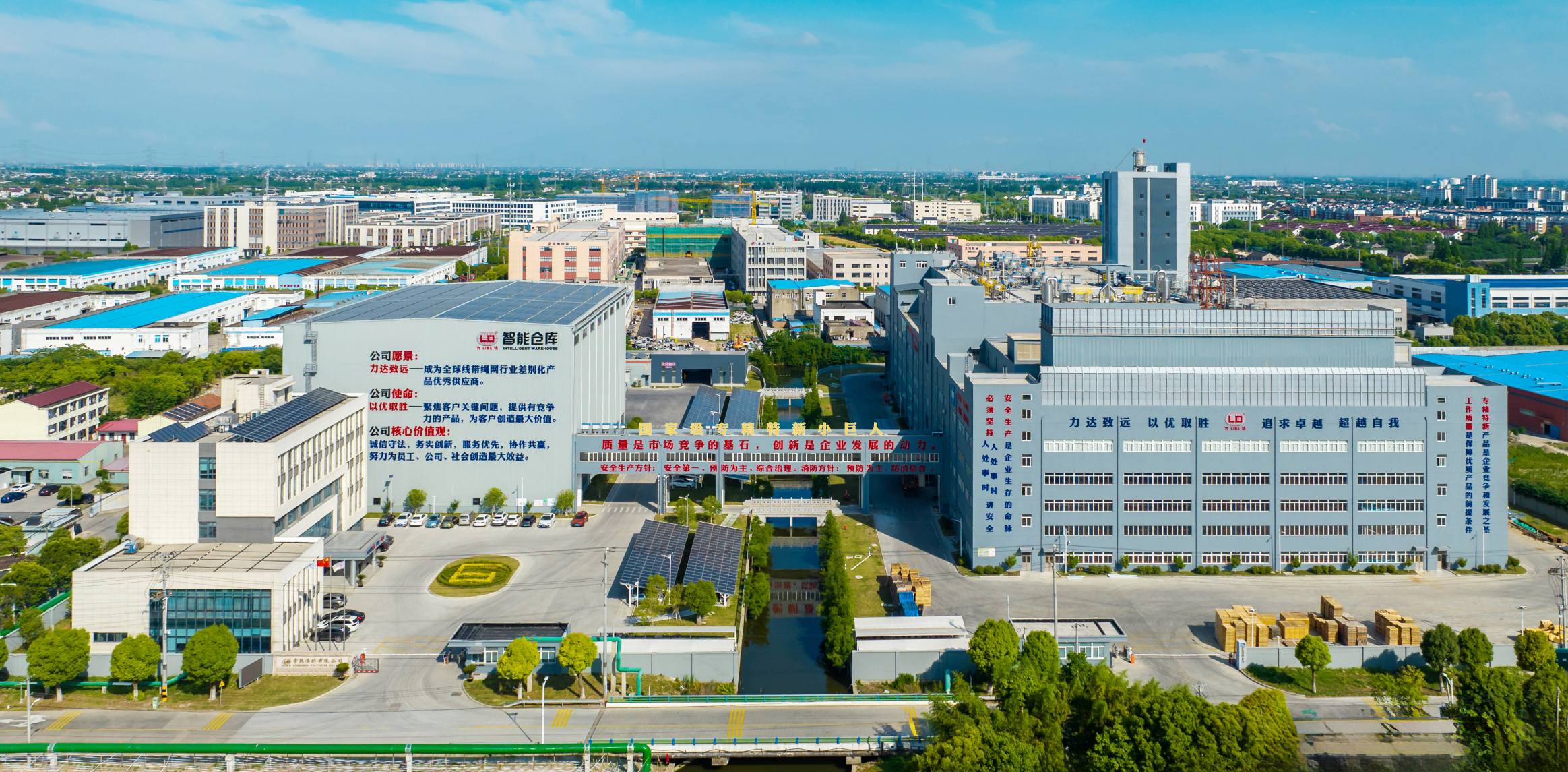

High Tenacity Nylon 66 Filament Yarn Manufacturer for Durable Industrial Applications
2026-08-31
When it comes to industrial-grade durability, not all nylon 66 filament yarns are created equal. High tenacity is the quiet force behind conveyor belts that never quit, heavy-duty webbing that shrugs off abrasion, and stitches that hold when everything else gives way. That’s exactly where Changshu Polyester steps in—not just as another supplier, but as a manufacturer obsessed with the tensile strength and consistency your toughest applications demand. But what really separates a premium yarn from a merely adequate one? Let’s pull back the curtain on the fiber engineering, production control, and real-world performance that explain why nylon 66 remains the backbone of industries that refuse to fail.
The Molecular Edge of Nylon 66
The repeating architecture of Nylon 66 locks in an unusually regular sequence of amide groups, separated by six-carbon spacers on both the diamine and diacid sides. This symmetry isn't just cosmetic; it allows adjacent chains to align with near-perfect register, maximizing the density of interchain hydrogen bonds. That dense network is what gives the material its stubborn resistance to deformation and its high melting point, setting it apart from less periodic polyamides.
Unlike Nylon 6, whose head-to-tail orientation leaves occasional loose ends in the hydrogen-bonding pattern, Nylon 66's alternating donor-acceptor spacing creates a more uniform crystalline lattice. The result is a polymer that retains stiffness at elevated temperatures and resists creep under sustained load. This molecular order also explains why Nylon 66 fibers have a crisper hand and stronger recovery after stretching.
However, the same polar amide groups that provide strength also pull in moisture from the air, subtly swelling the matrix and lowering the glass transition. Engineers have learned to work with this trade-off: pre-drying pellets before molding, or blending with stabilizers to protect the hydrogen-bonded backbone from hydrolysis. In demanding under-hood automotive parts or high-wear gears, that balance of hydrogen-bond rigidity and practical processability remains Nylon 66's quiet advantage.
Drawn for Strength, Spun for Consistency
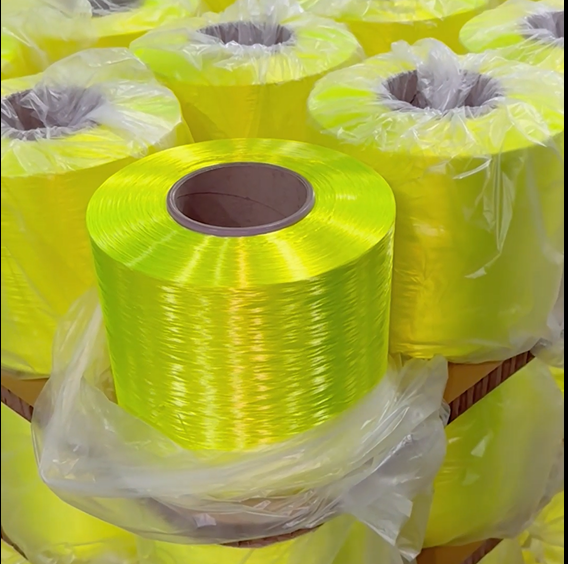
The drawing stage aligns the molecular chains along the filament axis, which directly boosts tensile strength without adding bulk. This isn't a surface treatment; the orientation happens throughout the cross-section, so the final thread resists breakage under load while keeping a lean profile.
Spinning then converts that drawn stock into a uniform strand, controlling twist and diameter within tight tolerances. Any inconsistency here shows up downstream as uneven tension, snags, or weak spots. By holding the spin parameters steady, the result handles the same on every run, from first meter to last.
From Conveyor Belts to Heavy Lifting Slings
Conveyor belts and heavy lifting slings rarely share a sentence, yet the leap from one to the other isn't as wide as it looks. Both rely on layered strength, abrasion resistance, and the kind of stitching that holds under strain. When a belt reaches the end of its hauling life, the core fabric often still has plenty of fight left.
That leftover toughness is exactly what makes the shift practical. Cutting a worn conveyor belt into strips, then folding and stitching those strips into reinforced loops, creates a sling that handles rough edges without tearing. The process isn't glamorous, but it keeps heavy loads moving in warehouses, ports, and rail yards where a snapped strap isn't an option.
Not every belt earns a second life this way. Splits, deep gouges, or heat damage weaken the layers beyond safe use. So the work calls for a sharp eye and a simple rule: if the fabric can still take tension without stretching unevenly, it's ready for the next job.
Custom Deniers and Twist Levels, Not Just Off-the-Shelf
Finding a supplier who can actually adjust denier and twist instead of pushing standard inventory changes how you approach fabric development. A 40-denier yarn with a low twist gives a completely different hand feel and drape than the same denier with a high twist, and that difference matters when you are building performance into a product from the start.
Think about a lightweight running shell. You might need a higher twist to keep the yarn compact, reduce snagging, and add a bit of mechanical stretch recovery. But for a next-to-skin base layer, the same denier with a softer twist creates more surface area and a warmer, less slick feel. Off-the-shelf options rarely let you make that call.
Working directly with a mill that offers custom deniers and twist levels means you can run small trials, adjust based on hand samples, and lock in a spec that fits your exact end use. It takes a little more time up front, but you end up with fabric that behaves the way you intended rather than settling for whatever happens to be in stock.
Batch-to-Batch Uniformity You Can Set Your Watch By
When a process drifts, even slightly, it shows up in the final product—shade differences, viscosity changes, cure times that don’t line up. We built our production line around the opposite idea: if you pulled samples from three separate batches produced months apart, you’d struggle to tell them apart without a label. That kind of sameness doesn’t happen by accident. It comes from locking down raw material specs, automating the critical mixing steps, and checking every batch against a reference standard before it leaves the floor.
The result is a rhythm you can rely on. No adjusting your downstream process because a new batch behaves differently. No re-qualifying materials every quarter. Just the same performance, batch after batch, like the ticking of a good watch—quiet, predictable, and something you stop thinking about because it never lets you down.
Less Replacement, More Uptime in the Field
The real cost of a failed component isn't just the part itself—it's the hours spent waiting for a replacement, the crew standing idle, and the schedule slipping further behind. Equipment that holds up under repeated load cycles keeps operations moving without those interruptions. By focusing on wear-resistant materials and tighter tolerances, manufacturers can push service intervals far beyond what traditional parts allow.
In field environments, every unplanned swap introduces another chance for misalignment, contamination, or installation error. Fewer replacements mean fewer opportunities for those problems to creep in. Components designed with longer fatigue life and better sealing don't just last longer—they preserve the integrity of the entire assembly, so uptime becomes the default rather than the exception.
Uptime isn't measured in days; it's measured in completed cycles, tonnes moved, or acres covered. When replacement frequency drops, logistics simplify, inventory shrinks, and maintenance teams can focus on inspection instead of constant part swapping. That shift changes the economics of field operations, making reliability a tangible advantage rather than a marketing claim.
FAQ
Its molecular structure gives it excellent tensile strength, resistance to abrasion and chemicals, and stable performance under sustained load.
Automotive, military, rope and netting, conveyor belting, safety harnesses, and geotextiles often depend on it for components that cannot fail under stress.
We monitor tenacity, elongation at break, and denier variation throughout each run, and sample from every lot before release.
Yes, we adjust denier, filament count, twist level, and surface finishes to match the mechanical and processing needs of each application.
Most industrial grades fall between 7.5 and 10.5 grams per denier, but exact values depend on the selected denier and end-use.
Nylon 66 generally offers higher melting point, better dimensional stability, and greater stiffness retention, which matters in hot or load-bearing environments.
We provide several spool sizes, tube types, and protective wrapping methods, and can match OEM labeling or barcoding requirements.
It is manufactured in-house on controlled extrusion lines and tested for linear density, strength, elongation, and visual defects prior to dispatch.
Conclusion
The backbone of any serious industrial textile starts at the molecular level, and nylon 66 earns its keep through dense hydrogen bonding between polymer chains. That structure gives the filament yarn a natural resistance to repeated flexing and shock loads, which is exactly what you need when a conveyor belt runs around the clock or a lifting sling hoists abrasive cargo. The manufacturer's job doesn't end at extrusion; controlled draw ratios align those chains to boost tenacity without killing elongation. The result is a yarn that feels consistent on the spinning line and behaves predictably under load, whether woven into heavy fabrics or twisted into multi-ply cords.
Customization is where off-the-shelf products fall short. Denier and twist levels tuned to a specific wear pattern—say, abrasive ore on a conveyor or saltwater exposure on a mooring line—prevent both overbuilding and early failure. The supplier's ability to hold batch-to-batch uniformity within a tight window is equally critical. Predictable specs let maintenance crews plan replacements around scheduled downtime rather than emergency repairs. Fewer change-outs and fewer surprise stoppages add up to more productive hours, which is the whole point of paying for a high-tenacity yarn in the first place.
Contact Us
Contact Person: CONNIE
Email: [email protected]
Tel/WhatsApp: 86-0512-53671634
Website: https://www.lida-yarn.com/