

Hybrid Servo Press Brake Supplier Evaluation Tips for Modern Manufacturers
2026-10-07
Choosing a hybrid servo press brake supplier today means cutting through a lot of noise. Every vendor promises precision, energy savings, and reliability, but the real differences only show up under scrutiny. For modern manufacturers, the evaluation process needs to go far beyond a quick spec comparison—it’s about understanding how a machine will perform five years down the line, how the supplier handles service, and whether the engineering truly matches your shop’s demands. That’s where many teams get stuck. In this post, we’ll break down practical tips to evaluate suppliers with confidence, and along the way, you’ll see why names like HUNSONE deserve a closer look rather than a casual pass.
Separating True Hybrid Servo Performance from Marketing Jargon
In the world of motion control, the term "hybrid servo" gets tossed around like confetti at a parade, but few suppliers actually deliver the closed-loop precision that the name implies. Real hybrid servos combine the simplicity of a step motor with the feedback and torque management of a servo drive, correcting position errors on the fly instead of just hoping the rotor landed where it was told. If a system can't survive a sudden load spike without stalling or losing steps, it's not a hybrid servo—it's a stepper with a fancy sticker.
The gap between claims and reality often shows up in the drive's current control. A true hybrid servo drive modulates current in real time based on encoder feedback, reducing heat at holding torque and boosting current only when the load demands it. Jargon-heavy marketing sheets will boast about "smooth motion" and "high efficiency," but without a proper servo loop and field-oriented control, those phrases are just noise. Ask a vendor to show you a live torque-versus-speed curve under variable load—if they hesitate, you've found the marketing line.
Another tell is how the system handles acceleration and deceleration. A genuine hybrid servo ramps velocity with closed-loop certainty, hitting target positions without overshoot or audible hunting. Imitation systems often mask their shortcomings with vague terms like "advanced damping" or "self-tuning," but they still vibrate on direction changes or lose accuracy when the workpiece weight shifts. True performance is measured in repeatability and cycle time under real conditions, not in a lab demo with a perfectly balanced flywheel.
What Frame Geometry and Ram Guidance Reveal About Long-Term Accuracy
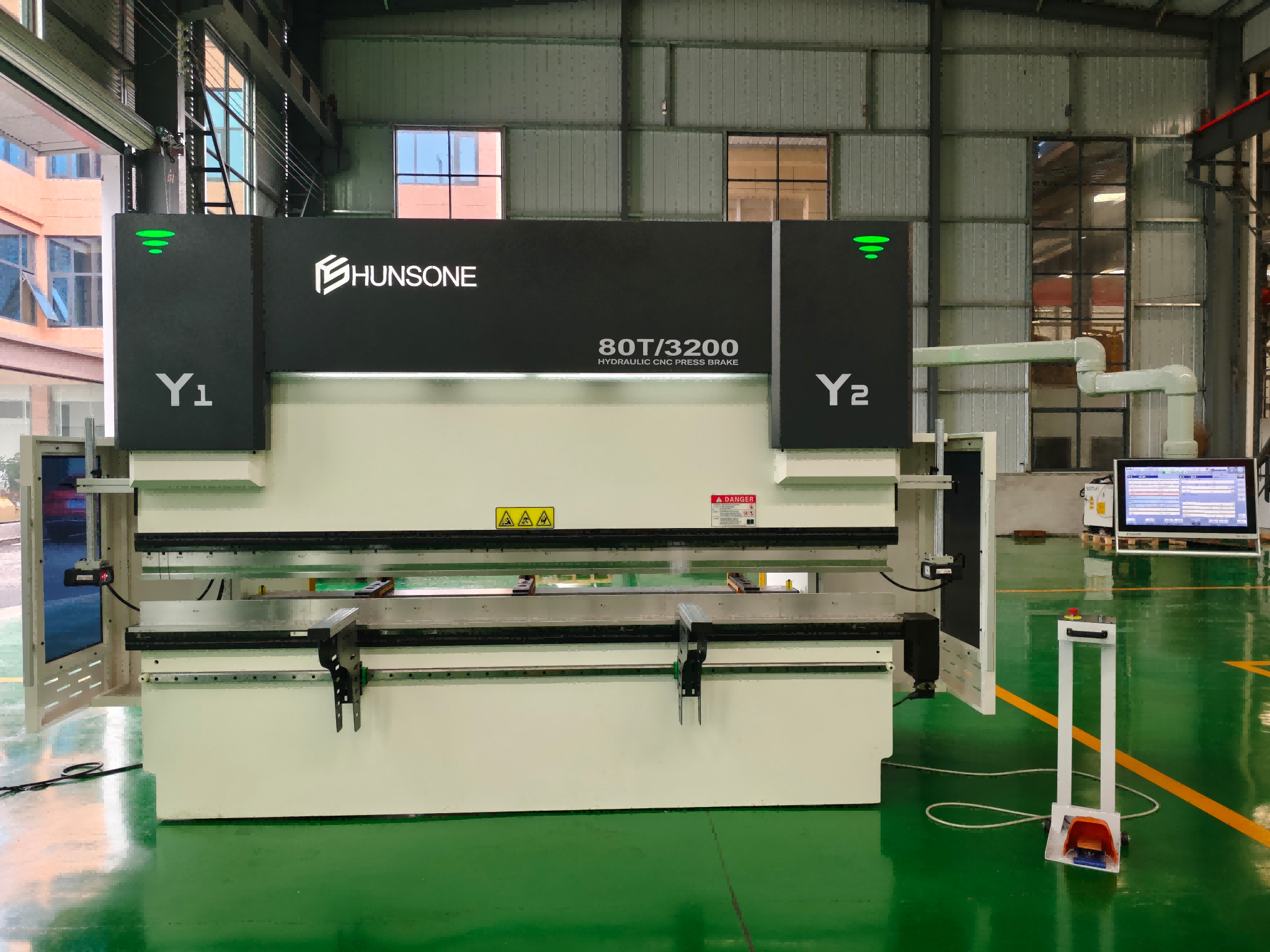
Frame geometry sets the baseline for how a machine behaves under load. A deeper bed and thicker side housings resist twisting, while open C-frame designs tend to breathe more at the throat, letting the bend angle wander from one end of the workpiece to the other. What matters over the long run is not the rated tonnage alone, but whether the frame deflection stays small enough to keep the tooling aligned despite repeated off-center loading and thermal growth.
Ram guidance plays an equally telling role. The moving beam follows rails or gibs, and any uneven wear there shows up as yaw or tilt that the control system cannot fully correct. Machines with narrow guide spacing or soft wear plates may hold tolerance for a few months, then drift as the clearance opens. Precise, well-lubricated guidance keeps the ram perpendicular to the bed, so the bend profile remains stable without constant shimming or electronic offset adjustments.
Together, frame stiffness and ram tracking reveal why some machines retain accuracy for a decade while others need frequent re-qualification. Real long-term precision comes from a rigid load path and guidance surfaces that resist wear, not from software that hides mechanical drift. If the structure itself moves or the ram tilts, no amount of angle correction will recover the original repeatability.
Control Software Complexity That Fits Your Actual Operator Pool
Most control software gets built for an idealized operator: someone with years of HMI experience, a patient disposition, and a tolerance for digging through three nested menus to change a single setpoint. That assumption quietly wrecks factories. Your actual operator pool might include a 20-year veteran who wants keyboard shortcuts and a temp worker on their second shift who still hesitates before touching anything. Complexity isn't a badge—it's a cost that shows up as slower line starts, more missed alarms, and workarounds that bypass the software entirely.
The practical move is to match the interface depth to the person standing in front of it, not the other way around. That means stripping the main runtime view down to the five or six values an operator actually needs to run the line, while hiding deeper diagnostics behind a clearly labeled advanced section. It also means respecting role differences: a supervisor may need override permissions that a line operator should never see, and a maintenance tech needs fault histories without the clutter of production dashboards.
When the software fits the operator pool you have—not the one you wish you had—training time drops, errors become easier to trace, and the system stops feeling like a hurdle. The goal isn't to dumb the controls down; it's to put the right complexity in the right hands at the right moment.
Parts Availability and Service Distance: Testing the Supplier's Local Footprint
When a machine goes down, the clock starts ticking. What matters most is not the supplier's global reach, but whether the right part sits on a shelf within a few hours of your site. We look at actual inventory placements, not just promised lead times. A local warehouse with empty bins is worse than a distant one that actually stocks the item.
Service distance shapes the true cost of ownership. A technician who can arrive before lunch prevents a minor fault from becoming a week-long shutdown. We ask suppliers for their real dispatch logs, not marketing maps. How many calls were closed same-day? Where do their vehicles park overnight? These details tell you if the local footprint is operational or just a sales office.
Testing the local footprint means walking the ground. We visit regional hubs, check shelf tags against their own inventory system, and talk with nearby customers about response times. A supplier may quote a four-hour window, but if their nearest depot is three hours away on a good day, the math fails quickly. The proof is in the last-mile delivery, not the brochure.
Idle Draw, Peak Power, and the Real Cost of Your Bending Schedule
Most shops only look at the kWh figure on the utility bill, but that number hides two very different cost drivers: what the machine pulls while sitting idle and what it demands at peak. Idle draw on a CNC press brake is rarely zero—hydraulic pumps stay warm, control systems stay live, and cooling fans keep spinning. Over a full week of staggered shifts, that background consumption can add up to more than anyone expects, especially if the machine is left powered through lunch breaks and shift changes.
Peak power is the sharper edge of the same problem. When every machine in the cell starts at the same moment, the facility's demand charge can jump, and that charge is usually based on the highest 15-minute average draw in the billing cycle. A bending schedule that staggers high-startup-current operations or avoids running multiple large drives simultaneously can reduce that peak without reducing throughput. It's not about using less energy overall; it's about not using it all at once.
The real cost of a bending schedule shows up when idle hours and peak events are left out of the planning conversation. A job that waits too long between bends keeps the machine awake for no productive reason, while a schedule that back-to-backs heavy lifts may create a demand spike that follows you for the entire month. Treating idle draw and peak power as schedule inputs, not afterthoughts, often saves more than chasing a slightly lower per-kWh rate.
Demo Day With Your Own Material: Non-Negotiable Checks Before Purchase
When you bring your own material to demo day, treat it as a live audit of the supplier's claims. Don't just watch the machine run—feed your material exactly as you would in production and note how it handles tension, heat, or blade wear. If a vendor hesitates to let you run your stock, that's already a red flag. Insist on checking thickness variance across the roll, not just a single swatch, because batch consistency often falls apart at the edges.
Color matching under showroom lights means almost nothing. Take the material to a window, then to the warehouse corner where lighting is poor, and check for metamerism. Run a fingernail across coated surfaces; if the finish lifts, it won't survive packing or end-user handling. Also ask for the exact mill lot number printed on the label and compare it to the sample you'll keep—never accept a verbal guarantee that 'production will match the demo.'
Before you leave the demo, write down the machine settings used, the ambient temperature, and who operated the line. If the supplier won't let you photograph the setup, that's non-negotiable too. Bring your own scale and calipers; don't borrow theirs. Any spec you can't verify on the spot—like tensile strength or chemical resistance—gets locked into a purchase contract with a penalty clause, not a polite email promise.
FAQ
A solid drive system pairs a servo motor with a hydraulic pump to deliver high responsiveness at low speeds. Ask for the specific response time from idle to full tonnage, the repeatability tolerance across the Y-axis, and whether the system recovers energy during deceleration. Avoid suppliers who only mention servo hybrid without giving measurable dynamic specs or a live demonstration on your typical material thickness.
Insist on a test run with your own tooling and material samples. Have the supplier hold a target angle across multiple bends and measure the spread. Request third-party calibration certificates for the backgauge and ram, and check how thermal drift is compensated during continuous operation. A supplier who refuses a live test or only shows static specs is often hiding limitations.
The purchase price hides ongoing costs like energy consumption, hydraulic oil changes, and downtime. A hybrid servo system typically cuts idle energy use by half or more compared to conventional hydraulics, and fewer heat cycles extend oil and seal life. Calculate the payback period using your actual production volume, then compare suppliers on cost per bend rather than upfront invoice.
Ask for the average on-site response time in your region, whether critical spare parts are stocked locally or shipped from overseas, and if remote diagnostics are included. Also clarify who provides training for operators and maintenance staff, and whether software updates are free or subscription-based. A supplier with a thin local presence may turn a minor fault into a week-long stoppage.
The controller determines how quickly your operators can go from drawing to finished part. Look for offline programming, 3D simulation, and automatic bend sequence calculation. Check if the software can import CAD files directly and connect to your ERP or MES without custom middleware. A clunky interface or missing simulation tools will waste more time than any mechanical advantage saves.
Beyond standard tonnage and length, ask about adjustable crowning, custom backgauge finger layouts, automatic tool clamping, and follow-up support arms for thin or large sheets. The supplier should be willing to modify stroke length, open height, and safety systems to match your part family. Off-the-shelf only options often force you to change your process instead of the machine adapting.
Request visits to facilities running the same machine model for at least two years. Ask those operators about real cycle times, unexpected downtime, and actual energy bills, not the marketing numbers. Look for signs of wear on the tooling and backgauge, and listen for complaints about service response. A supplier confident in their product will gladly arrange such visits.
Watch for vague answers on spare parts pricing, reluctance to provide a detailed preventative maintenance schedule, or a control system that has not been updated in years. If the sales team avoids committing to performance tests or cannot show a local service depot, the risk of hidden costs and extended downtime climbs quickly. Also be wary of suppliers who push extra options without understanding your production flow.
Conclusion
Cutting through supplier claims on hybrid servo press brakes demands a hands-on approach that treats every specification as a hypothesis, not a promise. The term “hybrid servo” gets attached to machines that merely use a servo pump for hydraulic flow control, while true hybrid systems integrate servo-electric ram positioning with hydraulic force amplification to eliminate valve lag and reduce oil volume. Ask the supplier to demonstrate closed-loop position repeatability under off-center loads, not just on a centered test coupon, and watch for thermal drift after a sustained run. Frame geometry matters just as much as the drive type: a narrow throat or lightly ribbed side housings will flex under uneven tonnage, and that flex shows up years later as angle variation across the part. Look for ram guidance with four-point or eight-point roller contact, because two-point systems allow yaw under asymmetrical bending. On the control side, resist software that assumes every operator is a programmer. If your shop floor has a mix of veteran brake hands and entry-level operators, the interface should support both conversational offline programming and step-by-step teach modes without forcing a CAD-heavy workflow. Ask to see error recovery: how quickly can an operator back out of a wrong bend sequence without scrapping the sheet?
A supplier's local footprint often predicts your real uptime more than any brochure number. Map out where critical wear parts—guide rollers, servo drives, hydraulic seals, and control boards—are stocked, and ask for the actual response time from a field technician, not just a sales office. If the nearest service engineer is a plane ride away, every fault becomes a production stoppage. On energy, ignore the headline “eco-mode” badge and demand a load profile test: run a typical bending schedule for your part mix and measure idle draw, peak power during rapid approach, and consumption during holding. Hybrid systems often save power by shutting down the motor during dwell, but some controllers wake up too slowly for high-cycle work, forcing you to disable the feature and lose the savings. Finally, bring your own material—not the supplier's pre-cut, pre-grained samples—and run a dozen parts with the exact die set, material thickness, and grain direction you use daily. Check angle consistency at both ends, flange length stability when the sheet is flipped, and crown correction behavior at different bend lengths. If the supplier hesitates to let you push the machine with your own operators and real blanks, that hesitation is the most honest data point you will get.
Contact Us
Contact Person: James Chen
Email: [email protected]
Tel/WhatsApp: 86 13770803946
Website: https://www.hunsone.com/