

Mold Steel Factories: Unveiling the Secrets of High-Quality Steel Production
2026-04-11
Have you ever wondered what goes into creating the steel that shapes our world? In the realm of mold steel production, precision and quality are paramount. Join us as we explore the fascinating journey from raw materials to high-performance steel, with insights from industry leaders. Discover how Jiangsu Baowu New Materials is revolutionizing this field with cutting-edge techniques and unwavering commitment to excellence. Get ready to uncover the secrets behind superior steel that drives innovation across industries!
Innovative Techniques in Modern Mold Steel Manufacturing
One of the standout methods revolutionizing mold steel manufacturing today is additive manufacturing, which allows for precise, layer-by-layer construction of complex geometries. This approach reduces material waste and enables the integration of internal cooling channels within molds, significantly improving heat dissipation and part quality. As a result, manufacturers can now produce molds with enhanced durability and faster production cycles, pushing the boundaries of what traditional machining could achieve.
Another key innovation is the use of advanced alloy formulations and heat treatment processes, such as gas quenching and cryogenic treatments, which impart superior hardness and corrosion resistance to mold steels. These techniques help molds withstand the intense stresses of high-volume injection molding and extrusion, ensuring longer service life and reduced downtime for maintenance, thereby optimizing overall manufacturing efficiency.
Moreover, the adoption of digital twin technology and real-time monitoring systems in mold steel production has transformed maintenance and quality control. By simulating mold behavior under various conditions and tracking performance data, manufacturers can predict wear and failure points, enabling proactive adjustments and minimizing unexpected breakdowns. This not only enhances reliability but also contributes to more sustainable practices by reducing scrap and resource consumption in the manufacturing process.
Advanced Material Science: The Backbone of High-Performance Steel
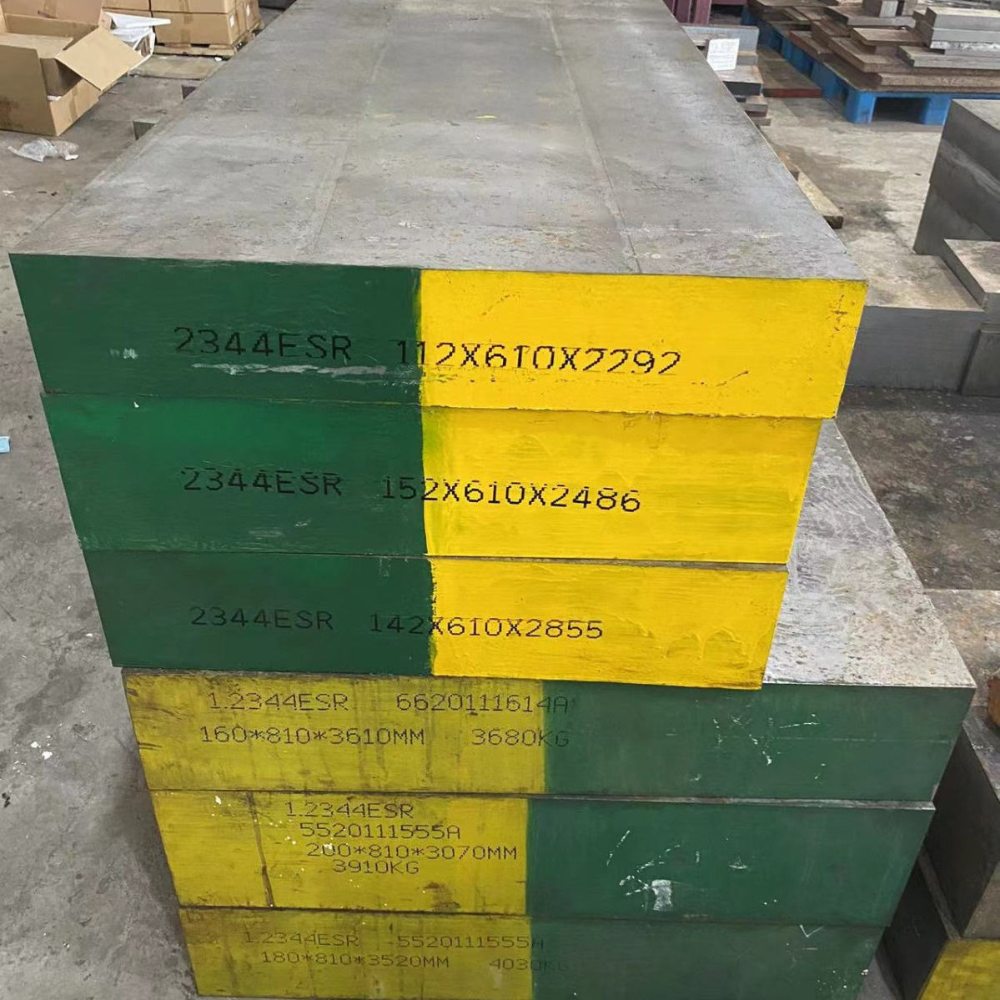
At its core, advanced material science has revolutionized the steel industry, pushing the boundaries of what this ubiquitous material can achieve. It involves sophisticated techniques like alloying, heat treatment, and microstructural engineering to tailor steel properties precisely. By manipulating elements at the nanoscale, scientists can enhance strength, toughness, and resistance to corrosion, enabling steel to withstand extreme environments—from deep-sea pipelines to aerospace applications where failure is not an option.
What sets modern high-performance steel apart is its ability to balance seemingly contradictory traits, such as being both lightweight and incredibly durable. Innovations like dual-phase steel and advanced high-strength steel (AHSS) emerged from decades of research into phase transformations and deformation mechanisms. These materials not only improve safety in automotive structures by absorbing impact energy but also reduce fuel consumption through weight savings, showcasing how material science directly addresses global challenges like sustainability and efficiency.
Looking ahead, the integration of digital tools and artificial intelligence is accelerating discoveries in steel development. Computational models predict material behavior under stress, guiding experiments that once relied on trial and error. This synergy between traditional metallurgy and cutting-edge tech ensures that high-performance steel remains at the forefront of innovation, adapting to demands for smarter, greener solutions in construction, transportation, and beyond.
Sustainable Practices in Steel Production for Long-Term Quality
To achieve long-term quality in steel production, adopting sustainable practices is no longer a choice but a necessity. Instead of treating environmental concerns as side issues, forward-thinking steelmakers are weaving sustainability directly into their core processes. This approach includes innovations like using renewable energy sources—such as solar or wind power—to reduce carbon emissions during smelting, which not only cuts down on pollution but also enhances the steel's structural integrity by minimizing impurities. Over time, this leads to more durable and reliable steel grades that stand up better to wear and tear, ensuring consistent performance in construction or manufacturing applications.
Another key aspect is the implementation of circular economy principles, which focus on recycling and reusing materials to extend product lifecycles. For example, steel plants might invest in advanced scrap processing technologies that allow them to melt down old steel efficiently, reducing the need for raw iron ore and lowering energy consumption. This not only conserves natural resources but also produces steel with fewer defects, as recycled materials can be refined to higher purity levels. By maintaining this focus on material efficiency, companies can deliver products that meet rigorous quality standards while also reducing their environmental footprint, making them more attractive to eco-conscious buyers.
Beyond just the production phase, sustainable practices foster long-term quality by promoting ongoing innovation and adaptability. Steel producers are increasingly collaborating with research institutions to develop new alloys that are stronger, lighter, and more corrosion-resistant, all while using greener methods. This proactive stance ensures that as market demands evolve—say, for more resilient infrastructure in climate-vulnerable areas—the steel industry can respond with superior materials that last longer and require less maintenance. In the end, this holistic approach doesn't just protect the planet; it builds a legacy of trust and excellence, with steel that performs reliably for decades to come.
Precision Engineering: Ensuring Consistency in Mold Steel Output
Precision engineering in mold steel production isn't just about hitting exact dimensions—it's the art of maintaining flawless repeatability across every batch. We start by sourcing premium raw materials, subjecting them to rigorous chemical analyses to guarantee uniformity from the outset. Advanced CNC machining and heat treatment processes are then calibrated to micron-level tolerances, ensuring each piece not only meets specs but behaves predictably under stress. It's this relentless focus on consistency that transforms good molds into great ones, reducing downtime and enhancing part quality for demanding applications like automotive or medical devices.
Beyond the machinery, ensuring output consistency hinges on a culture of meticulous process control. Our teams employ real-time monitoring systems that track variables like temperature gradients and cooling rates during steel hardening, catching deviations before they impact the final product. Statistical process analysis helps us spot trends and refine techniques, whether it's tweaking a quenching method or fine-tuning surface finishing protocols. By bridging cutting-edge technology with hands-on expertise, we achieve a level of reliability that minimizes mold variations and extends tool life, giving clients peace of mind in high-stakes manufacturing environments.
In practice, this commitment to consistency means every mold steel component undergoes stringent quality checks, from ultrasonic testing for internal flaws to hardness mapping across critical sections. We've developed proprietary alloys and treatment sequences that resist wear and deformation, ensuring performance doesn't drift over time. It's about delivering steel that doesn't just meet standards but sets them, empowering manufacturers to ramp up production with confidence. After all, in industries where a fraction of a millimeter can make or break a product, precision engineering isn't an option—it's the cornerstone of success.
Cutting-Edge Technology Integration for Enhanced Steel Properties
Advanced technologies are revolutionizing steel production by integrating elements like computational modeling and AI-driven predictive analytics, which enable manufacturers to fine-tune microstructure and composition at unprecedented levels. This approach allows for precise control over mechanical properties such as strength, ductility, and corrosion resistance, resulting in materials tailored for specific applications like aerospace or automotive industries.
Recent innovations include additive manufacturing and smart sensors that monitor real-time performance, reducing waste and enhancing consistency. By combining these tools with traditional metallurgical insights, engineers can develop high-performance steels that meet evolving demands for sustainability and durability, pushing the envelope in environmental friendliness without compromising on functionality.
The synergy between these technologies fosters a new era of steel customization, where properties are optimized through iterative testing and data analysis. This not only boosts productivity but also opens doors to novel alloys, ensuring steel remains a versatile and competitive material in global markets amidst changing technological landscapes.
Quality Assurance Processes That Set Industry Standards
In today's fast-paced markets, companies are pushing the boundaries of quality assurance to establish benchmarks that others strive to meet. This often involves a deep integration of agile methodologies, where cross-functional teams collaborate from the outset to identify potential issues before they escalate. For instance, organizations might leverage real-time data analytics to monitor production lines, ensuring that every product not only meets but exceeds customer expectations. Such proactive approaches transform quality control from a reactive checklist into a dynamic, value-driven process that resonates across sectors.
Another key aspect is the emphasis on holistic testing environments that simulate real-world scenarios. Instead of relying solely on standard procedures, leading firms develop comprehensive test suites that cover edge cases and user interactions across diverse platforms. By incorporating feedback loops from beta testers and end-users, these processes foster continuous improvement, making quality an integral part of the organizational culture rather than a final step before launch. This cultivates a reputation for reliability that attracts high-profile partnerships and sets new industry norms.
Ultimately, what distinguishes top-tier quality assurance is its adaptability and scalability. Companies that excel often tailor their strategies to specific project needs, blending automated tools with human insight to navigate complex challenges. This balanced approach not only enhances efficiency but also ensures that products stand out in competitive landscapes, driving innovation while maintaining unwavering standards. As a result, these processes become reference points, inspiring others to elevate their own quality benchmarks and shape future industry expectations.
FAQ
High-quality mold steel is characterized by its superior purity, uniform microstructure, and enhanced properties like wear resistance and thermal stability, which ensure longevity and precision in demanding manufacturing processes.
Precision heat treatments, such as quenching and tempering, refine the steel's grain structure and tailor its hardness and toughness, crucial for maintaining dimensional accuracy under high-stress conditions.
Strategic alloying with elements like chromium, vanadium, and molybdenum boosts corrosion resistance, hardness, and fatigue strength, allowing molds to withstand repetitive use without degradation.
A flawless surface finish minimizes friction and defects in molded products, reducing wear on the mold itself and ensuring consistent, high-quality output over extended production cycles.
Through rigorous quality control, including spectroscopy and non-destructive testing, factories monitor every production stage to eliminate impurities and maintain tight tolerances.
Emerging technologies like additive manufacturing and smart automation enable custom alloy designs and real-time process adjustments, pushing the boundaries of efficiency and performance.
Conclusion
Modern mold steel manufacturing represents a sophisticated convergence of innovative techniques and advanced material science, forming the backbone of high-performance steel production. By integrating cutting-edge technology, factories enhance steel properties, ensuring consistent output through precision engineering. These methods reveal the secrets to achieving durable, reliable mold steels that meet rigorous industrial demands, setting new benchmarks in quality and performance.
Sustainability and quality assurance are equally critical in unveiling the secrets of top-tier steel production. Sustainable practices ensure long-term quality by minimizing environmental impact and optimizing resource use, while robust quality assurance processes set industry standards through meticulous testing and control. Together, these elements create a holistic approach that distinguishes leading mold steel factories, driving excellence and reliability in this vital sector.
Contact Us
Contact Person: Zoe Liang
Email: [email protected]
Tel/WhatsApp: 86 189 2128 6299
Website: https://www.baowuchina.com