

OEM High-Voltage Switchgear: A Comprehensive Guide to Selection and Maintenance
2026-06-30
In the high-stakes world of industrial power distribution, the humble switchgear often goes unnoticed—until it fails. When voltages soar and reliability is non-negotiable, every choice matters. This guide dives into the heart of OEM high-voltage switchgear, unraveling the nuances of selection, operation, and proactive maintenance. Whether you're speccing a new installation or extending the life of existing assets, insights from Lugao will help you navigate the maze of standards, safety margins, and smart technologies. Let’s shed light on what truly powers your uptime.
What Sets High-Voltage Switchgear Apart
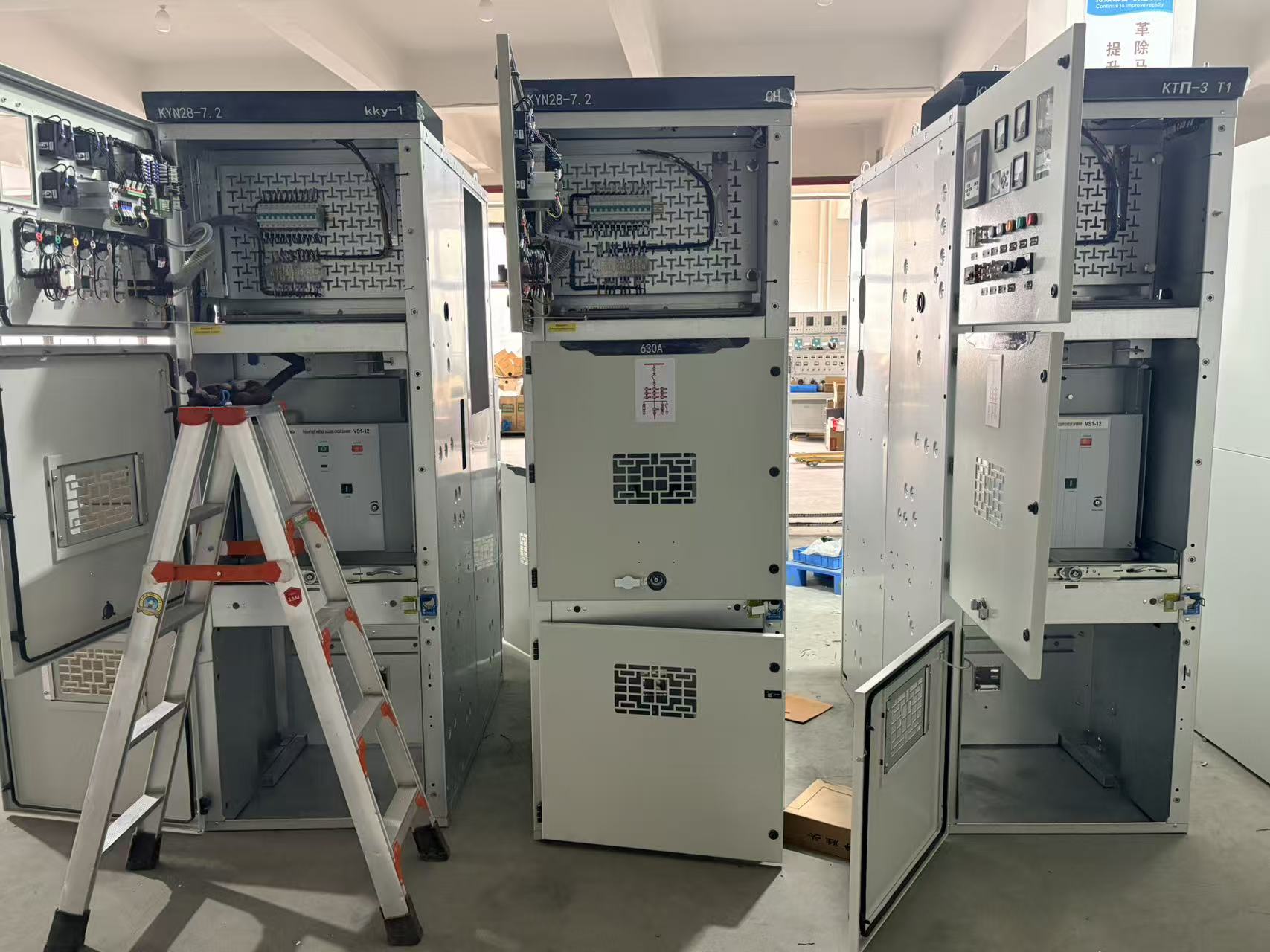
High-voltage switchgear isn't simply a scaled-up version of its low-voltage counterpart. The fundamental difference lies in the sheer intensity of electrical and mechanical stress it must withstand. At voltages above 1 kV, the air itself becomes a less reliable insulator, demanding sophisticated arc-quenching techniques like SF6 gas or vacuum interrupters. This necessity shifts the design focus toward minimizing arc energy and ensuring fail-safe interruption, which in turn dictates the use of modular, compartmentalized architecture that isolates each phase and critical component.
Beyond insulation challenges, high-voltage switchgear integrates a complex network of protective relays and sensors that react in milliseconds to faults, preventing catastrophic failures. Unlike simpler setups, these systems often employ redundant closing and tripping coils, and the busbar connections are meticulously engineered to handle continuous currents of thousands of amps without overheating. The operational environment also sets it apart—installations in outdoor substations demand weatherproof enclosures and resistance to seismic events, adding another layer of rugged engineering not seen in commercial or residential gear.
Perhaps most strikingly, maintenance and safety protocols diverge dramatically. The sheer energy involved makes any direct interaction hazardous; thus, high-voltage switchgear incorporates built-in earthing switches and mechanical interlocks that enforce a strict sequence of operations. Technicians rely on remote racking mechanisms and condition-monitoring systems that track partial discharge and gas pressure, moving the industry toward condition-based maintenance. This shift from reactive repairs to predictive analytics is quietly revolutionizing how utilities manage their critical infrastructure.
Matching Specifications to Real-World Demands
Too often, product specifications are shaped in isolation, guided by lab benchmarks or engineering ideals that ignore the messy reality of daily use. A laptop might boast a 20-hour battery life, calculated with the screen dimmed and Wi-Fi off, but when you open a few browser tabs and join a video call, you’re lucky to get half that. Genuine alignment with real-world demands means testing under the conditions people actually encounter—multitasking, weak network signals, fluctuating temperatures—and then building those expectations into the spec sheet honestly.
In industrial settings, the gap between spec and performance can be costly. A motor rated for 5,000 hours of continuous operation might seize up after 3,000 if dust or vibration exceeds what the engineers assumed. Successful manufacturers don’t just list best-case numbers; they engage with end users to understand maintenance habits, environmental stressors, and typical work cycles. By weaving these insights into the design and documentation, specifications transform from abstract figures into dependable promises.
Bridging this gap also requires humility. No matter how thorough the upfront research, surprises emerge when a product hits the market. Smart teams treat specifications as living documents, updating them based on field data and service reports. This iterative approach not only builds trust—it turns users into co-creators, revealing demands that no lab could have imagined. Ultimately, matching specs to reality is less about hitting a number and more about earning a reputation for honesty.
OEM Customization That Goes Beyond the Datasheet
When working with industrial hardware, most engineers quickly discover that standard datasheets only provide a glimpse of what’s possible. Real-world integration often demands subtle yet critical adaptations—whether it’s tweaking I/O configurations, reworking thermal profiles for cramped enclosures, or adding custom firmware hooks that align with proprietary protocols. We approach these requests not as afterthoughts but as core engineering challenges, diving deep into board-level modifications, environmental testing, and long-term validation right from the initial design review.
We’ve learned that true customization means listening closely to production floor realities: a medical device manufacturer might need a quieter fan curve to meet noise limits in patient-facing units, while an automotive supplier often requires conformal coating and extended temperature range without sacrificing processing power. By co-developing these specifications early, we sidestep the painful iteration cycles that plague off-the-shelf solutions, turning what could be six months of back-and-forth into a single, well-baked revision.
Beyond the obvious hardware adjustments, there’s a deeper layer of tailoring that rarely makes it into the glossy product sheets—things like custom boot logos, tightly controlled BOM lock-in for regulatory submissions, or specialized packaging that reduces in-plant handling damage. Every tweak is documented, traceable, and backed by a dedicated engineering liaison who stays with the project from prototype to volume production. That’s where the datasheet ends and genuine partnership begins.
Maintenance Routines That Prevent Costly Failures
Most expensive breakdowns start with tiny, overlooked details. A weakened seal, a slightly misaligned belt, or dust buildup on cooling fins can cascade into full system shutdowns. Instead of just following a fixed schedule, pay attention to early warning signs: unusual vibrations, temperature shifts, or fluid discoloration. Catching these early often requires nothing more than a flashlight and five minutes of focused observation.
Thermal imaging tools have become surprisingly affordable and can reveal hotspots in electrical panels and rotating equipment long before failure. Pair that with ultrasonic leak detectors for compressed air systems—many facilities bleed thousands of dollars annually through pinhole leaks that go unnoticed. A quarterly walk-through with these tools replaces guesswork with data and often pays for itself within the first inspection.
Don’t underestimate the value of clean consumables. Contaminated grease, clogged filters, or old coolant silently degrade components. A disciplined lubrication routine—using the right grease for each bearing and cleaning fittings before pumping—prevents the slow death of machinery. It’s not glamorous, but neither is replacing a seized motor at 2 a.m.
Spotting Early Signs of Wear and Electrical Stress
Catching wear and electrical stress before they escalate starts with a visual once-over. Look for discoloration on insulation, especially near terminals or bends—brownish or darkened spots often mean the material has been baking from excessive heat. Connectors that appear dull or have a white, powdery residue are showing early corrosion, which can quietly increase resistance. Even the slightest swelling on a capacitor’s top or a subtle bulge in a cable jacket is worth noting; these aren’t always dramatic failures but steady physical changes that hint at internal breakdown.
Your senses can pick up what meters might miss. A faint, acrid smell near an electrical panel or motor isn’t something to dismiss—it’s often the off-gassing of overheating components like varnish on windings or melting insulation. Listen for intermittent crackling or sizzling sounds that don’t belong; such arcing can carve tiny pits into contacts over time, eventually causing high-resistance faults. Vibration is another silent contributor—loose terminals that wiggle under normal operation wear through surface plating, inviting oxidation and erratic conductivity.
Regular thermal imaging, done under typical load conditions, turns invisible hot spots into clear trouble signs. A connection running just 10°C warmer than its neighbors can signal a corroded lug or an internal strand break you’d never see from the outside. Pay attention to patterns: one phase consistently hotter than the others in a three-phase system often points to imbalance that stresses insulation unevenly. Keep an informal log of what you observe over time—trends like slowly rising operating temperatures or increasing dust buildup on cooling vents often reveal gradual degradation long before a protective device trips.
Upgrades and Retrofits for Ageing Infrastructure
Modernising ageing infrastructure isn’t just about patching cracks or replacing worn parts—it’s a strategic rethinking of how legacy systems can meet today’s demands. Many facilities were built decades ago with materials and designs that no longer align with current safety standards or usage patterns. A thorough upgrade often involves integrating smart sensors for real-time monitoring, reinforcing structural elements, and swapping outdated electrical systems for energy-efficient alternatives. The challenge lies in executing these changes while keeping operations running, frequently requiring phased implementations and creative engineering to minimise downtime.
Retrofitting also provides a unique opportunity to future-proof assets against climate change and evolving regulations. For example, older bridges might be strengthened with advanced composites that resist corrosion, while water treatment plants can be retrofitted with membrane bioreactors to handle higher pollution loads without expanding their physical footprint. The key is to adopt a lifecycle approach, choosing upgrades that not only solve immediate issues but also pave the way for easier maintenance and further technological adoption down the line.
Cost is always a consideration, but the long-term savings from reduced energy use, fewer emergency repairs, and extended asset life often justify the initial investment. Additionally, retrofits can enhance a structure’s aesthetic and community value—think of industrial sites converted into mixed-use spaces that retain their historic character while serving new purposes. The most successful projects blend technical expertise with a clear vision of how these renewed assets will serve the people who depend on them.
FAQ
OEM high-voltage switchgear refers to equipment designed and built by an original equipment manufacturer to control, protect, and isolate electrical circuits operating at high voltages. It's the backbone of power distribution in industrial plants, substations, and large commercial facilities, ensuring safe switching and fault interruption. Unlike generic gear, OEM units are often tailored to specific system requirements, so they integrate smoothly without extensive modifications.
Start by nailing down your voltage rating, current capacity, and fault level. Then think about the environment—indoor or outdoor, dusty or clean—and the switching frequency. OEMs offer various insulating mediums like air, gas, or vacuum; each has trade-offs in footprint, maintenance, and lifespan. Don't forget to check compliance with local standards and whether the manufacturer provides customization to match your protection and control scheme.
Regular visual checks for signs of overheating, corrosion, or insulator cracking go a long way. Functional testing of breakers, trip units, and interlocking mechanisms should be done periodically, not just when something trips. Tightness of connections, cleanliness of contacts, and lubrication of moving parts often prevent nuisance failures. Insulation resistance and contact resistance measurements help spot deterioration before it causes a flashover.
Stick to the OEM manual as your baseline. While many practices overlap, each design has quirks—torque values for bolts, allowed contact wear limits, or specific greasing points. Deviating can void warranties or, worse, lead to misalignment or improper closure during a fault. The OEM's guidelines are built around how that particular switchgear handles thermal expansion, arc quenching, and mechanical stress.
Bus bar joints that loosen over time from thermal cycling are a common culprit. Insulation degradation from humidity or pollution tracking can cause partial discharge and eventual breakdown. Circuit breaker operating mechanisms, especially stored-energy types, need attention to springs and charging motors. Secondary wiring connections in control compartments also suffer from vibration and corrosion, leading to nuisance trips or failure to operate on command.
A yearly inspection suits moderate environments, but harsh conditions like coastal salt spray or heavy dust might call for checks every six months. Operate seldom-used breakers at least once a year to keep them from sticking. Diagnostic tests like thermographic scanning, partial discharge monitoring, and timing tests can be on a longer interval—say every two to three years—unless trending data suggests otherwise. After major fault interruptions, always inspect before re-energizing.
Beyond the initial commissioning, most OEMs offer extended service agreements that cover emergency repairs, spare parts, and access to software updates for protection relays. They should provide updated technical documentation if design changes or safety alerts arise. A solid OEM will also have application engineers who can advise on system expansions or retrofits, helping you avoid compatibility pitfalls down the road.
Conclusion
High-voltage switchgear doesn’t just handle more power—it demands a different design philosophy. What sets it apart is the way insulation mediums, arc quenching, and thermal management are engineered for stresses that medium-voltage gear rarely faces. Matching these traits to real-world demands means looking beyond nameplate ratings: fault levels, ambient conditions, switching duties, and even harmonic profiles shape what’s actually needed. This is where OEM customization proves its worth. Instead of settling for a pre-packaged unit that only meets baseline specs, a well-engaged OEM can tailor internal busbar configurations, protection schemes, and enclosure dimensions to fit a retrofit site or a new substation layout. Datasheets capture technical limits, but they don’t show how a switchgear lineup will behave under repetitive switching or in corrosive coastal air—a meaningful OEM partnership fills that gap.
Even the most perfectly selected gear decays without sound maintenance. Routines that look deeper than a visual walkthrough—thermal imaging of bolted joints, partial discharge surveys, and timing tests on breakers—catch deterioration before it evolves into a flashover or unplanned outage. Spotting early signs of wear, such as subtle tracking on insulators or a rising trend in contact resistance, keeps small issues from escalating. For facilities burdened with ageing infrastructure, the discussion often shifts to upgrades and retrofits. Modern digital relays, condition monitoring sensors, and new vacuum or SF6-free interrupters can be installed into existing cubicles, dramatically extending life without the cost and space of a full replacement. The key is treating maintenance as a continuous engineering activity, not a periodic chore.
Contact Us
Contact Person: Doreen
Email: [email protected]
Tel/WhatsApp: 8618057712366
Website: https://www.liugaopower.com/