

Oil Flow Switch Company Insights: How Reliable Sensors Shape Industrial Success
2026-11-16
In an industry where a single unnoticed flow disruption can cascade into costly downtime, sensor reliability isn’t just a spec, it’s the backbone of operational confidence. At HONGSEN, we’ve seen how precision oil flow switches turn potential disasters into controlled shutdowns and data-driven decisions. This piece unpacks the quiet engineering stories behind the compact devices that keep refineries, data centers, and processing plants running smoothly—and why their accuracy matters more than most managers realize. If you’ve ever wondered whether your current monitoring setup is truly protecting your assets, the insights ahead might reframe your risk checklist.
Oil’s Quiet Guardian: Why a Reliable Flow Switch Matters More Than You Think
Buried inside miles of pipework, tucked behind control panels that rarely see daylight, a flow switch is the kind of component nobody bothers to praise—until it fails. In oil processing, where a single stuck valve or a moment of lost circulation can cascade into a pressure spike, a spill, or a pump running dry, this unassuming device does more than measure movement. It’s the silent sentinel that decides whether a system hums along or grinds to a catastrophic halt. And yet, most of us only remember it exists when the alarms start screaming.
What makes one flow switch more dependable than another isn’t always obvious from a datasheet. A reliable unit doesn’t just trip at the right threshold; it ignores the constant vibration, the gummed-up crude residues, and the temperature swings that turn lesser switches into guesswork. In aging refineries, where reality rarely matches the original engineering drawings, a switch that can sense flow through scaling pipes or sluggish startup conditions often prevents incidents before an operator even notices. It’s the difference between a smooth night shift and an emergency call at 3 a.m.
The Domino Effect: How a Single Sensor Failure Can Disrupt an Ecosystem
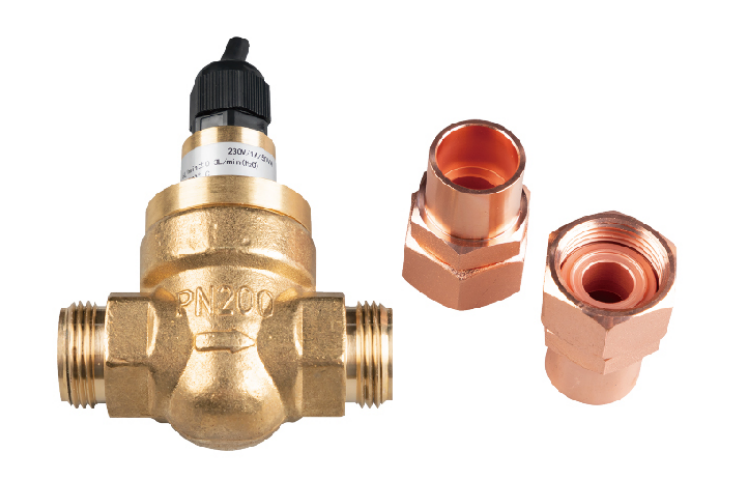
It begins with something almost imperceptible—a temperature sensor in a cooling tower reads ten degrees too low, or a pressure gauge on a water line sticks just slightly. The immediate local effect barely registers. A fan runs a little slower, a valve stays open a fraction too long. But these systems don’t exist in isolation. That fan is supposed to protect a server rack, and that valve feeds a hydroponic bay that supplies a restaurant. The sensor’s misread becomes a seed of disproportion, quietly rewriting the rules before anyone notices.
As the false data travels upstream, algorithms built on trust begin to amplify the error. A control loop compensates by overcooling, which condenses moisture on circuit boards. A nutrient dosing system, convinced the water volume is higher than reality, dilutes the solution until crops start showing deficiency. The real damage isn’t the broken sensor—it’s the cascade of corrective actions that act on a lie. Downstream processes, from energy management to inventory ordering, warp around a phantom. The system becomes an echo chamber where one small voice, singing off-key, forces the whole choir into dissonance.
Recovery reveals how tightly woven the dependencies are. Replacing the sensor is trivial, but unraveling the chain of maladaptive responses can take days. A restaurant runs out of basil, a server crashes during peak load, a chiller short-cycles until a compressor fails. Teams scramble to restore order, but the truth is humbling: you can’t fix a domino fall by standing the last piece up again. You have to trace the vector of original error, and that means acknowledging that our ecosystems—whether in a data center or a vertical farm—are held together by brittle threads wearing a mask of resilience.
Precision Under Pressure: Inside the Lab Where Flow Switches Are Born
A row of stainless steel chambers hisses softly in the background, each one cycling through pressures that would crush a lesser device. Here, flow switches aren't just assembled—they're forged in a relentless dialogue between fluid dynamics and material limits. Engineers move between test rigs with the quiet focus of people who know that a half-micron burr on a piston can mean the difference between seamless operation and a catastrophic system failure. The lab doesn't tolerate approximations; every valve seat, every spring tension, and every weld is interrogated by lasers and calibrated against traceable standards that leave zero room for guesswork.
What makes this place unusual isn't the hardware—it's the refusal to separate design from reality. Prototypes are submerged in oil baths heated past 300°F, then frozen in nitrogen-chilled chambers within the same hour. Acoustic sensors listen for the faintest chatter of cavitation while high-speed cameras capture the ballet of a poppet lifting off its seat at 10,000 frames per second. One technician calls it "teaching metal to think," and there's truth in that: the switches learn from every cycle, their subtle behaviors shaping the next iteration of geometries that textbooks can't predict.
Step outside the cleanroom and you'll find a vibration table shaking a batch of production units with the kind of violence reserved for rocket launches. Next to it, a life-cycle tester has been running nonstop for fourteen months, ticking past eighty million actuations without a single drift in trip point. Longevity here isn't a marketing bullet—it's a quiet obsession proved in data logs and autopsy reports on components that gave their last performance under conditions no customer will ever see. When a flow switch finally ships, it carries the signature of a lab that has already broken it a dozen different ways, just to be certain it can't be broken in the field.
From Rust Proof to Blast Proof: Engineering Sensors for Extreme Environments
When a sensor is built to survive, it begins with a quiet battle against oxidation. A thin layer of specialized coating might separate a functioning gauge from a corroded failure in marine installations or chemical plants. This initial rust-proofing stage is a careful marriage of metallurgy and surface engineering, selecting alloys and treatments that shrug off humidity, salt spray, and acidic vapors without sacrificing measurement sensitivity. However, resisting a slow chemical decay is just the entry ticket. Many environments demand a quantum leap from passive protection to active survival in the face of sudden, violent forces.
Blast-proof design rewrites the rulebook entirely. Here, engineers confront pressure waves that rise in microseconds, fragment impacts, and thermal pulses that would vaporize ordinary electronics. The sensor housing becomes a pressure vessel in miniature, often machined from high-strength stainless steels or exotic nickel alloys, with geometries calculated to deflect and absorb shock. Internal components are potted in energy-absorbing compounds, and delicate sensing elements sit behind sintered flame arrestors or thick sapphire windows. The goal isn't just to endure one event—it's to keep transmitting accurate data milliseconds after an explosion, helping to trigger safety systems or guide emergency response.
Bridging these two extremes—rust proof and blast proof—demands a design philosophy that treats resilience as a chain rather than a single feature. A sensor might need to withstand years of corrosive dullness in an offshore platform, then operate flawlessly through a catastrophic gas leak ignition. This drives unconventional material choices and testing regimes: cyclic salt fog chambers that alternate with live-fire shock trials, and electronics rated for both intrinsically safe operation and post-blast functionality. The result is a class of instruments that disappear into their hostile backgrounds, quietly holding the line between routine monitoring and sudden disaster.
Data That Flows Upstream: Using Switch Intelligence to Anticipate Downtime
Networks have long been built on the assumption that data moves from users to the core, but modern infrastructure turns that model on its head. Switches and routers now generate a constant stream of telemetry that flows back toward monitoring systems, carrying granular insights about port errors, temperature spikes, and micro-bursts that precede failure. Instead of waiting for a ticket to land, operations teams can tap into this upstream intelligence and spot the quiet signals that something is about to break—often hours before any user feels the impact.
What makes this approach genuinely practical is the shift from polling to streaming. Older SNMP-based checks sample performance every few minutes, creating blind spots where trouble can flare up and vanish without a trace. Streaming telemetry from switch ASICs fills those gaps with sub-second visibility into buffer depth, CRC errors, and link flap events. When correlated with historical patterns, these metrics form a behavioral baseline. A sudden deviation—say, a spike in FCS errors on a specific SFP port—can automatically trigger a predictive alert, giving engineers a head start on reseating optics or rerouting traffic before the link goes dark.
The trick isn't just collecting more data; it's teaching the network to listen differently. By running lightweight anomaly models directly on switch hardware or at the edge collector, only meaningful deviations travel upstream. That keeps the volume manageable and the insights sharp. Over time, these models adapt to the rhythm of each environment, distinguishing a harmless traffic burst during a nightly backup from the erratic sawtooth pattern of a failing power supply. The result is a network that doesn't just forward packets—it forwards its own health, making downtime less of a surprise and more of a solved problem.
Industry’s Silent Revolution: When Flow Switch Reliability Becomes a Competitive Edge
Most manufacturing floors still treat flow switches as a low-stakes commodity—a simple on/off sentinel that rarely gets a second thought until a pump runs dry or a cooling line seizes up. But behind the scenes, a quiet transformation is rewiring how production engineers calculate downtime risk. In sectors where a single minute of unplanned stoppage can erase tens of thousands in revenue, the reliability of these unassuming devices has shifted from a maintenance footnote to a genuine competitive lever.
What’s driving the change isn’t just better materials or tighter tolerances; it’s a growing insistence on predictive stability. Facilities that once swapped out failed paddle switches without analysis are now embedding thermal mass flow sensors with self-diagnostics, capable of flagging drift weeks before it triggers a false alarm. This means fewer midnight calls for emergency repairs and more capacity to plan maintenance around actual production rhythms rather than arbitrary calendar dates.
The commercial payoff can be startlingly concrete. A food processing plant, for example, eliminated recurring coolant blockages by replacing mechanical switches with hermetically sealed models that ignore suspended solids—recovering over 400 hours of uptime annually. Elsewhere, a pharmaceutical manufacturer leveraged redundant flow sensing to satisfy FDA validation requirements while cutting batch rejection rates. In each case, the switch itself wasn't the headline; it was the more resilient process architecture built around it, turning a once-generic part into a strategic differentiator.
FAQ
It comes down to material integrity and design simplicity. We use corrosion-resistant alloys and avoid complex moving parts that can jam. Every unit is pressure-tested beyond rated limits before it leaves our facility, so you're getting a sensor that has already proven it can handle real-world stress.
An unreliable flow switch can trigger false alarms or miss a critical drop, leading to unplanned shutdowns that cost hours of production. When the sensor consistently reports accurate flow status, operators can trust the system, respond only to real events, and avoid cascading failures in downstream equipment.
Mechanical paddles wear out, especially with contaminated or waxy crude. Thermal dispersion has no moving parts, so there's nothing to break. It also responds faster and can detect very low flow, which helps catch pump cavitation before it causes damage.
It's a frontline defense. If a leak or rupture occurs, the immediate drop in flow signals the system to isolate that section, stopping a small spill from becoming a major incident. A sensor that reacts within seconds can mean the difference between a contained cleanup and a regulatory nightmare.
We embed self-diagnostics that continuously check sensor drift against a known reference. If it deviates, the system flags it for maintenance. This eliminates the old habit of waiting for a failure before recalibrating, which keeps accuracy high throughout the asset's life.
Yes, if it's built with a wide enough range and appropriate certifications. Our dual-range sensors work on production manifolds just as well as on refined product lines, as long as you configure the setpoints for the specific fluid and pipe size. It reduces inventory and simplifies training.
The engineering margin. A commodity sensor meets the minimum spec at the lowest cost. A critical-process sensor is overbuilt: thicker housings, redundant sealing, hazardous-area certifications, and factory testing at extremes. That extra margin prevents failures during abnormal conditions like pressure surges or high vibration.
Instead of a simple on/off signal, you get trend data, alerts for degrading performance, and the ability to integrate with predictive maintenance platforms. This shifts the flow switch from a binary guard to an active contributor in optimizing pump schedules and energy use across the plant.
Conclusion
In the cramped, humming guts of a refinery or chemical plant, an oil flow switch does its work in near-total anonymity—until it doesn’t. This small sentinel is often the difference between a seamless production run and a cascading mechanical nightmare. A sticky paddle or a seized thermal actuator can blind operators to a critical loss of lubricating oil, and within heartbeats a compressor’s journal bearings overheat, metal fuses with metal, and a domino fall sweeps through interconnected vessels and downstream customers. That grim sequence is why an obsessive focus on reliability sits at the center of any serious oil flow switch company’s R&D. It isn’t enough for a switch to perform on a bench top; its true character emerges inside test cells that replicate years of thermal shock, pressure hammering, and chemical attack. Prototypes are cycled until they fatigue, interrogated under strobe lights to catch chatter, and tortured with slurry-laden fluids that turn lesser alloys to rust. This baptism by fire weeds out the weak, ensuring that every shipped unit carries a memory of abuse it has already survived.
Yet sheer toughness is only the price of entry. The real revolution lies in what these sensors can tell you before they even think about failing. Modern flow switches, engineered with corrosion-proof housings and blast-resistant enclosures for offshore platforms or LNG plants, are shedding their binary “on-off” nature and growing a digital voice. They now whisper trends back to control rooms: a gradually lengthening switch response time hints at varnishing internals, a subtle drift in flow-rate threshold echoes abrasive wear, and a quiet uptick in cycle frequency suggests an upstream pump that’s breaking rhythm. Maintenance shifts from reactive panic to choreographed precision, replacing unplanned outages with targeted, prescheduled interventions. That shift does more than protect machinery—it reshapes the economics of an entire plant. When every sensor becomes a node of foresight, reliability morphs from a procurement specification into a competitive weapon. The plants that harness this flow-switch intelligence deliver uninterrupted throughput to their buyers, while rivals bleed margin on emergency repairs. It is a silent, unglamorous revolution, driven by the recognition that in a hyper-connected industrial ecosystem, supremacy starts at the most mundane measurement point.
Contact Us
Contact Person: KOPASS HO
Email: [email protected]
Tel/WhatsApp: 8613606566112
Website: https://www.hongsenref.com/