

Pillow Gel Pad Supplier Guide: Finding Reliable Partners for Comfort and Durability
2026-11-16
When comfort meets durability, the search for the ideal pillow gel pad supplier becomes a critical decision. Whether you’re sourcing for a bedding brand or a hospitality chain, the right partner can make or break your product’s reputation. In this guide, we cut through the noise to help you identify suppliers who truly deliver on both softness and long-lasting performance. Among the names worth knowing, Kunbao has built a solid track record—but what exactly sets a reliable supplier apart? Let’s find out.
What Separates a Memory Foam Pillow Gel Pad That Lasts From One That Flattens in Weeks
The real difference starts with the foam's density and how the gel is bonded to it. Cheap pads often use low-density memory foam that feels plush for the first few nights but lacks the internal cell structure to spring back after repeated compression. A longer-lasting pad will use a denser foam core, often above 4 pounds per cubic foot, which gives the material enough resistance to return to its original shape. The gel layer itself matters too: if it's just a thin coating painted on, it can crack or separate within weeks. Better pads infuse gel beads directly into the foam or use a thicker, poured gel layer that stays bonded under heat and pressure.
Another factor is how the pad handles nightly pressure without losing its cooling effect. Inferior pads trap body heat because the gel is only on the surface, while the foam underneath degrades quickly and becomes a flat, warm slab. Durable designs use open-cell foam that lets air move through the pad, plus a gel distribution pattern that doesn't flatten into a solid sheet. You can usually spot a quality pad by pressing your thumb into the center: if it takes more than a couple of seconds to fully recover, the foam is too soft to hold up. A good pad will bounce back almost instantly, even after being slept on for a month.
The edge construction and cover also give away whether a pad will last. Many budget pads have no reinforced edges, so the gel migrates toward the middle and leaves the sides floppy and useless. A well-made pad has stitched or heat-sealed borders that keep the gel evenly distributed across the sleeping surface. The cover should be removable and washable, but more importantly, it should be breathable enough to let the gel do its job. If the cover is thick and non-porous, it traps moisture and breaks down the foam faster. Look for pads with a thin, stretchy knit cover that moves with the foam instead of fighting it—that small detail often separates a pad that lasts years from one that feels flat by the second wash.
Reading Between the Lines of a Supplier’s Material Spec Sheet
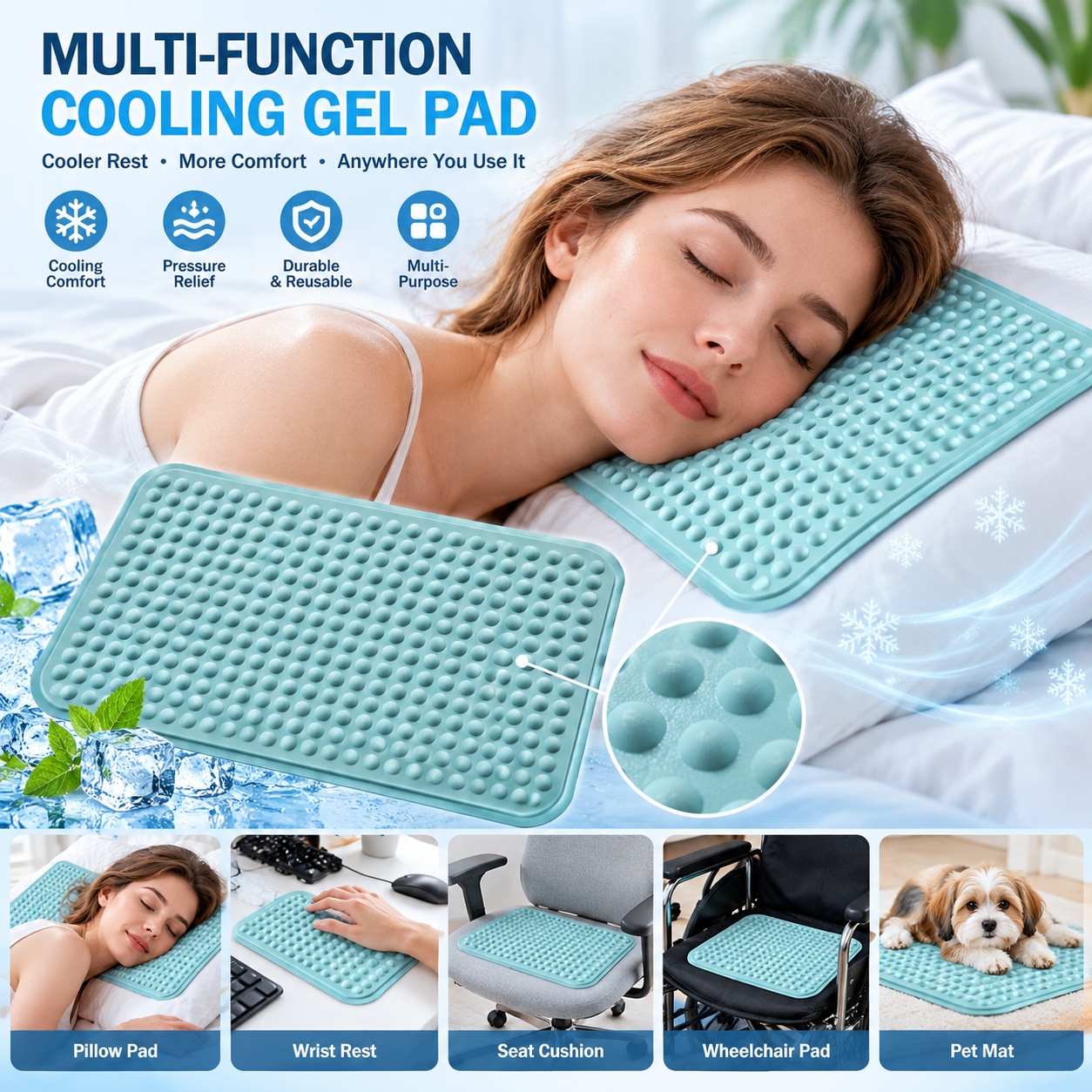
A material spec sheet from a supplier often looks like a straightforward list of numbers, but the real story hides in what's not printed. The first thing worth questioning is the testing environment. A tensile strength value means nothing without knowing the temperature, humidity, or specimen preparation method. Suppliers sometimes quote performance under ideal lab conditions that have little in common with your production floor. Checking whether the data follows ASTM, ISO, or a proprietary in-house method can reveal whether the comparison is apples-to-apples or apples-to-oranges.
Pay attention to the footnotes and fine print. Many specs bury critical limitations there: "typical values, not guaranteed," "results may vary by batch," or "for reference only." These phrases shift risk from the supplier to you. Another red flag is a suspiciously narrow range for a property that normally varies widely in the real world. If a material claims 100% consistency across all shipments, that's either an idealization or a sign that the supplier hasn't tested enough.
Finally, look for what the sheet doesn't say. The absence of data like long-term aging, chemical resistance, or UV stability can be just as informative as the numbers that are present. A well-prepared spec sheet should include both typical and minimum/maximum values, along with traceability to specific production lots. When a supplier resists sharing the complete test reports behind the summary, treat that as a signal to dig deeper before committing to a purchase.
The Hidden Costs of Cheap Gel Infusions You Won’t See on the Invoice
Anyone who has run a busy salon or clinic knows the temptation of a rock-bottom price per syringe. The sticker price is right there in black and white, and on paper the math seems simple. But what rarely shows up on the invoice is the time lost to stiff plungers, uneven flow, or tips that clog halfway through a treatment. When a cheap gel infusion forces you to stop mid-procedure, swap out a syringe, or reassure an anxious client, the real cost is measured in wasted chair time and frayed nerves. That inefficiency compounds quietly across every appointment until the savings vanish into thin air.
Then there are the less obvious clinical trade-offs. Budget formulas often use lower-grade hyaluronic acid with inconsistent cross-linking, which can lead to faster breakdown or a less predictable finish. What matters to your clients isn’t the price you paid but how their skin looks and feels a month later. If a gel migrates, clumps, or simply doesn’t deliver the same smoothness, you end up doing free touch-ups or losing return visits. Reputation damage doesn’t appear on any supplier’s invoice, but it is measured in empty chairs and lukewarm referrals.
Finally, there is the hidden burden of aftercare complaints. A bargain infusion may trigger more redness, swelling, or tenderness simply because the formulation lacks the purity and buffering of premium alternatives. Every extra phone call, every unscheduled follow-up, every refund quietly chips away at the profit you thought you were protecting. When you add up all the unseen hours, the rework, and the good word you never earned, the cheapest option often ends up being the most expensive one in the long run.
How to Gauge a Factory’s Quality Control Without Setting Foot on the Floor
You can learn a surprising amount about a factory's quality discipline from its paperwork trail long before you ever see the production line. Ask for recent inspection reports, not the polished ones they keep for visitors, but the raw daily logs with all the scrawled notes and failed checks still visible. If the documents show a consistent pattern of small defects being caught and corrected rather than a suspiciously clean run of pass stamps, that's usually a sign the system is actually being used. Also look at how they handle non-conformance: a factory that can show you specific examples of rejected batches and what they did about them is far more trustworthy than one that claims "we never have problems."
Another useful move is to request a sample from the current production batch, not a hand-picked showpiece from the showroom. Have it shipped to you or to a third-party lab, and pay attention to how the factory reacts when you ask for a random pull. A quality-focused operation won't flinch; they'll have a defined procedure for pulling samples at set intervals and will happily send you the same piece they'd inspect internally. If they insist on sending a "golden sample" or make excuses about why random selection isn't possible, that tells you more than any audit checklist ever could.
Don't overlook the human signals you can pick up through video calls or casual questions. Ask a line supervisor to walk you through what happens when a new operator joins the team. Listen for concrete training steps, sign-off procedures, and who has the authority to stop the line if something looks off. Factories with real quality control can name the people responsible, talk about past stoppages without embarrassment, and explain how they track improvements over time. Vague answers about "everyone cares about quality" or "we train constantly" without specifics usually mean the systems exist on paper only.
Why Customization Deadlines Matter More Than the Design Itself
A beautiful, perfectly tailored design means nothing if it arrives after the moment has passed. Customization deadlines carry weight because they anchor the entire experience to a real-world event—whether it's a product launch, a holiday gifting window, or a personal milestone. Missing that window doesn't just delay a delivery; it strips the customization of its purpose. A name engraved on a bracelet for a birthday three weeks ago becomes a reminder of poor timing, not thoughtful intent.
The deadline also shapes how we perceive the value of the work. A custom piece delivered on time feels deliberate, as if the creator understood the urgency and respected the recipient's anticipation. But when the same design arrives late, even flawless craftsmanship can feel rushed or careless. Deadlines create a frame around the design—without that frame, the design is just an object floating in missed opportunities.
In the world of personalized goods, the clock is not an afterthought; it's a core part of the product's meaning. Customers remember whether a custom gift arrived before the celebration or after the candles were blown out. That memory often outlasts the details of the design itself. So when someone asks if the font or color matters more than the delivery date, the honest answer is no—the deadline is the design's quiet backbone.
Building a Partnership That Survives More Than a Single Order Cycle
Many supplier relationships start with a single order, but the ones that last are built on something quieter: the habit of showing up consistently. It's not about grand promises or glossy pitch decks. It's about answering the email within hours, not days. It's about flagging a potential delay before the client has to ask. These small, unglamorous acts accumulate into a trust that no contract can fully articulate.
A resilient partnership also requires a shared tolerance for imperfection. Orders get damaged in transit. Specifications shift mid-production. What separates a durable relationship from a transactional one is whether both sides treat a problem as a joint puzzle rather than a blame game. When a supplier says, "Here's what went wrong, and here are three ways we can fix it together," the client stops seeing a vendor and starts seeing an ally.
Finally, look beyond the invoice. The strongest partnerships involve a gentle curiosity about the other side's long-term goals. Ask what their customers are complaining about, what their next season looks like, what keeps their operations manager up at night. When you start solving problems they haven't yet articulated, you stop being a line item in their budget and become part of their own growth story.
FAQ
Pay attention to the gel's density and rebound rate. A reputable supplier will share samples so you can feel the difference between a pad that flattens in weeks and one that keeps its cushioning for years. Ask about the raw material source and whether the gel is medical-grade or industrial-grade, as that affects both softness and odor.
Request a recent third-party lab report that covers heavy metals, phthalates, and other restricted substances. Don't settle for a verbal guarantee. The report should reference standards like REACH or CPSIA, and the supplier should be able to explain which tests were run and when.
Many suppliers offer custom molding, but you need to confirm the tooling cost and lead time for new molds. Ask about the minimum run for a custom shape and whether they can adjust firmness levels across different zones of the same pad. A flexible partner will work from your technical drawings and send a prototype before full production.
Expect an MOQ between 300 and 1000 units for standard sizes, while custom designs often start at 2000 pieces. Smaller quantities are possible but may carry a higher per-unit cost. Be wary of suppliers that offer unusually low MOQs without explanation—they might be using lower-grade gel or thinner material.
Lead times vary from 15 to 35 days after sample approval, depending on the order size and whether new tooling is involved. Always confirm whether the quoted lead time covers production only or also includes packaging and shipping. Ask for a production schedule once the order is placed, so you can track progress and avoid surprises.
A solid supplier will perform incoming material inspection, in-line checks during molding, and a final audit on a random sample from each batch. They should test dimensions, weight, gel hardness, and compression recovery. Request their QC checklist and ask how they handle defective units—whether they replace, repair, or sort the entire batch.
Look for ISO 9001 for quality management and ISO 14001 for environmental controls. For the gel itself, ask for RoHS and REACH compliance documents, plus any flammability test results if the pads will be used in bedding. A trustworthy supplier will send these without hesitation, not just after repeated requests.
Conclusion
A pillow gel pad that holds its shape begins with what the supplier leaves out of the brochure. Memory foam density ratings often hide poor recovery rates, so a pad that feels plush on day one can bottom out by week three. Reliable partners speak plainly about foam cell structure and gel distribution, not just marketing adjectives. Reading a material spec sheet means ignoring the highlighted numbers and hunting for what's missing: the rebound time after compression, the gel's actual pour weight, and whether the infill is a continuous layer or scattered beads that shift with heat. Cheap gel infusions often carry off-gassing risks and uneven cooling, costs that surface later as customer complaints or returns you can't invoice back to the factory.
Quality control from a distance isn't about trusting a video tour; it's about asking for batch-level test logs, drop-ship samples from random production runs, and clear rejection thresholds they enforce before your order ships. Customization deadlines matter because a late tweak isn't just a scheduling slip, it's a signal that the factory's internal communication breaks under pressure. The suppliers worth keeping treat your design changes as a shared problem, not a blame game. A partnership that survives multiple order cycles is built on honest lead times, proactive material updates, and a willingness to flag issues before you discover them in a warehouse audit. That kind of transparency is rarer than a perfect gel pad, and it's the only thing that keeps comfort durable enough to reorder.
Contact Us
Contact Person: Catherine Peng
Email: [email protected]
Tel/WhatsApp: +86-13434169510
Website: https://www.kbcoolgel.com/