

Private Label Ice Maker Machines That Help Your Brand Stand Out
2026-11-16
Private label ice maker machines tend to blur together—same silhouette, same controls, same anonymous look. If your brand wants shelf presence and repeat buyers, the machine itself has to make an impression. YOMAN designs ice makers around that exact problem, giving your label the kind of visible, tactile difference customers notice before the first cube hits the bin.
Custom Panels and Finishes That Make the Machine Unmistakably Yours
The moment a machine loses its factory sameness, it starts to feel like an extension of whoever runs it. Custom panels and finishes do more than change a colorway; they shift the entire presence of the equipment. A deep brushed graphite faceplate, a satin anodized trim, or a hand-finished wood side panel can turn a standard build into something that reads as deliberate, personal, and quietly expensive. These choices sit at eye level and get touched daily, so the material matters as much as the hue.
Texture carries a lot of that weight. A micro-textured powder coat hides fingerprints and softens reflections, while a machined aluminum surface holds a cooler, sharper edge. Some owners lean into contrast, pairing a matte body with glossy badge surrounds or a leather inlay along the grip points. Others go monochrome, layering subtle variations in sheen so the finish reveals itself only when light moves across it. The result is a machine that doesn't shout for attention but feels unmistakably yours in the way it catches the eye.
Beyond the visible layer, custom finishing also invites a different kind of care. When a panel is chosen rather than accepted, people tend to maintain it differently, wiping down the surface more often, noticing small scratches before they spread. That relationship is part of the point. The machine stops being a tool in the background and becomes an object with a signature, one that reflects a specific mix of taste, patience, and pride in the details.
Faster Ice, Lower Noise, Fewer Service Calls
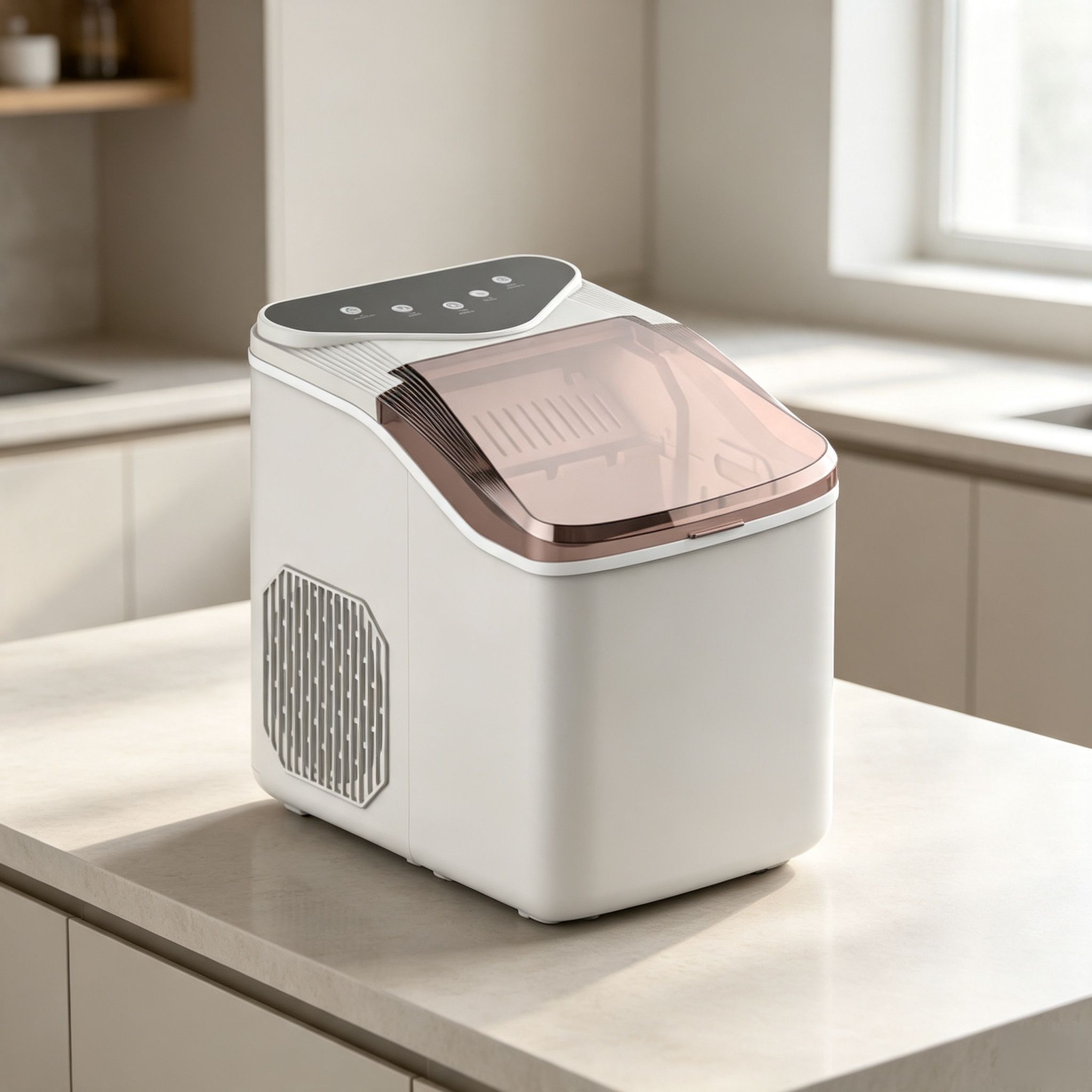
Faster ice starts with a shorter temperature pull-down, not just a bigger compressor. The system primes the evaporator before the first water hits it, so the first cubes appear sooner and later batches don't drag. It also watches the harvest cycle closely, dropping the ice as soon as it releases instead of waiting on a fixed timer that wastes five or six minutes every round.
The quieter operation comes from more than extra insulation around the bin. The fan and compressor ramp together instead of surging at full speed, and the water pump mounts on soft isolation points so the hum doesn't travel through the counter. You notice it most at night, when the machine runs and the only real sound is the occasional cube hitting the tray.
Fewer service calls follow from making the routine parts boringly easy to reach. The condenser screen slides out without tools, the water circuit has a self-flush schedule, and the control panel tells you when a sensor is drifting before it turns into a shutdown. Most owners end up wiping something down once in a while and otherwise leaving it alone.
Compact Builds That Fit Where Big Brands Leave Gaps
Small footprints tend to get treated as a compromise, but the real gap is bigger than that. Mainstream lineups chase volume, so they ignore the awkward alcoves, half-width shelves, and furniture cutouts where a carefully planned compact build actually belongs.
Working within those leftover spaces changes the order of decisions. Cooling, cable routing, and component choice get settled before the frame is finalized, which keeps the result from feeling like a downsized afterthought. The goal is a machine that settles into the room without demanding that the room change around it.
Packaging and Manuals That Already Speak Your Brand Language
The unboxing moment starts before the tape comes off. The weight of the paper, the layout on the carton, and the first sentence in a setup guide all carry the same brand voice or quietly dilute it. When packaging and manuals are treated as part of the product rather than afterthoughts, they remove the small hesitations that make a new purchase feel unfamiliar.
That kind of consistency does not come from a style guide alone. It comes from choosing words and materials the way a brand would speak in person. A manual can explain a step without sounding mechanical, and a box can handle shipping without turning into a billboard. The effect is subtle: customers may not name what feels different, but they are less likely to reach for a competitor the next time.
Inventory Planning for Seasonal Spikes Without the Surplus
Seasonal demand rarely arrives all at once, so inventory should not either. Instead of ordering the full projected peak weeks ahead, split purchase orders into staged deliveries tied to actual sell-through signals. This lets you ride the upward curve with fresher stock and a shorter cash cycle, while keeping a buffer for the few weeks that genuinely spike.
Use last year's numbers as a starting point, not a verdict. Strip out one-off events, weather anomalies, and promotion-driven blips before calculating your baseline. Then build a range rather than a single forecast: a conservative plan for replenishment, an aggressive plan for upside, and a pre-agreed markdown or transfer path if demand stalls.
Work with suppliers on shorter lead times during the peak window, even if it costs slightly more per unit. That flexibility often beats the hidden expense of overstock, discounting, and storage. Internally, keep sales and marketing commitments visible so inventory decisions follow actual campaign timing, not a generic seasonal calendar.
A Factory Line That Treats Small Batches as Seriously as Large Ones
Most production floors are tuned for volume, and smaller orders end up squeezed between larger runs or pushed to the least experienced crew. This line works differently: a fifty-unit request gets the same calibration routine, the same material checks, and the same signed handoffs as a fifty-thousand-unit order.
Changeover stations sit close to the main conveyor, so tooling swaps happen in minutes instead of hours. That proximity keeps short runs from turning into interruptions, which is exactly where misalignment and rushed adjustments tend to creep in.
Samples are pulled at the same intervals whether the batch fills one pallet or an entire truck. The line does not use order size as an excuse for looser attention, and the operators know a short run still carries the full weight of the customer relationship.
FAQ
More than most people expect. Beyond logo placement, you can often choose the housing finish, control panel layout, lid material, and even the shape of the ice. The goal is to make the machine feel native to your product line rather than a white-label afterthought.
Bullet, nugget, and clear cube are the most common. Nugget ice tends to attract a premium audience, while bullet ice keeps costs down. The right choice usually depends on whether you are targeting home bars, offices, or outdoor kitchens.
Not always. If you work with an existing platform, many factories accept a smaller pilot run to test packaging and finishes. The minimum rises sharply only when you ask for custom tooling or a fully unique chassis.
Strong packaging turns a generic appliance into a brand moment. A well-designed box, molded inserts, and a quick-start card with your voice can reduce returns and make the product feel worth its price before it is even plugged in.
Noise level, water tank capacity, and how easy the machine is to clean. These affect daily use far more than a logo. A factory that talks openly about those specs is usually more reliable than one that focuses only on cost and color options.
After the design is approved, most orders ship in eight to twelve weeks. Certifications and packaging approvals are usually what slow things down, so it is smart to lock those details early.
Yes. The key is to negotiate spare parts, replacement units, and troubleshooting documentation before production starts. That way you are not left figuring out a compressor issue on a customer's kitchen counter.
Consistency. The finishing, the fit of the lid, the clarity of the manual, and the reliability of the ice production all have to align with the look. If the experience matches the branding, customers remember it.
Conclusion
A private label ice maker should feel built for your catalogue, not borrowed from someone else's. The real difference begins with panels and finishes that match your product line exactly—whether that means a brushed steel front, a matte black side panel, or a custom shade your customers already recognize. From there, the details continue into packaging and manuals that follow your brand voice, place your logo where it belongs, and avoid the clumsy generic instructions that make a product feel off-the-shelf. Compact builds matter too. Many buyers need a machine that slides into a narrow bar corner or fits under a low counter, places where standard units simply do not work. The result is a product that looks specified rather than sourced, down to the smallest printed insert.
Performance still decides whether that brand promise holds up after delivery. Faster ice production with quieter operation and fewer service calls keeps the ownership experience smooth in busy cafes, bars, and convenience stores. Inventory planning around seasonal demand also becomes less wasteful when the factory treats small batches with the same care as large runs, so you can build ahead for summer heat or holiday traffic without sitting on surplus through slow months. A responsive production line that adjusts volumes without forcing oversized commitments gives smaller brands the freedom to test a new finish or regional packaging without gambling. The advantage is not one loud feature but a set of quieter choices—custom panels, sane lead times, compact sizing, reliable output—that let a private label line carry your identity instead of blending into the background.
Contact Us
Contact Person: Mr. Sun
Email: [email protected]
Tel/WhatsApp: 8618867635088
Website: https://www.nbyoman.com/