

Top 10 Ring Main Unit Options for Reliable Power Distribution
2026-09-10
Choosing the right ring main unit can make or break your power distribution network's uptime—and with so many options flooding the market, it's easy to feel lost. From compact gas-insulated designs to robust air-insulated solutions, each configuration brings its own trade-offs in safety, footprint, and maintenance. In this guide, we've ranked ten standout RMU choices that balance real-world reliability with operational flexibility, including models from Lugao that are quietly winning over utility engineers. Whether you're upgrading an aging substation or specifying a new commercial complex, the following breakdown will help you match the right unit to your load profile—before a fault finds the weak link for you.
How Ring Main Units Keep Critical Facilities Running During Outages
In a medium-voltage distribution network, a ring main unit sits at the point where utility feeders enter a facility or where internal distribution loops are split. During an upstream fault, an RMU does not try to ride through the disturbance. Instead, its protection relays and fault-passage indicators detect the abnormal current path and trigger the local circuit breaker or switch-fuse combination to open. That action isolates the faulted section from the rest of the ring, while the healthy side of the loop remains energized. For a hospital or data center, this means the lights and critical loads stay on even though a section of the incoming cable has failed.
Switching speed matters less than coordination here. The RMU’s breakers are set to trip only for faults on their downstream side, so an upstream failure does not cause a cascade. In many installations, the unit also provides a manual or motorized bypass path. When a fault is isolated, operators can close the normally open point of the ring and restore supply to all loads from the alternate feeder. This reconfiguration often happens in under a minute, but the real benefit is that essential circuits never see a complete loss of voltage in the first place.
Modern RMUs add remote terminal units and condition monitoring sensors, so the utility or facility team can see gas pressure, contact wear, and fault flags without entering the substation. That visibility allows preemptive switching before a weak section fails during peak load. In critical facilities, the RMU also works alongside backup generators and UPS systems: it shortens the duration of any transfer event and reduces the number of times the generator must start. By keeping the ring topology intact, the RMU turns a potentially catastrophic outage into a localized, manageable event.
Gas-Insulated vs Air-Insulated: Matching RMU Technology to Your Site
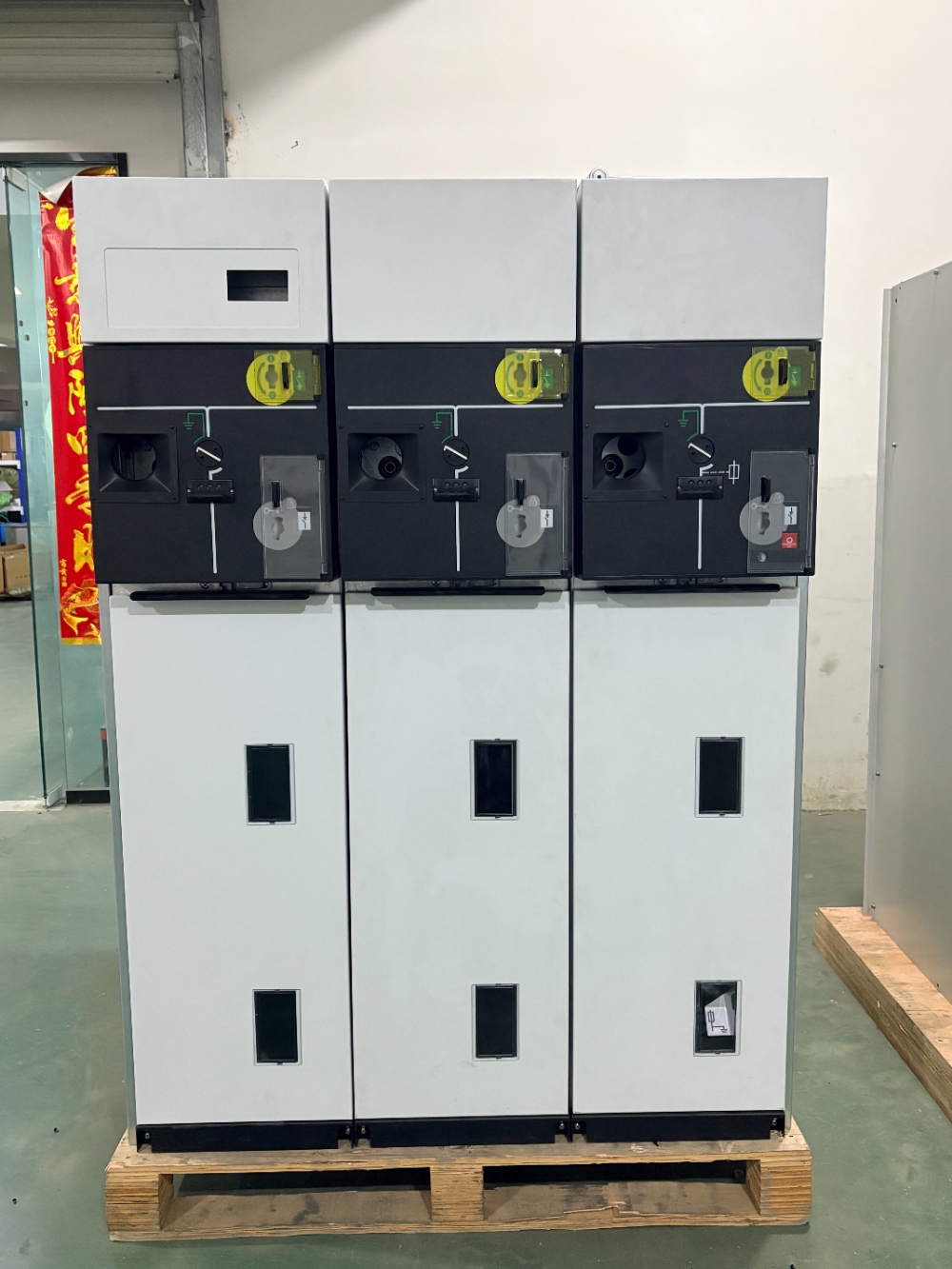
Choosing between gas-insulated and air-insulated ring main units usually comes down to the physical realities of the installation site. A compact substation or underground vault leaves little room for bulky air-insulated switchgear, so the sealed, maintenance-free nature of SF6 or alternative gas-filled enclosures often wins. On the other hand, a spacious outdoor pad or dedicated electrical room might favor air-insulated technology, especially if the site team prefers visible disconnects and simpler internal access without gas handling procedures.
Environmental conditions also push the decision. Coastal locations with high humidity and salt spray tend to degrade air-insulated components faster, making gas-insulated units a more robust choice despite their higher upfront price. For inland sites with moderate climates and lower contamination, air-insulated RMUs can be cost-effective and easier to retrofit. The key is to evaluate not just the initial footprint, but the long-term burden of cleaning, testing, and replacing parts under your site's specific weather patterns.
Space-Saving Designs for Dense Urban Substations
In dense urban cores, every square meter counts. Substation designers are moving away from sprawling air-insulated switchgear toward gas-insulated switchgear (GIS), which shrinks the footprint by up to 70 percent. By enclosing busbars, circuit breakers, and disconnectors in sealed SF6 or alternative gas compartments, GIS allows a full high-voltage bay to fit within a footprint smaller than a tennis court.
Vertical stacking further compresses the site. Instead of spreading equipment across a single level, engineers place transformers on the ground floor, switchgear on the mezzanine, and cable termination or cooling systems above or below. Multi-level layouts, combined with noise-buffered walls and ventilation shafts, let a 220 kV substation hide inside a mid-rise structure that also hosts commercial or community space.
Underground and semi-underground solutions push space-saving even further. In cities like Tokyo and Singapore, substations sit entirely below parks or roadways, with only access hatches and exhaust vents visible. Transformer design has also evolved: compact three-phase units, low-profile bushings, and forced oil-air cooling reduce clearance requirements, while smart monitoring cuts the need for wide maintenance corridors. These approaches turn the substation from an industrial eyesore into a quiet, nearly invisible neighbor.
Adding Remote Monitoring Without Overcomplicating Operations
Remote monitoring often sounds like a major overhaul, but it doesn't have to be. The trick is to start with the data you already collect and simply make it visible from anywhere. Instead of deploying a complex new platform, consider a lightweight gateway that forwards readings from existing sensors to a secure dashboard. This way, the core operation stays unchanged while you gain the ability to check pressure, temperature, or runtime without walking to the equipment.
The biggest mistake is trying to monitor everything at once. Pick two or three parameters that directly affect uptime or maintenance costs, and build alerts around those. A simple threshold notification by email or text keeps the team informed without flooding them with noise. Over time, you can add more channels, but by then the habit of reviewing remote data is already part of the routine, not a new burden.
Operations stay simple when remote monitoring is treated as an assistant, not a replacement. The goal isn't to automate every decision, but to give technicians a head start before they arrive on site. A quick glance at a trend graph can turn a two-hour troubleshooting call into a ten-minute part swap. That practical payoff keeps adoption high and complexity low.
Cost-Effective RMUs That Still Meet Stringent Safety Codes
Balancing budget and compliance doesn't mean settling for flimsy enclosures. Today's ring main units can be engineered with smart material choices and modular designs that trim costs without cutting corners on arc containment or fault ratings. Think cast resin insulation instead of bulkier alternatives, or compact switchgear layouts that reduce footprint and installation time. The key is focusing spend on the critical safety components—like reliable interlocks and pressure relief systems—while streamlining non-essential features.
Field experience shows that a well-chosen mid-range RMU can handle years of switching operations with minimal maintenance, often meeting IEC 62271 or ANSI standards just as rigorously as premium models. Instead of paying for brand prestige, facility managers look for units with independently tested enclosures, clear labeling, and straightforward access for routine checks. Some manufacturers now offer configurable options where you add only the protection schemes your network actually needs, avoiding the trap of paying for unused automation or telemetry that inflates the price tag.
The real savings often come from long-term ownership costs, not just the initial purchase. A cost-effective RMU with robust bushings, stable gas pressure (or solid insulation), and easily replaceable fuses can avoid the downtime and rework that eat away at capital budgets. When procurement teams compare total cost of ownership rather than sticker price, they frequently find that a competitive unit from a focused supplier outperforms an expensive flagship in everyday distribution duty—without ever compromising on the safety codes that keep personnel and equipment protected.
Modular Configurations That Grow With Your Distribution Network
Distribution networks rarely expand in a straight line. A configuration that forces you to commit to a fixed capacity from day one either leaves you overbuilt or scrambling during peak seasons. Modular setups flip that equation: pick the nodes you need now, understand how each piece talks to the others, and add capacity in measured increments without reworking the entire layout.
Think of it like adding shelves to a warehouse instead of leasing a second building. When a new regional hub comes online, the existing control logic, labeling conventions, and routing rules should carry over without a custom integration project. That kind of continuity only happens when the original configuration was designed to accept new modules cleanly, not bolted on as an afterthought.
The real advantage shows up in edge cases: a sudden contract win, a temporary overflow from a neighboring facility, or a pilot program that may or may not scale. With a modular backbone, you spin up a test lane or a small sortation cell, prove the workflow, and then replicate the pattern rather than redesigning it. Growth stops being a capital event and becomes a series of small, low-risk decisions.
FAQ
It's a compact, sealed switchgear assembly used in secondary distribution networks. The ring configuration lets electricity reach customers from two directions, so a fault on one side doesn't knock out the whole circuit. That built-in redundancy is a big reason utilities and industrial plants lean on them.
You'll typically see names like Schneider Electric's RM6, Siemens 8DJH, ABB SafeRing, Eaton's Xiria, and Lucy Electric's Aegis. These aren't just popular because of marketing - each has a track record in different voltage ranges and environmental conditions, from urban substations to coastal installations.
Gas-insulated units, usually SF6 or eco-friendly alternatives, take up less space and handle harsh environments well, but air-insulated ones are simpler to maintain and don't raise gas-handling concerns. If space is tight or pollution is heavy, gas-insulated often wins; if you want serviceability and lower lifecycle costs, air-insulated may be the better fit.
Modern RMUs are designed to be low-maintenance, but not zero-maintenance. You should schedule visual inspections for corrosion or leaks, check gas pressure indicators where applicable, and test the mechanism periodically. Many problems come from ignored cable terminations rather than the switchgear itself, so pay attention to those connections.
Many models are rated for outdoor use with weatherproof enclosures. The key is checking the IP rating and corrosion resistance for your specific climate. Coastal areas, in particular, need units with enhanced protection against salt spray, otherwise you'll see premature deterioration.
Adding remote terminal units and sensors lets operators spot abnormal temperatures, partial discharge, or loss of gas pressure before a failure occurs. That's especially valuable in unmanned substations or distributed networks where sending a crew to every site is impractical.
It's critical. The RMU must be able to withstand and interrupt the maximum prospective fault current at its location. Underrating this leads to catastrophic failure; overrating unnecessarily drives up cost. Always have a protection engineer calculate the fault level before shortlisting units.
They've improved a lot in the past decade. Solid insulation and alternative gases can match SF6 performance in many medium-voltage applications, and they avoid the regulatory headaches around greenhouse gas reporting. Early versions had limited field data, but current offerings from major manufacturers have been tested extensively.
Conclusion
Choosing among the top ring main unit options starts with a clear-eyed look at how each design behaves when the grid stumbles. In hospitals, data centers, and transit hubs, a dependable RMU isolates a cable fault in seconds and lets operators reroute power before backup systems even notice the disturbance. Gas-insulated units often earn their place in damp or dusty environments thanks to sealed enclosures and low maintenance, while air-insulated models remain a sensible pick where budget and simple servicing matter more than compactness. For dense urban substations, space-saving configurations with front-facing cable access and narrow footprints turn awkward basement vaults into workable switchgear rooms without forcing major civil works.
The strongest contenders also balance remote monitoring with operational simplicity. A good unit should offer clear fault passage indicators and optional RTU connections, but it should not demand a full-time communications expert to interpret alarms. Cost-effective options in the top ten still clear tough safety hurdles, using arc-resistant designs, interlocked earthing switches, and pressure relief channels that protect staff without adding unnecessary complexity. Meanwhile, modular RMU configurations let a small industrial feeder grow into a multi-ring distribution hub by adding switch or fuse modules over time, rather than replacing the entire lineup. Taken together, these choices cover a wide range of reliability needs, from a compact three-way unit in a city basement to a remotely monitored, expandable substation on the edge of a growing network.
Contact Us
Contact Person: Doreen
Email: [email protected]
Tel/WhatsApp: 8618057712366
Website: https://www.liugaopower.com/