

Top 10 Sewer Jetting Machines Sourcing Insights for Industrial Buyers
2026-11-19
Most industrial buyers don’t realize how quickly a sewer jetting machine’s advertised pressure can be undermined by poor hose management, cheap nozzles, or a pump that loses efficiency after a few hundred hours. That gap between brochure numbers and real jobsite performance is exactly why sourcing decisions need a different lens. In this post, we break down ten practical insights designed to help you compare trailer, skid, and combination units with more confidence. You’ll see what separates durable builds from short-term bargains, why serviceability matters more than a long feature list, and how to spot red flags in supplier claims. As you narrow down options, manufacturers like AMJET are worth a closer look for their focus on field-ready engineering. These insights will help you build a shortlist that holds up long after the quote stage.
What Paper Specs Hide About Real Jetting Performance
A spec sheet can list basis weight, caliper, brightness, and gloss without telling you how a drop will behave at the moment of impact. Those numbers are measured under static conditions, while jetting is a fast, fluid event. Two papers with the same grammage can sit at opposite ends of the absorbency curve, so one holds ink near the surface for crisp edges and the other lets it wick along fibers until fine text turns soft.
Coatings and fillers rarely show up in a basic comparison table, but they do more to shape output than most headline figures. A bright sheet may owe its whiteness to optical brighteners that shift ink color or reduce lightfastness. Surface energy, pore size, and the ratio of calcium carbonate to clay can change dot gain, mottle, and even how often you stop to wipe the printhead.
The only reliable way to judge real jetting performance is to run the paper on the press or printer you actually use. Print a full solid, a fine rule, reversed text, and a photograph, then check for bleed, bronzing, cockle, and dry time. What looks impressive on a data sheet often turns ordinary after the first few meters of production.
Nozzle Selection Mistakes That Quietly Cut Cleaning Power
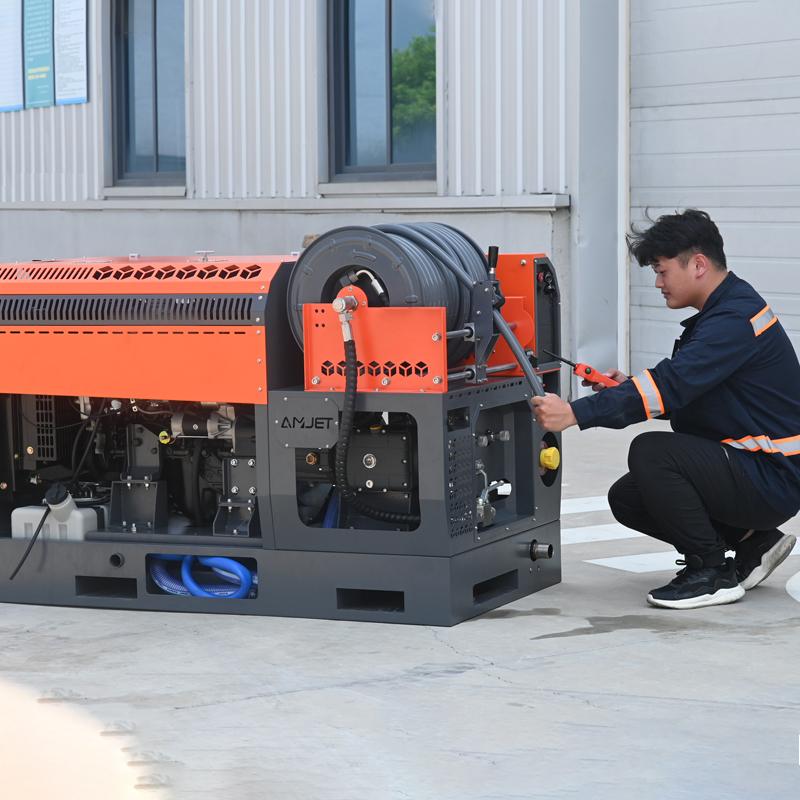
A pressure washer can feel weak even when the pump is healthy, and the nozzle is usually where that lost force hides. Swapping on a tip with the wrong orifice size does not always make a dramatic change in sound, but it quietly drops pressure at the surface or forces the pump to work against itself. If a 2.5 orifice gets replaced with a 3.0 because it fits the threads, the machine may still spray strong while actual cleaning impact falls off.
The red zero-degree tip is another quiet trap. It looks like the obvious choice for stubborn stains because the stream seems more intense, yet that narrow jet only cleans a thin line and often slows down large flatwork. A 15- or 25-degree fan usually removes grime faster on concrete, siding, and decks because the pressure spreads into a wider pass instead of carving a groove that misses most of the dirt.
High-pressure tips also get left in place during soap application or final rinsing, which steals cleaning power from steps that depend more on flow than force. The machine sounds unchanged, so the problem goes unnoticed while detergent fails to cling or delicate wood gets etched. Using a black soap nozzle or a wider rinse tip keeps water volume high and lets the cleaner do its work without extra pressure doing damage.
The First 500 Hours: What Fleet Operators Actually Notice
Within the first few weeks, the complaints file tells you more than any spec sheet. Drivers start noting how the seat cushion holds up after a ten-hour shift, or whether the mirror vibration clears up once you hit highway speed. One operator I spoke with tracked every minor issue on a whiteboard in the dispatch room, and by hour 400, a clear pattern emerged: the little annoyances weren't random, they clustered around specific components that the brochure never mentioned.
What rarely gets talked about is how the first 500 hours expose the gap between lab testing and daily grind. A fuel filter that works fine on a dyno can clog twice as fast when the fleet runs short-haul routes with constant stop-start cycles. Maintenance teams learn to ignore the manufacturer's service intervals and instead watch for early oil discoloration or a slight pull in the steering under load. These aren't failures, just small tells that tell you whether a vehicle will age gracefully or turn into a shop regular.
After the first 500 hours, fleet operators stop caring about panel gaps and start caring about repeat visits to the service bay. A truck that needs a sensor reset every two weeks costs more in downtime than one with a slightly rougher idle. The operators who pay attention wind up building their own cheat sheets, marking which vendors actually answer a call on a Sunday, and which parts can be swapped in without waiting three days for a backordered bracket. By the time the odometer rolls past 500, the real review is already written in the maintenance log.
Supplier Questions That Reveal Weak Engineering Early
A lot of suppliers will show you polished specs and a slick demo, but that tells you almost nothing about how the team actually thinks. Instead, ask them to walk through a recent design decision that went badly. Pay attention to whether they blame external factors right away, or whether they can pinpoint the exact moment the assumptions started drifting. A supplier that hesitates, then gives you a vague story about “requirements changing,” often lacks the internal review habits needed to catch weak engineering early.
Another useful question is about how they handle a feature that looks simple on the surface but gets complicated underneath, like a data export that works fine for a hundred rows but falls apart at a million. Ask them to sketch the failure path without drawing a diagram. Listen for phrases like “we thought it would be fine” or “nobody expected that volume.” Strong teams will describe the limits they tested, the logs they checked, and the point where they realized the original schema was wrong. Weak teams will describe a sequence of hotfixes and hope.
You can also probe their definition of done. Ask what “ready to hand off” means for a component that hasn’t been integrated yet. If they tell you it’s ready because the unit tests pass, dig into what those tests actually cover. The best suppliers will mention boundary conditions, concurrency, and failure recovery without being prompted. The ones to worry about will talk only about happy-path behavior and wind up surprised when your environment exposes the gap.
Why Equal PSI Machines Rarely Perform the Same
PSI gets treated like the headline number on a spec sheet, but it only tells you how hard water leaves the nozzle. Two machines with identical PSI can feel completely different because flow rate, nozzle shape, and spray angle all change the cleaning force. A unit that moves more gallons per minute will rinse debris faster even if the pressure reading never moves, while a lower-flow machine with the same PSI can feel thin and slow.
The way pressure is measured also creates gaps between machines. Some brands list peak pressure from the pump, while others list working pressure at the wand after losses through hoses, fittings, and valves. Pump material, hose diameter, and unloader adjustment all quietly eat away at the number. One machine may hold its rated pressure under load, while another drops sharply as soon as the trigger is pulled.
Then there is the human side. Nozzle choice, distance from the surface, inlet water supply, and even tiny air leaks change how a machine behaves in real use. That is why two pressure washers with the same PSI badge rarely feel identical once the water is running and the work begins.
Spare Parts and Service Windows Before Purchase Commitments
Smart buyers treat spare parts availability as a negotiating point, not an afterthought. Asking for a written list of critical components, their typical lead times, and the nearest stocking location before a purchase order is issued can reveal how seriously a supplier takes post-sale support.
Service windows deserve the same scrutiny. If routine maintenance can only be scheduled during narrow vendor-defined periods, that constraint will eventually collide with production demands. Locking down response times for breakdowns, including weekend and holiday coverage, gives the buyer a clearer picture of real operating cost.
The goal is not to extract promises for the sake of paperwork. It is to filter out vendors whose support model depends on selling the machine first and figuring out parts later. Commit after the supply and service expectations are documented; it changes the rest of the relationship.
FAQ
Most crews settle around 18 to 22 GPM at 2,200 to 2,600 PSI for lines up to 12 inches. Above that diameter, raise flow before pressure because pushing more water moves debris farther and keeps it from settling again.
Trailer units keep upfront costs lower and let you use existing trucks, but they add setup time on site. If your crews handle multiple stops daily, truck-mounted rigs pay off through faster deployment, even though the initial price is steeper.
Ask for a penetrating nozzle for grease and soft blockages, a flusher nozzle for general line cleaning, and a root-cutting nozzle if tree roots are common in your area. Skip large nozzle kits at the start because three well-made nozzles beat a dozen cheap ones.
Look for a triplex plunger pump with ceramic plungers and stainless steel check valves. Brass heads wear quickly when operators use reclaimed water, so brass may be fine for clean water only but not for daily municipal work.
Hoses, nozzles, and swivels wear out faster than the pump. Budget roughly 8 to 12 percent of the machine price per year for consumables, and keep at least one spare hose length on hand because downtime usually costs more than the part.
Ask whether the pressure vessel and hose assembly carry a recognized third-party mark suitable for your country. Also request a full parts list with manufacturer codes, not just internal part numbers, so you are not locked into one supplier later.
Request a video of the exact model running a real line with a clear pressure gauge reading, not a promotional clip. Ask what fails first and what they changed in the last two years. A maker that answers honestly gives you more useful information than a polished spec sheet.
For a stock trailer unit, expect four to eight weeks after deposit. Custom tank sizes, hose reels, or engine options usually add two to five weeks. Confirm whether the lead time starts at drawing approval or payment, because that detail changes the delivery date significantly.
Conclusion
Most sourcing teams start with spec sheets, but what gets printed rarely predicts what happens in a wet, debris-heavy line. Two units can share the same PSI and flow numbers yet feel completely different once hose length, nozzle mass, and pump recovery time enter the picture. The same logic applies to nozzles: a small mismatch in orifice size or spray angle quietly robs cleaning energy long before an operator complains. Fleets that track the first 500 hours tend to notice heat soak, fitting loosening, and control sensitivity issues that never show up in laboratory curves. That early field behavior is often a better buying signal than peak pressure.
Factory visits and straightforward supplier questions expose weak engineering faster than any brochure comparison. Ask how the frame is welded, how the hose reel bearing is sealed, and what happens when the unit sits unused for three weeks. Equal PSI machines rarely perform the same because pump quality, valve design, and hose diameter shape the actual jetting force at the nozzle. Before committing, experienced buyers also map out spare parts availability and realistic service windows. A machine that cannot be back on a job within a predictable downtime window will erode margins regardless of its rated output. Those quiet operational details separate equipment that works from equipment that only looks good on paper.
Contact Us
Contact Person: Mike
Email: [email protected]
Tel/WhatsApp: +86 19545555505
Website: https://www.amjeting.com/