

Top 3D Printing Services Supplier for High-Quality Custom Parts and Rapid Prototyping
2026-11-16
Transforming a rough idea into a tangible part shouldn't be a gamble. For engineers and product designers, the difference between a delayed launch and a market win often comes down to one choice: the right manufacturing partner. That's where ProtoMat redefines what's possible. We blend industrial-grade precision with an almost obsessive focus on speed and surface quality, so your custom prototypes and end-use parts don't just arrive fast—they arrive ready to impress. In this post, we're pulling back the curtain on how to spot a truly top-tier 3D printing service, and why the right supplier does far more than just hit 'print'.
Beyond Prototypes: Real Production Power
Shifting from a polished demo to a system that holds up under real-world stress is where most teams hit a wall. The difference isn't just about scaling servers or adding redundancy—it's about designing workflows that assume failure is inevitable. A prototype thrives on ideal conditions, but a production system has to digest malformed input, survive traffic spikes with no warning, and let operators sleep through the night without panic. That mindset shift means we stop asking "does it work?" and start asking "what happens when this breaks?" Every integration point, every dependency becomes a potential fracture line that needs to be monitored, isolated, and recoverable without heroic intervention.
Teams often underestimate how much operational nuance separates early stage builds from truly reliable products. Profiling stops being a one-time exercise and turns into a continuous feedback loop. Memory leaks that were invisible on a developer laptop suddenly surface under sustained load. Queries that ran fine with 100 rows choke when the dataset grows by a factor of a thousand. Addressing these isn't about trying harder—it's about instrumenting the system so it signals its own decline before users feel it. This is where observability becomes a feature, not just a debugging tool, and where the entire engineering culture has to embrace ownership in production rather than tossing code over a wall.
The real power of a production system isn't in its raw capacity, but in how cleanly it degrades and how quickly it recovers. Dark launch patterns, canary deployments, and automated rollbacks are no longer nice-to-haves; they become the difference between a brief hiccup and a multi-hour outage that erodes trust. Building this layer of resilience requires investing in tooling that often feels thankless when everything is running smoothly. Yet that's exactly when it proves its worth—the quiet morning when a third-party API starts timing out and the system reroutes traffic seamlessly, and nobody outside the team needs to know anything happened at all.
Materials That Match Your Blueprint’s Demands
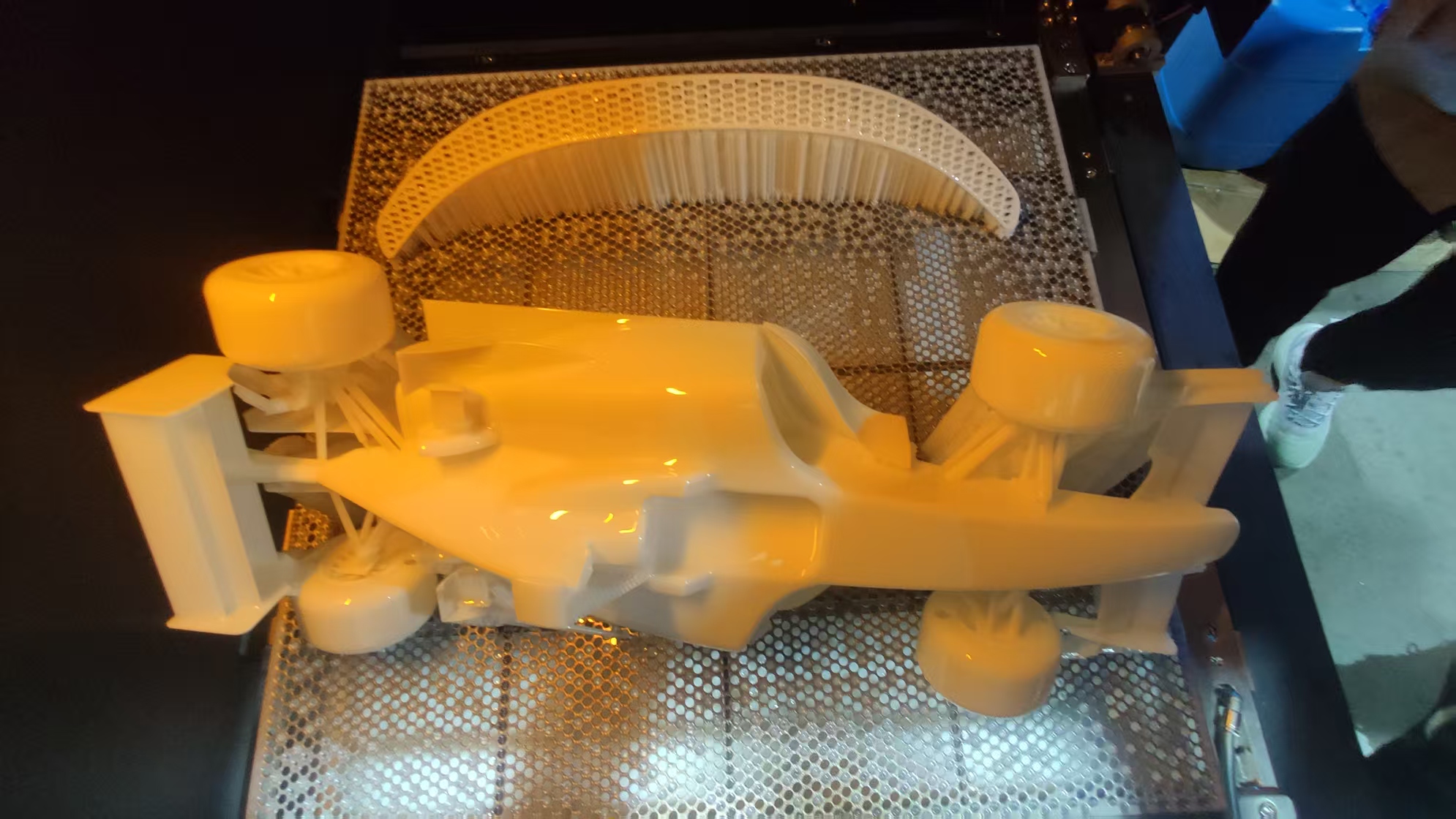
Selecting the right material is the silent architect of your project’s success. Every blueprint carries a unique set of demands—load tolerance, thermal exposure, chemical resistance, or aesthetic nuance—and the material you choose must answer each without compromise. It’s not about picking the strongest or the cheapest option, but the one that aligns with the intended life and performance of the design. From carbon steel for high-stress frameworks to UV-stabilized polymers for outdoor components, the alignment between material behavior and design intent determines whether a structure merely exists or truly endures.
Beyond mechanical properties, the manufacturing process also shapes which materials make sense. A component destined for precision CNC machining requires different metallurgical traits than one meant for additive manufacturing or injection molding. Sheet metal, billet aluminum, tool-grade alloys, and high-density plastics each carry their own rhythm of workability, grain structure, and post-processing behavior. Matching them to your blueprint means thinking ahead—considering not just if the material can hold a tolerance today, but how it will handle temperature swings, moisture, and repetitive stress five years down the line.
Practical sourcing further refines the list. Availability in the required form factor, lead times, and even regional supplier networks can tilt the scales between two otherwise suitable candidates. Some materials offer an ideal blend of strength and cost but come with lengthy procurement delays that stall your timeline. Others expedite production yet demand secondary treatments to meet corrosion or wear specifications. Bridging your blueprint’s demands with the realities of the supply chain ensures the final choice isn’t just excellent on paper, but reliable in your hands.
Speed Without Sacrificing a Micron
In precision manufacturing, the balance between pace and accuracy often feels like a zero-sum game. But here, speed doesn’t come at the cost of detail — it’s built into the same motion. Every rapid traverse and high-speed spindle rotation is engineered so the cutting edge lands exactly where it should, with no drift, no compromise. The result is a process that moves fast and measures right down to the last micron, time after time.
What makes this possible isn’t just horsepower or stiff frames. It’s the real-time feedback loops, the vibration-damping structures, and the thermal stability that keep everything in check while the machine is pushing its limits. You can run aggressive feed rates and still hold tolerances that would normally demand a crawl — because the system actively compensates for what speed would normally break.
This mindset changes how you think about throughput. Instead of dialing back to protect dimensional accuracy, you trust the platform to deliver both simultaneously. Complex contours, delicate wall thicknesses, mirror finishes — they come out right even when the cycle time shrinks. That’s not a trade-off. That’s just good engineering.
Complex Geometries, Zero Compromises
When a design calls for sharp angles, sweeping curves, or multi-layered forms that seem to defy conventional manufacturing, the typical response is to simplify. Corners get rounded, surfaces get straightened, and the original intent slowly erodes. We reject that trade-off entirely. Our process is built from the ground up to preserve every complex contour exactly as envisioned, without softening the details or padding the timeline.
That means taking on what others label impossible—internal lattice structures, undercuts that would trap traditional tooling, and assembly-free kinematic joints—and delivering them as fully functional, aesthetic parts. The secret isn’t one piece of technology but a deliberate mismatch between tool and mindset: pairing flexible production methods with a rigorous, almost obsessive, understanding of material behavior. It’s how a single piece can emerge with varying wall thicknesses, integrated living hinges, and surfaces that feel textured and intentional, not compromised.
The real measure of ‘no compromises’ shows up in the final handling. Pick up a part born from this approach and your fingers trace a geometry that feels sculptural, not machined. There’s no witness line from a split mold, no vestige of a support structure that was ground away. Just the physical realization of a complex digital shape, holding its tolerances and its integrity in equal measure. That’s the standard we hold ourselves to: if the geometry didn’t survive intact, the project isn’t done.
From Idea to Physical in Hours, Not Weeks
The moment a concept takes shape in your mind, the clock starts ticking – but it doesn’t have to tick for long. Modern rapid prototyping dissolves the traditional gap between sketch and sample, turning napkin drawings into tangible parts before the coffee gets cold. This acceleration isn’t magic; it’s a fusion of on-demand manufacturing networks, instant design feedback loops, and materials that cure in minutes instead of days.
What once required scheduling factory time and waiting through weekends now happens while you sleep. A file uploaded at midnight can become a physical object by sunrise, tested in a real environment before the next morning’s meeting. The shift isn’t just about speed – it’s about collapsing the iteration cycle so tightly that failure becomes cheap and learning becomes continuous. Designers no longer have to bet weeks of work on a single version; they can print, tweak, and reprint until the part feels right in their hands.
Behind this lies a quiet revolution in distributed manufacturing. Instead of relying on a single shop with a backlog, your design gets routed instantly to idle machines around the globe, chosen for material, precision, and proximity. The result isn’t just faster delivery – it’s a process that turns hardware development into something as fluid as software development, where updates happen overnight and breakthroughs arrive without the wait.
Where Every Layer Tells a Quality Story
From the first brushstroke to the final coat, every layer in our finishes is intentional. It’s not just about coverage—it’s about building depth, durability, and a story you can see and feel. The base primes the surface, the mid-coat adds character, and the top layer locks in a finish that ages gracefully. Each one contributes something distinct, working together like chapters in a well-crafted novel.
Walk your fingers across a surface we’ve treated, and you’ll notice the difference. There’s a rhythm to the layers—subtle textures that catch light differently, a richness that doesn’t shout but whispers quality. This isn’t mass production. It’s a patient process where craftsmanship meets chemistry, letting each coat cure and bond before the next begins. The result feels alive, not just applied.
We think of these layers as a record. Scratches, weather, time—they won’t erase the story, they’ll add to it. A well-layered finish reveals its roots when you look close, showing the care embedded beneath the surface. It’s why our work doesn’t just protect what it covers; it gives it a history that’s worth keeping.
FAQ
We typically ship small to medium batches within 3 to 5 business days after confirming the design. For larger orders or more complex geometries, we'll give you a clear timeline upfront—usually no more than 7 days. Rush options are available too.
Yes. Using engineering-grade materials like ABS-like resins, nylon composites, or even continuous carbon fiber reinforcement, we can produce functional prototypes that hold up under load and repeated use. We'll help pick the right material based on your specific stress and environment.
Every build goes through in-process monitoring and post-print inspection. We use calibrated industrial machines with real-time layer checks, and our team performs dimensional verification on key features. If a part doesn't meet your drawing specs, we re-print it—no questions asked.
Absolutely. Our application engineers can review your CAD files and suggest modifications for printability, weight reduction, or cost savings without sacrificing function. We also flag potential warping or overhang issues before they become problems.
With our SLA and high-resolution DLP setups, minimum feature size goes down to 0.3 mm for details like embossed text or thin walls. For SLS nylon parts, expect a minimum wall thickness around 0.8 mm. We always advise based on the specific geometry.
Definitely. We offer high-temperature resins that withstand over 200°C and ultra-performance thermoplastics like PEI (ULTEM) for extreme conditions. Just let us know the continuous use temperature, and we'll recommend the best option.
Many clients run hundreds or even thousands of parts through our service. We optimize build layouts to reduce per-part cost and can maintain color and finish consistency across the whole series. It bridges the gap between prototyping and injection molding nicely.
Conclusion
Finding a supplier that genuinely moves beyond quick-and-dirty prototyping into real production capability is rarer than it should be. The best 3D printing services today don’t just print shapes—they deliver functional parts that hold tolerances, endure stress, and integrate seamlessly into final assemblies. Whether you need a handful of custom components or a mid-volume production run, the right partner treats your project with the same rigor as traditional manufacturing, only faster and without tooling penalties. That means your CAD geometry reaches the physical world with all its complexity intact: lattices, internal channels, undercuts, or intricate meshes that would break a machinist’s spirit come out precisely as designed, every single layer inspected and true to specification.
The material palette is equally decisive. From engineering thermoplastics and flexible elastomers to metal alloys and ceramic-loaded resins, the service you choose should match the exact demands of your blueprint—heat resistance, chemical exposure, impact strength, or biocompatibility—not force a compromise. And all of this happens on a timeline that feels almost anachronistic compared to traditional supply chains. Devised in the morning, iterated over lunch, and shipped by evening, a well-honed 3D printing workflow compresses what used to take weeks into hours while guarding micron-level precision. It’s a quiet revolution where each printed layer isn’t just a step in additive manufacture; it’s a signed statement of consistency, density, and surface finish that tells you exactly how seriously a supplier takes the word “quality.”
Contact Us
Contact Person: Joe
Email: [email protected]
Tel/WhatsApp: +8613799507208
Website: https://www.3dprotomat.com/