

Ultrasonic Transducer Vendor: How to Choose the Right Supplier for Your Needs
2026-08-14
Choosing an ultrasonic transducer vendor is rarely as simple as comparing spec sheets. A low bid can hide inconsistent piezoelectric materials, poor acoustic matching, or a lack of application-specific tuning—problems that surface only after your production line stalls. Before you lock in a supplier, you need to ask harder questions about process control, testing documentation, and long-term support. At Siansonic, we’ve seen how the right vendor choice separates reliable throughput from costly rework. This guide walks through what actually matters when evaluating partners—so your next transducer order doesn’t become your next bottleneck.
Pin Down Your Frequency, Power, and Acoustic Load Before Shopping
Frequency sets the tone for how your ultrasonic system interacts with whatever you are putting in front of it. A 20 kHz unit drives larger cavitation bubbles with real crushing force, which is great for breaking up tough suspensions or emulsifying thick samples, but it can shred delicate cells or pitted surfaces if you are not careful. Meanwhile, a 40 kHz bath or probe runs gentler and works better for fine cleaning, dispersing soft nanoparticles, or degassing without beating up your sample. If you do not settle this first, no amount of extra power will fix a mismatch.
Power and acoustic load are not separate shopping categories; they only make sense together. Acoustic load is what your actual liquid, viscosity, volume, and temperature do to the transducer's output. Two devices can both claim 500 watts, yet one will hum along perfectly in a thin solvent while the other stalls or overheats in a thick gel. Look at how the manufacturer plots power delivery across a range of loads, and if you can, run a small trial with your real medium before committing. That tells you more than the spec sheet ever will.
Before you start comparing models, write down your working volume, typical viscosity, maximum temperature you can tolerate, and whether you need continuous or pulsed operation. Then use that list to filter out units that are simply too big, too small, or tuned for a completely different acoustic environment. A little up-front clarity here prevents the most common buyer's regret: buying a high-wattage box that only heats the sample and never does the actual work.
Seek Vendors Who Can Customize Housings and Tuning, Not Just Stock Parts
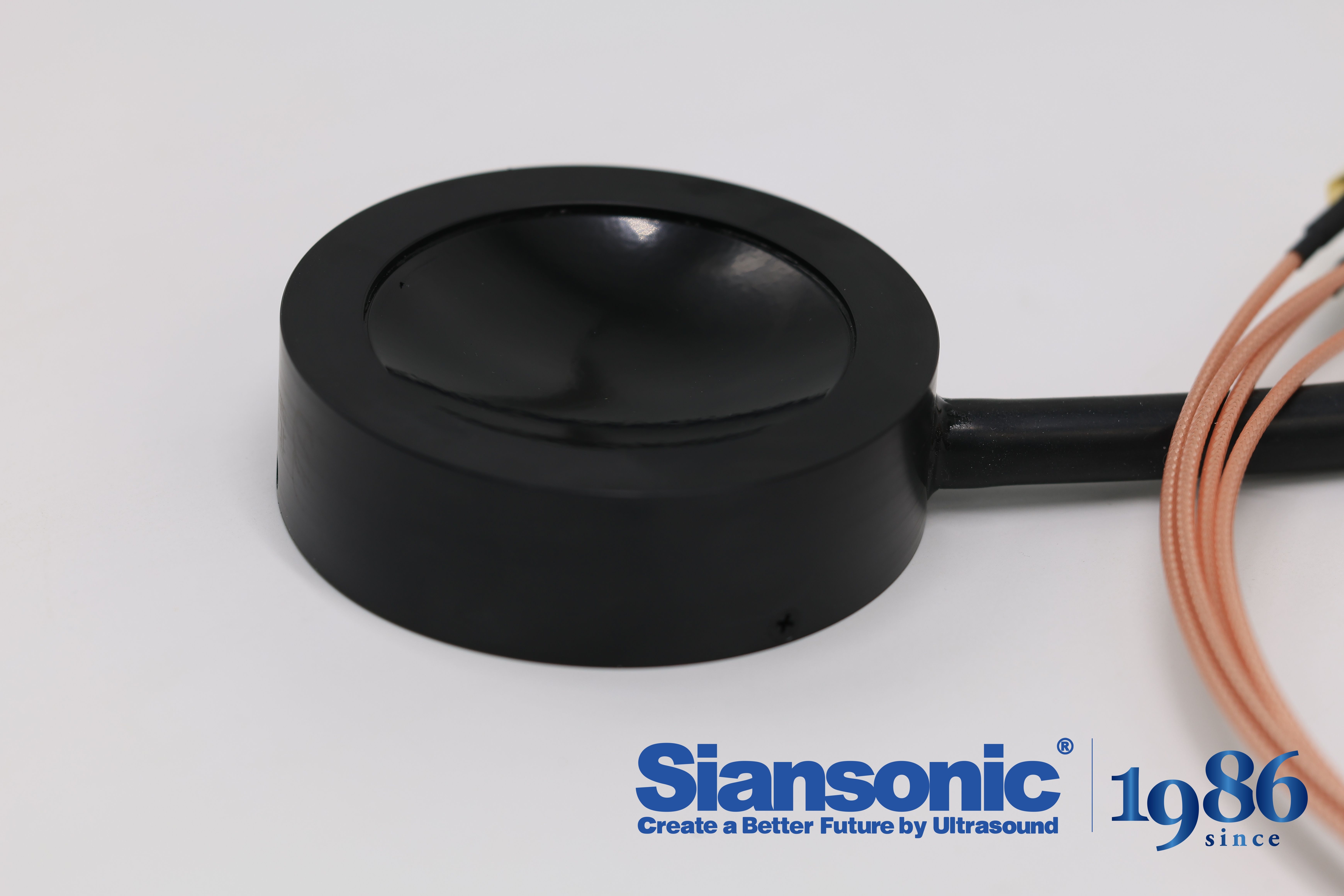
Most suppliers will hand you a catalog and ask which part number you want. That works if you're building something ordinary, but when performance or fit matters, stock housings and fixed tuning rarely cut it. You need a vendor who treats the enclosure and acoustic/mechanical tuning as variables, not afterthoughts. Look for suppliers with in-house engineering or at least a proven track record of altering cavity dimensions, venting, damping, and internal bracing to hit specific targets. Ask for examples of past custom work, not just a list of standard products.
A good custom vendor will ask about your operating environment, mounting constraints, and desired response before quoting anything. They should be comfortable changing wall thickness, adding inserts, or redesigning port geometry without charging for a full tooling overhaul. That flexibility separates a true partner from a middleman who just boxes up off-the-shelf parts. During evaluation, request a sample or prototype run with your exact specifications, and pay attention to whether they iterate quickly or push back toward their stock options. The goal is a housing and tuning tailored to your product, not a compromise forced by someone else's inventory.
Question Piezoceramic Quality and Long-Term Aging Claims
Piezoceramic components often arrive with bold promises about decades of stable performance, yet the reality of long-term aging tells a more nuanced story. Manufacturers cite polarization retention and mechanical integrity under cyclic loads, but field data from industrial ultrasonic transducers shows a different pattern: subtle shifts in coupling coefficients begin within the first year, driven by domain wall pinning and residual stress relaxation. These changes rarely appear in accelerated life tests because lab protocols use idealized thermal cycles and low-duty excitation, which fail to replicate the combined effect of humidity, electrical bias, and mechanical clamping found in embedded sensors. As a result, engineers who trust the printed datasheet risk designing systems with a false sense of margin.
The core dispute centers on how aging is quantified. Traditional metrics like d33 decay or frequency drift capture only bulk behavior, ignoring localized degradation near electrodes or microcracks that propagate from surface roughness. Independent failure analysis on retired medical transducers has uncovered silver migration along grain boundaries and oxygen vacancy accumulation near the polarization electrode—both phenomena absent from standard reliability reports. Furthermore, accelerated aging protocols based on Arrhenius extrapolation assume a single activation energy, but real piezoceramics exhibit a distribution of activation barriers tied to dopant segregation and sintering porosity. This mismatch explains why components rated for ten years can show unacceptable changes after only eighteen months in high-humidity, high-cycle applications.
Rather than relying solely on vendor claims, pragmatic teams now adopt a three-tier verification approach: baseline characterization before installation, periodic in-situ impedance spectroscopy during service, and destructive cross-sectioning of a sacrificial batch after set intervals. Such methods reveal that some low-cost PZT formulations age asymmetrically—losing sensitivity in the poling direction faster than transverse modes, which distorts beam patterns in phased arrays. The lesson is not that piezoceramics are inherently unreliable, but that quality claims must be anchored to defined aging models, realistic environmental stress, and continuous monitoring data instead of single-point accelerated tests.
Check Whether They Test In-House or Outsource Everything
A company’s answer here tells you more than their sales page ever will. If they test in-house, you can usually expect tighter collaboration with developers, faster regression cycles, and a deeper familiarity with the product’s quirks. That often translates to fewer handoff delays and a more stable release cadence. But it also means their capacity is limited by headcount—peak loads can stretch them thin, and specialized security or performance testing may fall outside their comfort zone.
When everything is outsourced, the picture flips. You gain access to broader tooling and round-the-clock execution, but you lose some of the context that comes from sitting next to the people who wrote the code. Before you commit, ask how they handle bug triage, who owns test data, and what happens when an outsourced team flags a critical issue at 2 a.m. The best setups rarely rely on one extreme—look for a clear boundary between what stays internal and what gets delegated, and make sure that boundary matches your risk tolerance.
Look Past Unit Price to Installation and Replacement Costs
A low sticker price can be tempting, but it often hides a far more important number: what you'll spend after the purchase. Installation and replacement costs frequently outweigh the initial unit price, especially for appliances, flooring, or HVAC systems. A cheap water heater might save you fifty dollars up front, yet the labor to swap it in—plus the higher chance of an early failure—can wipe out that savings within a year.
Smart buyers factor in the full lifecycle cost. Ask about typical installation fees, how long the product realistically lasts, and what a replacement will run you when it eventually dies. Sometimes spending 20% more on a quality unit cuts your long-term expense in half because it fits standard connections, requires less modification, and doesn't need replacing nearly as often.
Don't let the unit price alone drive your decision. Get a quote for the complete job, including removal of the old item and any necessary upgrades to surrounding components. That's the real price you're paying—and it's the only number that matters when comparing options.
Demand a Real Bench Test with Your Own Drive Signal
Most bench tests are nothing more than a polished demonstration with a lab-grade signal generator feeding a textbook sine wave into the drive. That setup hides a lot. If you want to know how a drive will actually perform in your machine, insist that the vendor runs the test using your own drive signal—the real PWM pattern, the same switching frequency, the same dead-time settings, and the same command sequence your application demands. Idealized waveforms make every drive look competent. Your drive signal separates the ones that hold tuning from the ones that fall apart under real electrical stress.
When a manufacturer tests with your signal, the ugly details come out: current harmonics that heat the motor unevenly, torque ripple that was invisible on a clean bench, resonance problems that only appear with your specific cable length and load inertia. Some drives will show erratic behavior during rapid direction changes or high-speed indexing when fed your actual command stream. Without this, you are buying a drive that has only been proven against a fantasy signal, and the integration headaches will land on your floor, not in their lab.
Ask for the raw data from the test—phase current traces, DC bus voltage under load, temperature rise on the heatsink and motor windings, and torque ripple measured with a proper transducer over a full duty cycle. Compare that against what your existing setup delivers. Any serious drive vendor will agree to this because it shortens your commissioning time and prevents field failures. If they hesitate or insist on using their own canned test profiles, treat that as a red flag.
FAQ
Frequency, bandwidth, beam angle, capacitance, and maximum drive voltage are the core ones. But don't stop at datasheet numbers—ask how those values shift under your expected temperature, pressure, and duty cycle. A transducer tuned for 40 kHz in open air may behave very differently inside a sealed housing or after 500 hours of continuous operation.
Request batch test reports, not just a single golden sample. Ask about their incoming material inspection and whether they track impedance and capacitance drift over production runs. If they hesitate to share failure rate data or traceability records, treat that as a warning.
Watch for vague answers about potting compounds, ceramic sourcing, or bonding methods. Suppliers who can't explain their process control limits—or who promise unlimited customization with no NRE discussion—often outsource heavily or overstate capability. Also note if they avoid on-site audits or video walkthroughs.
Off-the-shelf works if your frequency, beam pattern, and mounting constraints line up with existing models and your volume is modest. Customization makes sense when you need a specific acoustic window, unusual housing material, or tight impedance matching to your driver. Just get a written spec agreement and prototype phase before committing to tooling.
Dig into their process for ceramic polarization, bonding pressure, and curing time. Ask how many units they sample per lot for resonant frequency and impedance, and what happens to out-of-spec parts. A solid vendor will mention statistical process control, not just final sorting.
Lead time matters less than the vendor's ability to hold it. Ask for their on-time delivery rate and what happens when a shipment slips. Support means having an engineer, not just a sales rep, who can help tune the driver circuit or diagnose mounting issues after delivery. That access can save weeks later.
Yes, but make the sample evaluation meaningful. Test at your real operating voltage, temperature, and mechanical load—not just on a bench. Ask the vendor to include the exact serial numbers and test data for the samples, then compare them to the production units you receive later.
Conclusion
Choosing an ultrasonic transducer vendor starts long before you compare catalogs. You need to pin down the exact frequency, power level, and acoustic load your application will see; a supplier cannot tune a transducer properly without that context, and guessing leads to overheating or cracked ceramics. Once those parameters are clear, look for shops that will modify housings, backing layers, and matching networks rather than simply shipping a stock part from a shelf. Ask pointed questions about piezoceramic sourcing and aging behavior—cheap PZT can lose efficiency after a few hundred hours under load, even if initial impedance sweeps look fine. A vendor that hesitates to name its ceramic supplier or discuss depolarization curves is not one you want in a production line.
Testing claims matter just as much as material claims. If everything is outsourced to a third-party lab, turnaround time and accountability suffer; prefer a vendor with an in-house impedance analyzer and the willingness to share raw data, not just a pass/fail summary. Look past the initial unit price: a transducer that works but requires frequent retuning, custom cables, or special mounting hardware can quietly double your installed cost. Before committing to a volume order, demand a bench test using your own drive signal, duty cycle, and representative load. A supplier that agrees to that setup—and then meets the temperature rise and amplitude specs—has earned the order. Skip the ones who offer only a generic datasheet and a smile.
Contact Us
Contact Person: Ivy Zhang
Email: [email protected]
Tel/WhatsApp: +86 1081502288
Website: https://www.siansonic.com/