

Urban Pipe Gallery Mold: Driving Innovation in Modern Infrastructure
2026-07-09
Beneath the bustling streets of modern cities lies a hidden network that keeps urban life flowing—pipe galleries. As cities expand, the demand for durable, precisely engineered infrastructure has never been greater. At the heart of this evolution is the urban pipe gallery mold, a tool reshaping how we build underground utility tunnels. With advanced molding technology, projects now achieve unmatched accuracy, speed, and longevity. Leading this transformation is LugongMachinery, whose innovative mold solutions are setting new benchmarks in the industry. Curious about what makes these molds so revolutionary? Let’s dig deeper.
Revolutionizing Urban Spaces with Precast Gallery Molds
Picture a city where every underpass, tunnel, and pedestrian walkway transforms from a forgettable concrete void into a striking design element. That shift is already underway, driven by innovations in precast gallery molds. These precisely engineered forms make it possible to cast complex architectural details—ribbed ceilings, textured walls, integrated lighting channels—directly into large concrete segments before they even reach the construction site. The result isn’t just faster assembly; it’s an entirely new language for infrastructure, turning utilitarian spaces into destinations that shape how people experience the city.
What sets modern gallery molds apart is their ability to balance standardization with creative flexibility. Instead of relying on repetitive, off-the-shelf shapes, designers can now customize mold surfaces to echo local history, mimic natural rock formations, or create rhythmic patterns that guide movement. A metro station in Lyon might feature vaulted panels reminiscent of Roman aqueducts, while a highway underpass in Singapore uses biomorphic reliefs that soften its harsh surroundings. Because the finish is set in the mold itself, there’s no need for cladding or cosmetic layers—the structure becomes the finish, durable and low-maintenance from day one.
Beyond aesthetics, this approach fundamentally rethinks how public works are delivered. With quality controlled in a factory setting, each segment meets exacting tolerances before it’s ever lifted into place, cutting on-site errors and weather delays dramatically. Crews need fewer skilled laborers for finishing work, and public disruption shrinks because the heavy curing and detailing happen off-site. The long view is even more compelling: cities can commission gallery elements that are not only beautiful but also adaptable, with recesses for future sensors, drainage, or greenery. It’s a quiet revolution—one that’s turning infrastructure from an afterthought into an opportunity to uplift the everyday urban journey.
The Precision Engineering Behind Today’s Pipe Gallery Systems
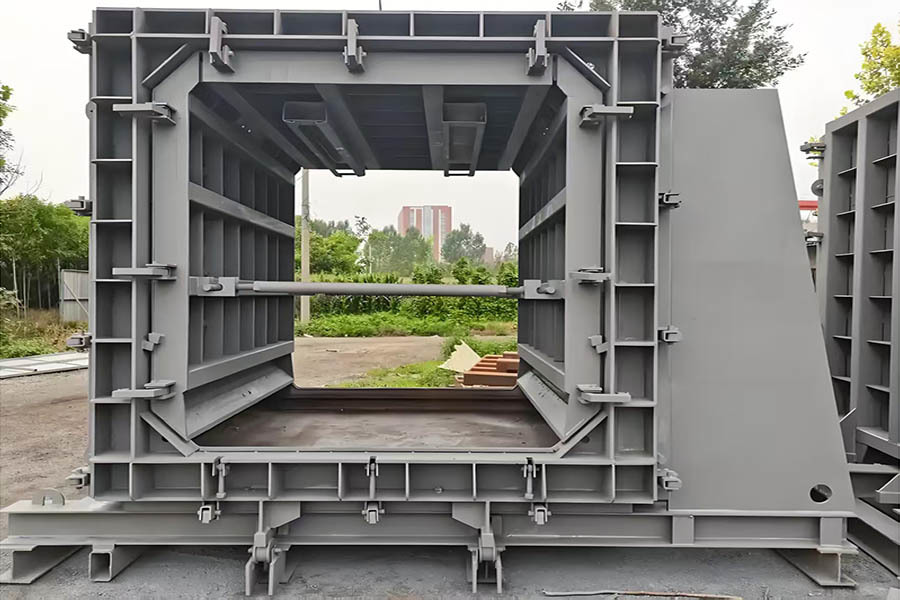
Modern pipe gallery systems are not just concrete tunnels filled with pipes—they are meticulously engineered environments where every dimension, material, and sensor placement is calculated to handle decades of thermal expansion, vibration, and emergency scenarios without failure. Computational fluid dynamics and finite element analysis simulate everything from seismic events to daily pressure surges, ensuring that pipe supports, expansion joints, and drainage slopes work in concert. This level of upfront simulation transforms what was once a simple utility corridor into a fail-safe arterial network.
The physical assembly inside these galleries reflects a philosophy of modular precision. Prefabricated pipe spools with laser-scanned flange alignments arrive on site and are joined with guided-bolt tensioning tools that record torque values in real time. Even the support frames are installed with laser trackers to guarantee that the designed load path is maintained within millimeter tolerances. This eliminates field welding variability and allows future sections to be added or replaced without cutting into primary structures.
Beyond the visible hardware, the invisible intelligence layer turns a pipe gallery into a living system. Fiber-optic strain and temperature sensors are embedded along the pipeline routes, feeding a digital twin that mirrors the physical asset in real time. Operations teams can run predictive failure models, optimize flow based on thermal gradients, and even rehearse emergency shutdowns virtually. Such precision engineering ensures that these hidden networks adapt to changing industrial demands while maintaining an operational lifespan that often exceeds 50 years.
From Factory to Foundation: Streamlining Infrastructure Assembly
The advent of modular construction has fundamentally reshaped the way we think about infrastructure assembly. Instead of relying on labor-intensive on-site fabrication, components are now precision-manufactured in controlled factory environments. This shift eliminates many of the variables that typically plague construction projects—weather delays, inconsistent workmanship, and material waste. The result is a process that feels less like traditional building and more like orchestrating a well-rehearsed symphony, where each piece arrives exactly when and where it's needed.
One of the most striking benefits of this approach is the dramatic compression of project timelines. While on-site crews are still preparing foundations, entire rooms or structural modules are already being assembled indoors, complete with electrical wiring, plumbing, and finishes. When these units reach the site, they can be craned into place in a matter of hours rather than weeks. This parallel workflow not only accelerates completion but also significantly reduces disruption to surrounding communities—a critical consideration in dense urban settings or on operational campuses.
Beyond speed, the factory-to-foundation model elevates quality control to levels rarely achievable outdoors. Every weld, connection, and seal is executed under rigorous oversight, often with the aid of advanced robotics and 3D scanning. These digital tools create a seamless feedback loop between design intent and physical reality, catching deviations before they become problems. For project owners, this means a more predictable outcome: tighter envelopes, improved energy performance, and fewer costly callbacks. The assembly line may have revolutionized manufacturing a century ago; now it's quietly transforming the foundations beneath our feet.
Smart Molds for Smarter Cities: Integrating Tech into Concrete
Concrete has long been the silent backbone of urban life, poured into standard forms and left to do its work unnoticed. But a new generation of smart molds is flipping that script, embedding the digital layer right at the casting stage. Instead of passive, inert slabs, these molds guide the integration of fiber optic nerves, piezoelectric sensors, and even conductive pathways directly into the cement matrix—turning pillars and panels into active data nodes before they even leave the factory.
The real leap comes when those cast-in components start talking. A bridge abutment poured with a tech‑enabled mold can report strain and micro‑cracks in real time, flagging maintenance needs months before a human inspector would notice. On a street corner, a smart‑molded curb might track foot traffic and air quality, feeding anonymized insights into the district’s management platform. It’s a quiet upgrade, replacing the blind, brute strength of traditional concrete with a structural nervous system that makes the city not just stronger, but genuinely responsive.
Sustainability Through Modular Design: Less Waste, Longer Life
Modular design rethinks how products are built from the ground up, treating components as interchangeable building blocks rather than a sealed, single-use whole. When a part wears out or becomes outdated, it can be swapped in minutes—no specialized tools, no entire device sent to a landfill. This approach extends product lifespan dramatically because the core structure stays in service while only the faulty or obsolete module gets replaced. Instead of a linear “make, use, dispose” cycle, modularity enables a continuous loop of maintenance and upgrade, keeping materials in circulation and shrinking the waste stream at its source.
Beyond simple repair, modular systems unlock a more thoughtful relationship with the things we own. A laptop’s processor can be upgraded without trashing the screen and keyboard; a furniture frame can be reupholstered or reconfigured for a new room layout. This adaptability means products evolve alongside user needs, avoiding premature obsolescence. It also changes the emotional attachment—people tend to care for items they can easily fix and personalize, which further reduces the urge to toss and replace. The environmental payoff is deep: fewer raw resources extracted, less energy burned in manufacturing replacements, and a steep drop in the mountains of e‑waste and bulky trash choking ecosystems.
Critically, modular design pushes responsibility onto manufacturers to supply accessible spare parts and clear documentation, making repair a realistic option rather than a frustrating dead end. When companies design for disassembly, they also make recycling at end‑of‑life more efficient because materials are easier to separate and reclaim. This model doesn’t just green the user experience—it reshapes supply chains toward closed‑loop systems. In an era of resource volatility, building things that can be taken apart and rebuilt isn’t a niche ideal; it’s a practical strategy for longer‑lasting products and a lighter footprint on the planet.
Customization at Scale: Tailoring Molds for Unique Projects
Every project brings its own set of demands, and off-the-shelf molds rarely fit the bill when precision and uniqueness are non-negotiable. We bridge the gap between mass production efficiency and bespoke craftsmanship by integrating adaptive design principles directly into the mold-making process. From initial concept to final form, our approach ensures that each mold not only meets but anticipates the nuanced requirements of your project, eliminating the need for costly workarounds or compromises in functionality.
What sets this apart is the seamless collaboration between engineering expertise and client vision. Instead of forcing your idea into pre-existing parameters, we start with a blank slate—adjusting geometries, material flows, and cooling channels to match the exact specifications of the end product. This level of customization means you can achieve complex undercuts, variable wall thicknesses, and surface finishes that standard molds simply cannot accommodate, all while maintaining the repeatability and speed needed for production timelines.
The result is a mold that feels less like a tool and more like a natural extension of your design intent. Whether you’re prototyping a single piece or scaling up for a limited run, the tailored solution evolves with you, offering flexibility in material choices and post-processing without sacrificing durability. It’s about turning manufacturing constraints into creative opportunities, ensuring that even the most unconventional projects are realized with the same confidence and precision as high-volume orders.
FAQ
It's a specialized formwork system used to cast underground utility tunnels that house multiple pipelines and cables. Its growing relevance stems from the push toward smarter, more resilient cities, where consolidating infrastructure below ground reduces surface disruption and long-term maintenance costs.
The molds are designed for rapid assembly and stripping, often incorporating hydraulic or modular systems that allow continuous pouring cycles. This cuts the time needed to form each tunnel segment, enabling crews to keep pace with aggressive project timelines without sacrificing structural integrity.
Modern molds integrate self-cleaning release agents, adjustable curvature mechanisms, and sensors for real-time alignment monitoring. These innovations reduce manual labor, minimize errors, and ensure consistent wall thickness even in complex geometries, which is a leap beyond traditional fixed-shape formwork.
By enabling the precise use of high-strength, low-carbon concrete mixes and reducing material waste through tight dimensional control. Some designs also allow for the incorporation of recycled aggregates, and the durable tunnels themselves extend the lifecycle of utilities, reducing the need for resource-heavy repairs.
In the construction of a major urban utility corridor in a dense metropolitan area, using a custom-engineered mold with vibration-damping technology allowed night-time pouring near residential zones without exceeding noise limits. This prevented project delays and maintained community relations.
Key factors include the soil conditions and groundwater pressure the finished tunnel will face, the required internal clearance, the frequency of junctions and access points, and the mold’s adaptability to different cross-sections. The ease of transport and on-site storage also weigh heavily in congested urban sites.
Digital twin modeling is now used to simulate the entire casting process, predicting thermal stresses and optimizing the mold design before fabrication. On site, IoT-enabled molds track temperature and vibration data, feeding into AI systems that adjust curing cycles automatically for maximum concrete strength.
Many assume the upfront investment is hard to justify, but when you factor in the reduced labor, faster project delivery, and lower lifecycle maintenance of the tunnels themselves, the long-term savings often outweigh initial costs. Plus, the ability to reuse modular molds across projects amplifies their value.
Conclusion
The evolution of urban pipe gallery molds is reshaping how cities approach hidden infrastructure. Rather than treating underground networks as an afterthought, today’s precast solutions bring factory-grade precision directly to the job site. Advanced engineering techniques ensure that each mold produces components with exact tolerances, minimizing on-site adjustments and speeding up assembly. This shift from traditional cast-in-place methods to streamlined, off-site manufacturing allows entire sections to be transported and installed like puzzle pieces, reducing disruption in busy urban areas. Moreover, the ability to customize molds for specific project geometries—whether for winding utility corridors or compact residential districts—means that no two installations are forced into a one-size-fits-all approach.
Beyond mere speed and fit, modern molds are embedding intelligence into concrete. By integrating sensors and digital monitoring systems during the casting process, these smart molds enable real-time quality control and future-ready connectivity. Once installed, the resulting galleries can support smart city technologies without retrofitting. Sustainability is equally central: modular mold designs drastically cut material waste, while high-durability mixes extend service life, lowering long-term maintenance. This marriage of eco-efficiency and technical sophistication is not just improving pipe galleries—it’s setting a new standard for the invisible frameworks that keep cities alive, proving that what lies beneath can drive above-ground innovation.
Contact Us
Contact Person: Zhang Zhenlai
Email: [email protected]
Tel/WhatsApp: 8618563210000
Website: https://en.lugongmachinery.com/